

2025 Longmont City Council Candidates
We asked every candidate to respond to a set of 26 community questions. These came from both the Chamber’s Public Policy Committee and members of the public, with some questions combined for clarity.
Candidates were free to skip questions, so not every answer will appear.
-
A single star (*) means the question came directly from a community member.
-
Two stars (**) mean the question reflects both committee and community input.
The Chamber shares these questions and responses without endorsing any viewpoint. Responses to questions are exactly as the candidate wrote them.
Candidates are added to the website as we receive their responses. All candidates and their responses will be posted by October 6, 2025.

This work is made possible with the support of:


2025 Mayoral Candidates
Click here to download a printer-friendly PDF of these responses.
Shakeel Dalal
Seat: Mayor
Campaign Website: shakeelformayor.com

I build and test spaceships for a living, but public service is my passion. As an immigrant who came to the United States at six months old, I feel a deep responsibility to contribute to the American project — and make sure that the opportunities that allowed my family to thrive are available to the next generation.
As co-founder of LAUNCH Longmont Housing, I’ve worked with people all over the community to pass policies through City Council which have made housing more affordable like legalizing ADUs and eliminating parking minimums. From 2018 to 2020, I covered local politics for the Longmont Observer and moderated 12 city council debates and the 2018 U.S. House of Representatives debate. In 2020, I helped found Longmont Public Media and ran the campaign to amend the Longmont Charter to make an arts and entertainment center financially viable. Since 2021, I’ve served on the board of the Longmont Community Foundation. For 5 years, I have been a member of the City of Longmont Professional Standards Unit, reviewing police misconduct allegations.
I live in Old Town with my fiancee Krista Ahlberg and our dog Remy.
Shakeel Dalal on the Issues
Click the categories below to expand the Q&A on the subject.
General Vision
If elected, what would be your top priority in office?
Longmont is a great place to live – if you can afford it. For 150 years, we didn’t need the second part.
My top priority is to restore affordability while protecting quality of life. We must be a city affordable for the people who make our community work—teachers, healthcare workers, young families, and seniors who want to age in place. And we have to do it while protecting the things that make Longmont a great place to live.
This isn’t just about making Longmont more affordable—it’s about proving that local government can be responsive, effective, and focused on what families actually need.
Housing families can afford: 65% of the residential zoned land in Longmont is restricted to the most expensive type of home. They cost the most to build and are the most expensive to maintain. By legalizing townhomes in every neighborhood in the city, we can create more opportunities for home ownership for everyone.
Fix traffic by making it safer to walk and bike: Longmont families spend 15% of their income on their car. Longmont’s Transportation Mobility Plan estimates that 20% of Longmont’s workers commute to Boulder. By improving our walking and biking infrastructure, we can maximize the number of people who can use the Bus Rapid Transit (BRT) starting in 2027. Each commuter that rides the bus 3 times a week instead of driving saves $1,100 per year. By making it safe to walk or bike, we reduce traffic for those who choose to drive, and improve the quality of public transit service for those who don’t.
Childcare solutions that scale: The annual cost of childcare in Longmont now exceeds tuition at CU-Boulder. This is not a problem Longmont can solve by itself. But instead of only subsidizing childcare for the neediest families – a solution which can only help a small number of people – we must look for solutions that are as big as the problem. We should take seriously the need for regional cooperation and innovative solutions to fund childcare and creative ways of increasing the supply. See my answer on Childcare for more details.
What is your plan for advocating Longmont’s business needs at the state and federal levels?
It is imperative that we lead from strength instead of waiting for permission on issues which are clearly within local jurisdiction. By implementing policies I have been advocating for, Longmont has started winning statewide awards for being ahead of the curve. As mayor, I’ll leverage that leadership position to shape policy rather than just react to it.
We can’t let one-size-fits-all mandates undermine the flexible approaches we’ve already developed. I’ll advocate for local control provisions that protect our setback reforms, ADU policies, and transit-oriented development rules. Longmont should be the model other cities follow, not a casualty of overly prescriptive state mandates.
We should also lobby the state to make childcare more affordable by adopting the wildly successful reforms Oklahoma enacted in 1998. They have free, universal pre-K along with childcare costs that are half that of Colorado.
To influence state level legislation, I’ll continue to build on the 2018 reforms which have the City take positions on matters occurring in the State General Assembly. I’m grateful to the many Longmont residents who spend time in Denver every spring to testify on Longmont’s behalf at the Assembly. I look forward to working with them.
I‘ll work closely with the Early Childhood Council of Boulder County, Chamber, Latino Chamber, Longmont Economic Development Partnership and any other organization with good ideas to advance Longmont’s agenda at the state to identify priority issues early in each legislative session. Using my agenda-setting authority, I’ll ensure Council takes timely positions that actually influence outcomes, not symbolic votes after bills have already passed.
We have to be more realistic about the role of the Federal Government in Longmont. We know that Federal funds to states are being heavily cut. It is irresponsible for local elected officials to continue to rely on federal funding to create the affordable homes we desperately need. Instead, we should be building local wealth and resilience by legalizing townhomes to create affordable starter options for young families and duplexes for senior citizens who want to age in their own homes.
There is, however, one Federal anti-trust statute, Robinson-Patman Act, also known as the “Magna Carta of Small Business.” It ensures that neighborhood grocery stores pay the same price for wholesale goods as Kroger and Walmart. Enforcement of this law has been idle for decades, but is seeing a resurgence.
While Longmont doesn’t have the authority to enforce the Robinson-Patman Act, the State Attorney General does. I have already had one-on-one conversations with many candidates for State Attorney General (a 2026 election) to ensure they understand how important this is to Longmont.
*What will you do to protect the council and staff from being distracted by issues that don’t fit within the city’s strategic plan?
Longmont has many strategic plans. Envision Longmont. Advance Longmont 2.0. Downtown Longmont Master Plan. Main Street Corridor Plan. Midtown Redevelopment Plan. Sugar Mill + STEAM Sub Area Plan. Longmont Sustainability Plan. Transportation Mobility Plan. 2025 Water Conservation Plan.
These many strategic plans are well thought out, often with tens of thousands of hours of resident input and millions of taxpayer dollars.
What we lack is the delivery of outcomes that residents want.
The Mayor, working with the City Manager, sets and prioritizes the meeting agenda. My goal for every meeting will be to spend Council time focused on outcomes, removing barriers which prevent staff from implementing strategy, and directing staff when they need to know what path to take.
This will be a very different approach to Council meetings than the past, which often operate on a first-in-first-out prioritization and can become mired in details which do not impact residents’ lives. By investing in this vision with other Councilmembers, we can work together to keep staff focused on the work which matters most to the city.
Minimum Wage
**Do you support setting a local minimum wage above the state requirement? If so, what rate do you believe is appropriate, and how do you anticipate it would affect local businesses? Given the pressure from county commissioners and special interest groups to accelerate minimum wage increases — and considering the reported business closures and job losses in cities like Denver, and Niwot — what would be your approach be on this issue?
If elected, I would vote for a minimum wage increase in Longmont to $16.50 per hour starting on January 1, 2027. This will impact very few Longmont employers. This is because the City of Longmont has already raised the minimum wage – just not for everyone. The 2025 minimum wage for City of Longmont employees is $21.41, and $26.21 for city contractors. As a result, almost all businesses inside the city already pay more than the minimum wage in order to attract employees.
Many of the business owners I talk to believe that what is being debated is increasing Longmont’s minimum wage directly from $14.81/hour to $25/hour. This is NOT being considered, and is a failure of communications and a key driver of resistance to raising the minimum wage.
I support a regional minimum wage, which improves living standards for Longmont workers while insulating Longmont businesses from unfair competition from outside city limits. However, the Boulder County Commissioners could have done a much better job with their regional minimum wage proposal, and this has caused a lot of fear and doubt among local businesses.
As I write, the Commissioners are reconsidering the implementation of the County minimum wage. I hope they will also rethink their communication plan when they do it.
I’ll also note that we cannot fix our cost of living issues just by making businesses pay more. Longmont’s City Council has another responsibility – avoiding a wage-price spiral to make sure employers’ and employees’ money goes further by implementing policies to make Longmont more affordable. See my responses on General Vision, Housing Development, Fiscal Responsibility, Business Startups and Childcare.
Environment & Sustainability
What are your plans/programs for balancing growth and environmental sustainability?
There’s no tradeoff—smart growth IS environmental protection.
When a home owner converts a single-family home into a triplex of townhouses, we’re simultaneously increasing housing supply and reducing per-unit environmental impact. Each new dwelling uses less energy and water than what it replaced, generates more property tax revenue, and requires zero new infrastructure.
Legalizing townhomes also advances environmental sustainability by protecting Open Space – because it is more financially sustainable to build homes in the city we already have instead of sprawling further out.
Allowing neighborhood businesses like corner grocery stores, preschools, and veterinarians also makes the neighborhood more walkable and eliminates car trips which contribute to traffic and carbon emissions. It also provides these locally owned businesses with a strong competitive advantage over big box stores – proximity.
Investing in transportation alternatives besides cars – whether sidewalks, bike lanes or ride-hailing systems like Ride Longmont – will encourage residents to choose to own fewer cars and use multimodal transit more of the time.
And the data consistently shows that implementation of these kinds of options, not requirements, improves quality of life, lowers the cost of living, and protects the environment. This is even true for persons who choose to drive, as they will encounter less congestion and ultimately find it easier to park.
*Longmont is five years away from its 2030 goal of sourcing all electricity from carbon-free sources. However, with Platte River Power Authority planning to replace its coal-fired turbine with a natural gas unit, this goal will not be fully met. Projections suggest the cumulative cost to Longmont residents will be around $100 million by 2030 due to steeply rising electric rates (~$2,500/ household).
Given Longmont’s negligible contribution to global CO₂ emissions, and the fact that roughly half of the city’s electricity reportedly now comes from carbon-free sources, should the city reconsider its goal and recognize that the progress made so far represents its fair share, or should it stay committed to the original target, regardless of the financial cost?
First, let’s correct the premise: PRPA’s new natural gas plant doesn’t replace renewable energy—it provides backup capacity required by federal regulators to prevent blackouts. Wind and solar already generate power more cheaply than coal or gas, but they’re variable. The gas plant runs only when needed, far more efficiently than the current coal plant that has to stay running constantly.
While Longmont’s emissions are small globally, leadership matters. We are far from the first community in the United States to embark on this goal, and will not be the first to achieve it. But we are among a small set of global cities (and the only one in the United States) recognized by the United Nations for the resilience of our infrastructure investments – including our city owned electric utility. Longmont is being spoken of in the same breath as Venice, Barcelona, Mexico City, Bogota, and Sendai.
When we prove that 100% clean electricity enhances quality of life while keeping costs affordable, we provide a model that other communities can follow. Our municipal utility ownership gives us advantages that investor-owned utilities don’t have—we can prioritize community benefit over shareholder profit.
We’re already partnering with PRPA to install utility-scale batteries at Longmont substations. Combined with local rooftop solar and smart grid technology, these Distributed Energy Resources (DERs) can store excess renewable energy and deploy it when wind and solar production is low. This approach actually reduces costs by eliminating peak demand charges and reducing purchased power during expensive periods.
Our 88% carbon-free grid (soon to be 100%) creates competitive advantages for energy-intensive clean manufacturing. Companies like UQM (now Danfoss) already choose Longmont partly for our clean electricity. This attracts good jobs while advancing environmental goals.
The question isn’t what others do—it’s what we do with the power we have. Making our grid 100% clean makes it easy for residents to do the right thing without lifestyle sacrifice.
The goal isn’t just clean electricity—it’s showing how our environmental leadership and economic prosperity strengthen each other.
Housing Development
**How will you balance sustainable growth and affordability with concerns about increased density—such as traffic, noise, and strain on infrastructure—while also addressing homelessness and panhandling linked to mental health and substance use challenges?
As I outlined in my General Vision and Environmental plans, the solution isn’t choosing between density and livability—it’s rethinking the design choices that resulted in tradeoffs between affordability and quality of life.
Integration is key. Environmental sustainability, housing affordability, transportation efficiency, and homelessness prevention aren’t separate challenges—they’re interconnected systems that strengthen each other when designed thoughtfully.
When we legalize townhomes in existing neighborhoods and allow corner grocery stores, childcare, and small businesses, we create walkable communities where families drive less. Our Transportation Mobility Plan shows 20% of Longmont workers commute to Boulder—each person who switches to Bus Rapid Transit three times weekly saves $1,100 annually, starting in 2027. More walking and biking infrastructure means less traffic for everyone, including those who choose to drive.
Allowing the construction of townhouses generates more property tax revenue while requiring zero new roads, sewers, or utilities. Because our current development review process incentivizes big projects instead of small ones, sprawl forces expensive infrastructure expansion; smart infill uses what we already have more efficiently.
According to HOPE for Longmont, 65% of homeless clients have jobs but can’t afford housing. Pew Research confirms the strong correlation between housing costs and homelessness rates. The same policies that create homeownership opportunities for teachers and healthcare workers also prevent working families from becoming homeless.
For individuals with mental health and substance abuse challenges, we need trauma-informed permanent supportive housing like LHA’s Zinnia project. If Boulder County’s Issue 1B passes, additional mental health funding will expand these proven programs. We’ll continue Longmont’s successful community-based policing and smart-cities approaches rather than relying on enforcement alone, especially given our limited detention capacity.
Fiscal Responsibility
What strategies would you implement to increase city revenue and enhance local economic sustainability without burdening residents or relying heavily on federal and state funding?
As I’ve outlined in my Housing and Environmental plans, legalizing townhomes in existing neighborhoods dramatically improves our revenue-to-infrastructure ratio. When we convert single-family homes to townhouses, we generate more property tax revenue while requiring zero new taxes. roads, sewers, or utilities. This is financially sustainable development that does not burden existing residents.
Federal funding is unreliable and comes with strings attached that often contradict local priorities. Instead of chasing uncertain federal housing subsidies that will never be big enough to help the 90% of Longmonters who can’t afford the average home, we must create affordable options through market mechanisms while generating wealth for existing homeowners. The strengthened tax base that results can fund major infrastructure projects more reliably than hoping Congress or Colorado stay engaged with local needs.
We must also address the real constraints on local business growth. When asked, local businesses say housing costs are the biggest downside to doing business in Longmont. When teachers, healthcare workers, and service employees can’t afford to live here, businesses struggle to find workers and customers struggle to afford services. My housing policies solve this constraint more effectively than any business tax incentive could.
When we allow corner grocery stores, coffee shops, and small professional services in residential areas, we give local businesses a competitive advantage over big box stores—proximity. Families who can walk to neighborhood businesses spend more money locally instead of driving to chains. The work I’ve already started to influence the state legislature and next attorney general to take Robinson-Patman Act enforcement seriously will help small retailers compete on fair terms.
We also need to recognize, and strengthen, our competitive advantages. Our clean-and-getting-cleaner carbon-free electricity attracts energy-intensive manufacturers like Danfoss. As we reach 100% clean power, we’ll become even more competitive for cleantech manufacturing that creates good local jobs.
More housing means more taxpayers. Walkable neighborhoods mean stronger local businesses. Clean energy means competitive advantages. This builds lasting economic sustainability rather than depending on political winds in Washington.
Advance Longmont
*What do you see as the key strengths of Advance Longmont 2.0, and what, if any, modifications would you propose? Additionally, what steps will you take to protect its integrity and promote its effective implementation?
Advance Longmont 2.0 provides a time-tested strategy for economic development that suits Longmont’s size and needs on issues highly salient for local businesses. Its collective-impact approach aligning public, private and non-profit stakeholders gives us the tools we need to attract great employers while playing to our strengths instead of trying to change who we are.
I’d change it in 3 key ways –
First, we need to rebuild the relationship between the City of Longmont and the Longmont Economic Development Partnership (LEDP). The adversarial relationship that’s developed over recent years serves no one. LEDP needs resources commensurate with the scale of problems we’re asking them to solve. I’ll advocate for stable funding at the level they’ve requested, while holding everyone accountable for measurable results.
Second, make for-sale housing options for young families and aging residents an explicit economic objective. Not everything has to be about housing, but the cost of housing has become the issue that is eating all of the other issues in Longmont. It’s hard to run a business if your employees can’t afford to live near where they work. We need townhouses, multi-story duplexes, triplexes, and fourplexes that working families can actually buy.
Finally, fundamentally rethink our childcare approach. Rather than simply subsidizing families who can’t afford childcare and workers who don’t earn enough, we should examine what’s broken in our economic model. Taking inspiration from successful approaches in Oklahoma and Larimer County, we need systematic solutions that address root causes—co-locating private childcare with schools, stable long term funding to ensure workforce availability and regional cooperation that creates sustainable funding models rather than perpetual subsidy dependence.
Advance Longmont 2.0 is one of many plans we have. It’s time to deliver. As mayor, I’ll use my agenda-setting authority to ensure regular progress reviews, clear metrics, and council accountability for delivering on commitments. Advance Longmont 2.0 can’t become another vision document gathering dust—it needs to be our operational roadmap for creating opportunity while preserving community character.
Arts Funding & Recreation
What is the city’s role to support and fund the arts, cultural programs, parks, recreation, and community spaces in Longmont?
Parks, recreation, and community spaces are fundamental infrastructure for addressing the loneliness epidemic. These aren’t luxuries—they’re essential for community health and social connection and At-Large Candidate Crystal Prieto has spoken persuasively to me about this.
When children can safely play in neighborhood parks and families can gather in well-maintained public spaces, we build the social fabric that makes communities resilient. This directly supports my broader vision of walkable neighborhoods where people interact naturally rather than being isolated in cars and private spaces.
As we legalize townhomes and allow neighborhood businesses, we need parks and community spaces that serve higher-density, more walkable areas. The Greenway System’s slow progress through developer contributions shows promise—we should incentivize trail connections as part of new development and connect existing neighborhoods through creative use of required utility easements.
The Art in Public Places program works well and provides sufficient resources for ambitious projects. While arts and cultural programs contribute to Longmont’s creative energy and community character, I think Longmont voters would rather we focus more of our energy on cost of living issues.
One place where these forces come together and allow us to address multiple challenges simultaneously is the Sugarmill redevelopment. It is a complex, multi-jurisdictional project that advances environmental sustainability, public amenities, multimodal connectivity, and housing diversity simultaneously. With the support of the County Commissioners, we have an opportunity for meaningful city-county collaboration.
What role do you see the Sundance Film Festival playing in Longmont’s cultural and economic landscape, and how would you balance its benefits with residents’ concerns about congestion and affordability?
Boulder lacks sufficient hotels, restaurants, and services to handle Sundance’s influx without creating shortages and congestion. Longmont should position itself as a logical basecamp for festival employees and technical workers who will need a place to stay to make the festival happen, but are unlikely to be able to afford Boulder prices. Visit Longmont can coordinate shuttle services, promote local businesses, and work with RTD to potentially accelerate BRT service—benefiting both cities while generating significant revenue for Longmont.
At-Large Candidate John Lembke has advanced an idea that has broad support among candidates for this year. For the festival period and surrounding weeks, we should temporarily relax short-term rental restrictions to accommodate technical workers and attendees. This means waiving registration fees and creating a city-managed platform through Visit Longmont to ensure quality and safety standards. This provides greater community control, while allowing Longmonters to directly benefit from the presence of Sundance.
Rather than treating Sundance as an isolated event, we should use it to test and demonstrate our walkable city vision. Festival shuttles become pilot programs for improved transit. Temporary housing arrangements help us understand demand for smaller, more affordable accommodations year-round. Local business promotion during Sundance builds ongoing relationships that support neighborhood commercial development. By being the basecamp for the festival’s technical workers, Longmont becomes a logical place for them to develop new businesses.
While Sundance offers meaningful economic opportunity, it’s not a silver bullet for our core challenges. The festival can generate revenue and raise Longmont’s profile, but our fundamental work remains housing affordability, transportation safety, and government effectiveness. Sundance should complement these priorities, not distract from them.
Civic Discourse & Engagement
What strategies would you implement to foster more respectful, productive discussions on local issues and encourage civil engagement while reducing vitriolic discourse?
Local government must be the most accessible and responsive level of government. As Mayor, I’ll be a visible public figure who takes real responsibility for hearing people’s concerns instead of just limiting input to 3 minutes during a City Council meeting. The Mayor sets the tone for how the community discusses challenging issues.
Most residents have reasonable expectations—they don’t expect their view to be the only one that matters, but they do expect their view to be taken into account.
Most Longmonters want the same things: safe streets, a lower cost of living, a nurturing place to raise their kids, and the opportunity to pursue their economic ambitions. When we focus on these shared outcomes rather than getting bogged down in procedural arguments, we find common ground quickly.
I’ll reduce the time tax on civic engagement by expanding communication methods outside of official forums that most people don’t hear about, aren’t interested in, or can’t attend. Instead I’ll try to reach people where they are by appearing on local podcasts, thoughtfully using social media and being findable at Longmont’s many public festivals that people attend for fun.
I’ll continue using plain language, specific examples, and data-driven explanations. When disagreements arise, I’ll focus on policy merits rather than questioning motives or values.
Business Startups, Costs, Commercial Development & Permitting
How would you address concerns over blighted or underutilized commercial areas?
Part of being a leader is knowing when to follow.
Ward 2 Councilmember Matthew Popkin is the clear expert in this area on the City Council, targeting the Longmont Urban Renewal Authority as an underutilized mechanism to improve blighted properties. I agree with him that we need to make better use of the tools available to it, including tax increment financing, to catalyze private investment in what would otherwise be desirable commercial and residential areas of the city.
We already waive affordable housing fees for developments that include affordable units. We should apply the same logic to brownfield redevelopment—ease height limits and streamline approval processes for projects that remediate contaminated or underutilized sites. This approach costs taxpayers nothing while encouraging the cleanup and productive reuse of problem properties.
We should also carefully scrutinize limitations on business opportunity in the city. Currently, electricians, plumbers, carpenters, and machinists who want to start their own businesses face a six-month conditional use permit process just to operate contractor shops. This is bureaucratic nonsense that penalizes our substantial population of skilled tradespeople. These should be permitted uses in mixed-use zones, not conditional secondary uses requiring planning and zoning review.
Demolition, however, is not the solution to every problem. It’s important that we do not repeat the mistakes of the “urban renewal” era that replaced many historic buildings on Kimbark Street with unproductive parking lots. Many “blighted” commercial buildings have good bones and strategic locations. Rather than pushing for teardowns, we should encourage adaptive reuse through streamlined permitting and revisit the parts of our city’s design standards that incentivize disposable, single-use buildings.
**What steps would you take to make Longmont a more competitive and business-friendly city, especially for startups and commercial development? Some have stated concerns that the planning and permitting process has become slow, complex, and costly — making it difficult for businesses to build and occupy space — how would you work to streamline these processes? Additionally, what strategies would you support to help keep commercial rents within reach for small businesses?
We should eliminate regulatory barriers that force businesses to pay commercial rent just to start. We need to ease land use requirements so entrepreneurs can launch from home offices, garages, or shared spaces before they’re ready for expensive storefronts. Currently, our zoning forces artificial separation between where people live and work, driving up costs for everyone.
Too many straightforward business proposals get routed through planning and zoning when they should receive simple administrative approval. A coffee shop in an existing commercial space shouldn’t require the same review process as a major development. I’ll work with staff and Council to clearly define which proposals need extensive review versus quick administrative approval.
We can further strengthen local businesses by allowing corner grocery stores, small professional services, and home-based businesses in residential areas. This gives local business owners a massive competitive advantage over chains—proximity to customers. When families can walk to a neighborhood cafe or bookstore, those businesses thrive while big box stores lose market share.
I’ll use my agenda-setting powers to lobby for robust state enforcement of the Robinson-Patman Act, which prohibits large retailers from using predatory pricing to eliminate local competition. Small businesses deserve a level playing field.
*Downtown businesses are estimated to be about 80% locally owned and operated independent. What would you do to protect and support that character? What top goals would you prioritize to ensure downtown remains vibrant, accessible, and welcoming to local businesses and the community?
Downtown’s strength is serving Longmonters, not tourists. Unlike Pearl Street, downtown Longmont thrives because residents actually use and enjoy these businesses daily. This local customer base naturally supports locally-owned enterprises over chains, which is why we maintain that 80% local ownership rate. We’re not competing with Boulder for tourism—we have a completely different and more sustainable economic model. Downtown’s local character thrives when we make it easy for Longmonters to choose local businesses over driving to chains and big box stores.
I’ll prioritize walkability improvements and bike infrastructure that make downtown easily reachable without driving. Walkability is great for business. Supporting robust public transit connections, including the upcoming BRT service, will bring more customers while reducing parking pressure. When people can safely bike or walk downtown, local businesses get more foot traffic and customers save money on transportation.
The Main Street Master Plan identifies opportunities to extend downtown’s mixed-use character both north and south of the current 2nd to 8th Avenue core. This doesn’t dilute downtown—it expands access to downtown-like amenities throughout more of the city while creating a larger market for local businesses.
As we allow corner stores, cafés, and small professional services in residential neighborhoods, we’re not competing with downtown—we’re creating a network of local businesses that complement each other. Someone might grab coffee in their neighborhood but go downtown for dinner and entertainment.
We can continue the DDA’s successful incremental improvement approach by reducing regulatory barriers for small business expansion, adaptive reuse of downtown buildings, and mixed-use development that puts residents within walking distance of locally-owned businesses.
Social Issues & Equity
*Are there or could there be local initiatives you would support to ensure a strong safety net for Longmont residents who may be disproportionately affected by broader policy changes—such as immigrants, refugees, low-income families, and those facing barriers to healthcare?
Yes, Longmont has an important role in ensuring a strong safety net for vulnerable residents. Our robust ecosystem of community organizations—Veterans Community Project, BRITE Collaborative, Recovery Cafe, HOPE for Longmont, OUR Center, and many others—provides essential services that government alone cannot deliver. The city should support and strengthen these partnerships rather than creating duplicate functions.
Regional collaboration will amplify our impact. I support Boulder County Ballot Issue 1B, which funds a 0.15% sales tax providing an estimated $13.8 million annually for mental health services. As Commissioner Claire Levy outlined, about $11 million would be available as grants to school districts and nonprofits throughout the county. Longmont’s strong nonprofit sector positions us to secure significant funding that directly serves disadvantaged community members.
By granting money directly to service providers rather than passing it through city bureaucracy, we avoid the cascade of rigidity—where compliance requirements consume resources that should go to actual services. As a Longmont Community Foundation trustee, I’ve seen how no-strings-attached grant making improves effectiveness by letting experts focus on outcomes rather than process.
The way we do policing is a national model. As a member of the Professional Standards Unit reviewing police misconduct investigations, I’ve witnessed how El Comite’s advocacy transformed Longmont’s approach to public safety. This accountability work protects vulnerable communities and provides a model other cities should study.
Strong safety nets require both robust services and accountable systems that earn community trust. At-Large Candidate Crystal Prieto knows this area well, and I would want her expert opinion to best understand which of these programs are effective and why.
RTD & Public Transit
Should Longmont explore new public transit options such as Front Range Passenger Rail? If so, what are they?
RTD’s 20 years of broken promises and subpar bus service has destroyed a lot of trust. So I want to start by saying what’s different about this time. Getting rail service to Longmont by 2029 is a priority for Governor Jared Polis, and one that requires no federal funding. The lack of federal reliance is particularly important right now.
Front Range Passenger Rail represents the right generational investment for our region. Just like Longmont’s water rights, electric utility ownership, internet utility, and Open Space program, intercity rail requires long-term vision and sustained commitment over decades. These infrastructure investments transformed Longmont precisely because previous generations had the patience to build and improve them over time.
We’re on track for rail service beginning in 2029, but we need to understand what that means—three trains morning and evening on weekdays for commuters. This isn’t the high-frequency European-style service we might dream of, but even those systems didn’t emerge overnight. They started with basic service and expanded based on ridership and political support.
It is crucial that we start right away to make public transportation the easy to choose option for as many Longmonters as we can. The BRT connection to Boulder launching in 2027 represents our more immediate opportunity to develop transit culture. 20% of Longmont workers commute to Boulder, and each person who rides the bus three times weekly will save $1,100 annually. But if getting to the BRT stop requires driving your car, the BRT is useless. So we need to ensure that we are adding homes to our city near transit stops, and making the areas around transit stops walkable and bikable, so that it is easy and convenient to use.
BRT success will demonstrate demand for quality transit service. High BRT utilization will justify further investment in the rail system we ultimately want. Transit ridership is a habit and a muscle we need to build systematically. People who learn to rely on BRT to Boulder will become the core constituency for expanded rail service throughout the Front Range. Success breeds success in public transit planning.
Business Acumen
Have you signed the front of a paycheck?
Yes. I moved to Longmont to co-found a business which manufactured specialized coatings for the tool-and-die, aerospace and semiconductor industries. We had multiple employees and at various times would hire contractors for specialized tasks.
I also co-founded LAUNCH Longmont Housing, a nonprofit with the mission of promoting city-level housing policy reform to help average people. While LAUNCH is operated entirely by volunteers, we have employed paid interns every summer. I paid those interns $20/hour out of my own pocket, because I believe that doing work that is good for the community shouldn’t mean not getting paid.
I have treated running for Mayor of Longmont like running a startup business – one which has a very narrow time window to achieve its goals and for which there is either total success or total failure. Like all new businesses, it is a high stakes venture where every dollar must be thoughtfully spent. While almost all work for my campaign has been done by volunteers, I have selectively paid for the services of some professionals.
What real-world business experience do you bring, and how would that experience affect your approach to budgeting, hiring, or marketing to help shape city policy?
The first business I ever ran was a convenience store located in the lounge of the Purdue University Society of Physics Students. As president, I ran our convenience store with $15,000 annual revenues funding club activities. This taught me the day-to-day realities of managing tight margins, preventing theft, and ensuring every expense advanced our mission—skills directly applicable to city budgeting where taxpayer dollars must deliver maximum value.
The second business I ever ran was landlord to the Alpha Chi Sigma fraternity at Purdue University. I collected rent, managed leases, oversaw maintenance, and paid down debt from previous leadership mistakes. I learned how to have hard conversations with people who didn’t want to pay rent and experienced firsthand the punishing costs of fixing others’ mistakes. This background helps me understand both the landlord and tenant perspectives in housing policy discussions. I am also motivated that no one in the future will have to clean up a mistake I’ve left behind.
The third business I ran was the first business I co-founded. We were located here in Longmont, making coatings for tool-and-die, aerospace and semiconductor companies. While some of the technologies worked and others didn’t, I learned that a good product and even a good value proposition isn’t enough. Manufacturing is an expensive enterprise, and it takes careful planning and courage to make the infrastructure investments necessary.
Marketing specialized B2B products in the digital age completely changed how I approach reaching people in local politics. You have to meet people where they are, use data to understand what resonates, and communicate complex technical concepts in accessible ways.
This experience reinforced my commitment to thrift as both a personal quality and governance principle. Every year I run a personal budget that is planned out at least a year, with a 5, 15 and 30 year goal. Whether managing a $15,000 student organization budget or Longmont’s $473 million budget, the fundamental discipline remains the same: every dollar must advance measurable outcomes that matter to the people you serve.
Sugarmill & Brownfield Developments
Do you have a vision for redeveloping the historic Sugarmill site? If so, how would you address environmental concerns, sustainable infrastructure and engage the community and developers to benefit Longmont as a whole?
This is another area where I have the self-awareness to recognize when someone else knows more, and I would plan to follow Councilmember Matthew Popkin’s lead. As Mayor, my contribution would be better directed to ensuring good cooperation with Boulder County (as the Sugarmill is currently outside city limits).
Councilmember Popkin’s vision for the Sugarmill, as I have heard him describe it, is excellent. By taking advantage of the powers of the Longmont Urban Renewal Authority, we can incentivize the creation of a commercially viable, sustainable development which will clean up the site. The same process will require only a minimum amount of city money, while simultaneously incentivizing private activity directed towards the betterment of the entire city instead of the enrichment of a few.
I do see a more expansive role for the City in this project, following a model similar to Covington, KY. Rather than relying on a single developer, which pools substantial risk in a single entity, we should make it possible for many small builders to work together to build this new Longmont neighborhood.
The City of Longmont, acting as developer, should lay down the infrastructure and plat the property. This will help the City better understand its own processes and how they (don’t always) work. Then, the City should sell individual lots to builders who want to build.
By diversifying the buildout of the property among many smaller businesses, we fill the neighborhood with a diversity of building heights, types and designs. That’ll mean a variety of people, with a variety of incomes, supporting all different kinds of local businesses. This de-risks each individual project, and dramatically improves the resilience of the city. While it may not be as “efficient” as building a subdivision, “efficiency” isn’t always the right goal.
Are there specific commercial areas in Longmont that you would prioritize for redevelopment or improvement? If so, which areas, and what strategies would you use to enhance them?
Beyond the Sugarmill, we should prioritize commercial areas that have poor pedestrian and bike connections despite sitting on major roads. The goal is creating nodes of good multimodal connectivity where successful design practices can spread and influence surrounding areas while attracting viable businesses.
Longmont should encourage property owners along the BRT route to critically evaluate their land uses. This is particularly true on north Main Street, where large parking lots occupy valuable street frontage despite being almost entirely empty. These empty parking lots are a prime opportunity for transit oriented development (housing which needs fewer parking spots because of the proximity to public transit and retail).
The former Walmart at Nelson and Hover is a prime opportunity. This location has become a place where businesses fail and vacancy encourages problematic behavior. More critically, this intersection will host a future BRT stop, making it a strategic transit-oriented development opportunity. We should work with property owners to create development that capitalizes on this transit investment— high density residential with surface improvements to prioritize resident access to the adjacent commercial and access to Village at the Peaks.
While we finally have someone taking on the vacant Safeway at 17th and Pace, the preponderance of asphalt and un-walkability of the active King Soopers across the street means nearby residents drive instead of walk. This area should receive tactical urbanism improvements: better crosswalks, pedestrian-scale lighting, and street trees that make walking feel safe and pleasant. When King Soopers customers can safely walk or bike, nearby housing becomes more valuable, the commercial area thrives, and local business owners get more opportunities.
Vance Brand Airport
What role does Longmont’s Vance Brand Airport play in supporting the economic growth and transportation needs of local businesses and residents?
The airport is irreplaceable transportation infrastructure that positions Longmont for sustainable aviation leadership. Our clean energy advantage—88% carbon-free electricity moving toward 100%—creates unique opportunities to lead in sustainable aviation businesses. Electric aircraft development, sustainable aviation fuel production, and clean aviation technology companies could find Longmont’s shared ownership of the airport and electric utility irresistible.
We have to think of the airport as part of our transportation network. First, we should develop the airport as a hub for regional connectivity—businesses offering shuttle services to ski towns and mountain destinations. These customers have significant disposable income and represent revenue opportunities that benefit the broader community. Second, we can position the airport as core infrastructure for Sundance, where private aviation brings high-spending visitors who need ground transportation, lodging, and services throughout Longmont.
The key is ensuring airport-related economic activity generates revenue that supports our broader transportation objectives. Fuel taxes, hangar rentals, overnight fees for out-of-towners and related business licensing should make the airport self-sustaining. When wealthy visitors fly into Longmont, their spending should benefit local businesses and put money in residents’ pockets.
The airport attracts businesses that need cargo capacity, quick access to regional markets, and proximity to Denver without Denver costs. This includes everything from specialized manufacturing to emergency services to research facilities that benefit from both airport access and our municipal utility advantages.
Airports become more valuable as regional development increases. Protecting and enhancing Vance Brand ensures Longmont maintains transportation options and economic opportunities that many communities lack.
Envision Longmont calls for development, including residential, near the Vance Brand yet some airport stakeholders have expressed concern about noise complaints and safety. What’s your philosophy on land use planning in that area to balance the City’s housing needs with concerns about airport operations?
As a well known local housing advocate, several people in recent years have attempted to convince me that we should do what Boulder has tried – close down the airport and build housing on top of it. I think we would miss benefits of the airport to Longmont’s economy and transportation network. But also, I am against urban sprawl.
It is always going to be alluring to imagine that if we sprawl just a little further out we’ll be able to add enough homes to satisfy our needs. This is an illusion, and always has been, and one that has been foreclosed in perpetuity by the Open Space program. Green field development is usually not environmentally sustainable, and it is definitely not financially sustainable. The choice to avoid sprawl and protect Open Space is something generations of Longmonters will benefit from – in the same way that we do for the founding of the Platte River Power Authority (which enabled Nextlight, among many other things).
The reality is that with our current land development rules, we just cannot build enough homes on a green field to have a meaningful impact on the cost of housing in Longmont. There aren’t that many green fields left anyway, and even ambitious proposals only add a few hundred of the 14,000 homes we need.
In comparison, the City of Longmont is quite large. The homes we need will barely be noticed when distributed across Longmont’s existing neighborhoods if we embrace incremental methods. And at the same time, we’ll strengthen Longmont’s long term financial resilience by getting more revenue from our existing land without raising taxes, and without taking on any long term infrastructure maintenance obligations.
*What is your position on allowing housing development near the Longmont airport, and how should the city manage potential conflicts between aviation activity and residential growth?
See my answer above.
Tourism
In 2023, nearly 600,000 visitors generated over $277 million in economic impact for Longmont and supported more than 3,000 local jobs — outcomes made possible through strategic destination marketing and management. What is your perspective on the role of tourism and continued investment in destination marketing to benefit both residents and visitors?
How would you work to align City priorities with tourism and destination goals—particularly through collaboration with nonprofit partners like Visit Longmont? What is your vision for the future of Longmont’s tourism economy and its broader contribution to the community?
Longmont’s model of tourism – where we primarily serve people from nearby cities but only a few visitors from far away – is perfect for us. The $277 million in economic impact it generates makes life better for residents without any of the externalities of a tourism-based economy.
Rather than competing with Boulder’s Pearl Street or Estes Park’s mountain tourism, Longmont should focus on the industries that support tourism infrastructure—hospitality services, event coordination, transportation logistics. This allows us to benefit from our neighbors’ tourism investments without the downsides of crowds displacing residents from local amenities.
The Sundance Film Festival is a perfect example of this. The film festival will generate approximately $132 million in economic impact across the state, including $13.8 million in sales taxes. While most of this economic benefit will go to Boulder, about $3.5 million in sales tax revenue is likely to be generated in Longmont with comparatively low impact. The key is planning well enough that residents who aren’t participating don’t have their lives disrupted. This indirect, short-duration model maximizes economic benefit while minimizing ongoing infrastructure strain.
Tourism should advance our walkability and transit objectives. Shuttle services developed for visitors become transit options for residents. Downtown improvements that serve tourists also benefit locals. Infrastructure that supports events can enhance daily life.
See my answers under Arts Funding & Recreation for more.
Diversifying beyond direct tourism prevents regional economic correlation risk—when tourism struggles regionally, we’re not entirely exposed. Supporting tourism infrastructure businesses creates more stable, year-round employment than seasonal visitor services.
Tourism revenue should support the fundamental infrastructure that makes Longmont livable for residents—better transportation, stronger local businesses, and community amenities that serve everyone.
Childcare
Childcare costs in Longmont and Boulder County are among the highest in the state of Colorado. What could you do as a councilor/mayor to help bring down the costs of childcare for families while helping childcare providers earn more thriving wages?
We should make it easier for small childcare providers to locate in residential neighborhoods. Childcare is the quintessential neighborhood business—families need it where they live, not across town. Currently, home-based childcare faces unnecessary zoning restrictions. I’ll work to allow family childcare operations and small centers in residential areas through administrative approval, eliminating costly conditional use permit processes that price out small providers.
While I am leery of adding too many requirements when what we need is more housing, we should examine the requirements we have for mixed use developments. Many new mixed use developments have vacant ground floor commercial space. We should evaluate those requirements, to ensure commercial childcare providers can use them and consider incentives for a developer who brings a childcare provider.
The Early Childhood Council of Boulder County has developed comprehensive approaches that recognize childcare as workforce infrastructure, not just social services. I support their policy recommendations including employer-assisted childcare incentives and regional funding models. Longmont should actively participate in county-wide coordination rather than attempting isolated local solutions.
Economic development conversations must include childcare capacity. LEDP should facilitate convenings between major employers and childcare providers to create workplace partnerships, explore co-location opportunities, and address the workforce constraint that childcare costs create for business recruitment.
Following Oklahoma’s model, we should work with St. Vrain Valley Schools to allow nonprofit childcare facilities on school property. This preserves provider economic viability by allowing them to offer services beyond universal pre-K while leveraging existing public infrastructure.
Diane Crist
Seat: Mayor
Campaign Website: dianecrist.com

I have lived in Longmont 30 years, and as a truly non-partisan practitioner, City Council has been the right place for me to further serve my community.
I’ve supported elections as a Boulder County Election Judge since 2014 and polling station judge for years before, and entered my own race in 2021. I currently represent Ward 1 as a Longmont City Councilwoman and prior to that was vice chair of Longmont’s Transportation Advisory Board.
As our contemporary Mayor retires, it is important for sitting Councilors to step into leadership, elevate the conversation, and more fully inform voters about the work ahead.
I own an Accounting and Business Development practice helping local businesses start up and become successful. I have had my ears, eyes, and hands creating success in every type of business in Longmont. I have the skills, education and knowledge to move the City forward.
- Business Design and Development Accountant
- Prior Vice Chair of Transportation Advisory Board
- Business Owner
- Current Water Board Liaison
We raised and schooled our family in Longmont. I am an avid cyclist, enjoy sports and creative pursuits, and growing things, especially trees.
Diane Crist on the Issues
Click the categories below to expand the Q&A on the subject.
General Vision
If elected, what would be your top priority in office?
My top priority is bringing us together as one people again (see how [under Civil Discourse below]) by focusing on Beauty, Science, and Business. We need to realize the vision of our founders by protecting our natural resources including our water, open space, and conservation easements. Conduct responsible growth using a Right Projects, Right Place, Right Time, and Right People (integrated and considering demographics) process. And treat each other in a way that creates a positive, clean, safe Longmont, turning our differences into innovation rather than division.
It’s called a Committed Model and I’ve done this with many of the Businesses I have worked to make profitable.
What is your plan for advocating Longmont’s business needs at the state and federal levels?
We have got to reverse/remove the 44 additional burdens our State has put on Businesses this past year. See my website www.dianecrist.com for a full list. AND convince the State Legislature to stop penalizing business as they did by removing the Vendors fee from Sales tax filings.
*What will you do to protect the council and staff from being distracted by issues that don’t fit within the city’s strategic plan?
The first thing our NEW Council – potential for 4 new Councilors – will do is engage with each other at a Council Retreat in February. This may be the most important Retreat in that we need to focus more on the operational aspects of “how” and “why” our priorities will be developed. Along with a good helping of analysis using data to determine what we have tried and whether it has been successful. Currently, our plan of “Housing for All”, “Early Childhood Education”, “Transportation”…etc. lacks the defining elements for building the results we want to see, consequently, any topic that mentions the categories of interest can become a distraction. Having a defined plan and measurable goals will help the Council stay on track.
Minimum Wage
**Do you support setting a local minimum wage above the state requirement? If so, what rate do you believe is appropriate, and how do you anticipate it would affect local businesses? Given the pressure from county commissioners and special interest groups to accelerate minimum wage increases — and considering the reported business closures and job losses in cities like Denver, and Niwot — what would be your approach be on this issue?
No, I support wages being set by Business rather than Government. Most of our Local business pay above minimum wage now as a way to keep and attract talent. Removing burden’s to Business will create better profitability for both Business and the City through increased tax revenue. It will also allow Business to hire more, pay senior employees more, and contribute to the Community more through sponsorships, charitable contributions, and support of Commercial real estate.
Environment & Sustainability
What are your plans/programs for balancing growth and environmental sustainability?
I have a Right Projects, Right Place, Right Time, and Right People (integrated and considering demographics) process in mind. Will the project stand the test of time –more than 20 years – and compatibility with adjoining property? Where does it make the most sense and is it innovative? Is this the right time to build in that space and who will it serve? Also, will this solve a temporary or permanent problem? Often we build in a permanent way to solve temporary problems. The Gen Z demographic is smaller, and expected to have fewer children. There were concerns about the ability for Gen Z to be as productive as Gen X who had the benefit of a technological boost. The introduction of AI will be a great equalizer to this Generation’s productivity but it also means excessive building will be underutilized in future.
The Council has also recognized the City is currently unable to recycle building waste effectively at this time. In order to meet our sustainability goals, we must be mindful to build judiciously and not create excess waste.
*Longmont is five years away from its 2030 goal of sourcing all electricity from carbon-free sources. However, with Platte River Power Authority planning to replace its coal-fired turbine with a natural gas unit, this goal will not be fully met. Projections suggest the cumulative cost to Longmont residents will be around $100 million by 2030 due to steeply rising electric rates (~$2,500/ household).
Given Longmont’s negligible contribution to global CO₂ emissions, and the fact that roughly half of the city’s electricity reportedly now comes from carbon-free sources, should the city reconsider its goal and recognize that the progress made so far represents its fair share, or should it stay committed to the original target, regardless of the financial cost?
Energy is one arena where Longmont’s great history of innovation, scientific, and technological edge can make a bit difference moving forward. It is true that most energy usage has been an add-on to prior energy sources, historically. That is to say, we have added on to our fuel methods rather than changing to a new method and eliminating a prior method. With that in mind, we are at a moment of moving forward but we will not stop and pitch a tent here.
Small Modular Reactors using Thorium are showing great promise in creating the levels of electricity we will demand in the future. The major cost to this innovation is regulation. A thinking, scientific-minded, City consortium or commission will be helpful to informing the Council regarding our City readiness and the viability/safety/productivity of emerging energy technology. Cost of energy will be part of this discussion.
Housing Development
**How will you balance sustainable growth and affordability with concerns about increased density—such as traffic, noise, and strain on infrastructure—while also addressing homelessness and panhandling linked to mental health and substance use challenges?
The more we build, the less affordable the housing. This is a function of Wrong Time (during high inflation) development and the subsidies provided to “affordable” projects that eventually pass onto rate payers and ultimately affect rents, the ability to qualify for attainable housing and the Longmont Cost of Living. “Right place” is important to reduce travel times to essential services and infrastructure.
Councilor McCoy initiated, and I supported an initiative to redirect cash contributions to the homeless into an account that supports homeless-directed non-profits. This would reduce and over time eliminate panhandling. Longmont currently leads the County on mental health and substance abuse initiative. There is always room to improve and having defined goals can help Longmont be more strategic.
Fiscal Responsibility
What strategies would you implement to increase city revenue and enhance local economic sustainability without burdening residents or relying heavily on federal and state funding?
Now is the time to buy locally! More sales equals greater sales tax revenue for the City and less reliance on State and Federal Funding
Advance Longmont
*What do you see as the key strengths of Advance Longmont 2.0, and what, if any, modifications would you propose? Additionally, what steps will you take to protect its integrity and promote its effective implementation?
One of the key strengths of Advance Longmont 2.0 is our new Director, Kelly Sage, she is experienced, connected, and effective. Additionally, having a group of local business people help direct efforts is priceless! Having an airport in our City is another signpost that Longmont is open to business and will be an economic powerhouse.
Arts Funding & Recreation
What is the city’s role to support and fund the arts, cultural programs, parks, recreation, and community spaces in Longmont?
Please see answers to 11 [Sundance Film Festival (below)], 13 [Business Costs] and 20 [Sugarmill redevelopment].
What role do you see the Sundance Film Festival playing in Longmont’s cultural and economic landscape, and how would you balance its benefits with residents’ concerns about congestion and affordability?
When it comes to the Sundance Festival, the squeeze is worth the juice in terms of any inconvenience being worth the economic benefit Longmont will derive.
Civic Discourse & Engagement
What strategies would you implement to foster more respectful, productive discussions on local issues and encourage civil engagement while reducing vitriolic discourse?
I mentioned to staff that one of my first Proclamations as Mayor will be to have a “No Opinion” day. The feedback I received was, “let’s have it on a Monday so everyone is relaxed by City Council Tuesday.” Often we are pushed to have an opinion about everything in today’s society. Having “No Opinion” give us the chance to develop a habit of active listening with, “I hadn’t heard that,” “that’s interesting,” or “tell me more.”
Additionally, I was reminded that prior Mayor Brian Baum asked Citizens to mention something they liked about Longmont when approaching the microphone at Public invited to be heard.
Let’s remember no matter our ideas, in the end we are all still neighbors, co-workers, and part of the same community.
Business Startups, Costs, Commercial Development & Permitting
How would you address concerns over blighted or underutilized commercial areas?
We find a way to fill them. I ran on a platform of filling the North Side Safeway on 17th and Pace. Given my Business Development Accounting profession I have developed a large number of business contacts and resources in Longmont and beyond. Those resources paid off and now VASA is rehabilitating the store and will offer more recreation service in Ward 1 for a reasonable monthly fee. See my website www.dianecrist.com for more information.
**What steps would you take to make Longmont a more competitive and business-friendly city, especially for startups and commercial development? Some have stated concerns that the planning and permitting process has become slow, complex, and costly — making it difficult for businesses to build and occupy space — how would you work to streamline these processes? Additionally, what strategies would you support to help keep commercial rents within reach for small businesses?
Lower property tax for Commercial concerns is really a function of the state legislature. Removing the Gallagher amendment without an adequate replacement caused a huge uptick in property tax. This is being addressed and the City Council should continue to weigh in and support efforts to correct the shortfalls in Gallagher that penalized Business more heavily. The City MUST reduce burdens to businesses in the form of less permitting, applying, and upgrading costs. I have voted against these cost increases at every turn. Having more Councilors with business acumen on Council will help in that regard.
*Downtown businesses are estimated to be about 80% locally owned and operated independent. What would you do to protect and support that character? What top goals would you prioritize to ensure downtown remains vibrant, accessible, and welcoming to local businesses and the community?
One of the most important projects we can do in the next two years is increase our way finding signs throughout the City and especially for out-of-towners who enter the City. I know LDDA has plans to update and implement more signage downtown but the simple fact is we need to show people who enter the City how to get to important economic centers in order to enhance the profitability in those areas. The City has planned $50K in the budget to address this but I think we much accelerate the funding and be more aggressive here.
Social Issues & Equity
*Are there or could there be local initiatives you would support to ensure a strong safety net for Longmont residents who may be disproportionately affected by broader policy changes—such as immigrants, refugees, low-income families, and those facing barriers to healthcare?
Most importantly we need to discuss Citizenship with immigrants. Being 2nd generation from an immigrant family I know from my own family history that being a sponsored employee is not enough to ensure equal treatment and equal rights. Without being a Citizen, immigrants can be taken advantage of and abused in many sectors, even from employers who often see immigrants as being a cheaper working class. There are 4 ways to achieve Citizenship in the United States. I have links on my website at www.dianecrist.com. I also have a Facebook interview with Ginny Schuster regarding how my family secured Citizenship in the US.
RTD & Public Transit
Should Longmont explore new public transit options such as Front Range Passenger Rail? If so, what are they?
Longmont should explore new transit options. These options should be ones that take us into the next century, not ones that were built a century ago. I have and still do support the introduction of a Hyper loop or magnetic levitation train solution. We have already paid $99 Million into Fast Tracks for a train we never received. Let’s make sure our dollars go to something that is innovative and will go the distance for another 100 years.
Business Acumen
Have you signed the front of a paycheck?
Yes, I have signed the front of a paycheck, many times.
What real-world business experience do you bring, and how would that experience affect your approach to budgeting, hiring, or marketing to help shape city policy?
I am a Business Development Accountant and own my own business working with other businesses. I have been instrumental in developing start-ups to the point of profitability, turning struggling businesses into successful enterprises, and helping 100s of businesses get their books in order, relate effectively, build supply chain, build business contacts and sales, and find and develop talent. I will say I have learned more from 30 years working with local businesses about developing a thriving economy than I ever learned earning my business degree or professional Accounting degree. But the Economics tutelage I received from my oft quoted in the paper Economics Professor has been unequaled to any information I have learned since.
Sugarmill & Brownfield Developments
Do you have a vision for redeveloping the historic Sugarmill site? If so, how would you address environmental concerns, sustainable infrastructure and engage the community and developers to benefit Longmont as a whole?
I would like to see a Coliseum build on the Sugar Mill property: A stadium, arena, or event center that brings people from out of town to Longmont for performing arts and other scheduled events.
We need to understand the costs of clean up on the site and we need to find a developer with lots of experience in this type of large project.
Are there specific commercial areas in Longmont that you would prioritize for redevelopment or improvement? If so, which areas, and what strategies would you use to enhance them?
Yes, I would like to see more business development on the North side of town. I believe better signage, attractive and interesting businesses, and full commercial storefronts would help to bring Rocky Mountain National Park traffic into the City to spend money here.
Vance Brand Airport
What role does Longmont’s Vance Brand Airport play in supporting the economic growth and transportation needs of local businesses and residents?
Air travel is the newest transportation system, (about 70 years old). It is therefore still finding itself in terms of being widely used and making meaningful connections regionally as a commuting solution, for example. Because it is the newest, we must recognize that it is still not fully realized in terms of potential, and also that we must persist with it otherwise be left behind others who do continue with air exploration.
Noise is a problem but solutions are in the pipeline. We are at that moment of change when things are uncomfortable but ready to make a giant leap forward. The solution is to keep marching forward.
Envision Longmont calls for development, including residential, near the Vance Brand yet some airport stakeholders have expressed concern about noise complaints and safety. What’s your philosophy on land use planning in that area to balance the City’s housing needs with concerns about airport operations?
We need to look at the City with a wider lens. Often we get caught in a solution for today that may not coincide with the situation of tomorrow. We agreed to revisit Envision Longmont in 2026 and so we will. During that process we can revisit all the factors surrounding the airport.
*What is your position on allowing housing development near the Longmont airport, and how should the city manage potential conflicts between aviation activity and residential growth?
This is a situation that has been brewing since I first attended City Council 30 years ago. Change is inevitable. We cannot solve this problem with the same thinking that created it. I hesitate to create a permanent solution to what will become a temporary problem.
Tourism
In 2023, nearly 600,000 visitors generated over $277 million in economic impact for Longmont and supported more than 3,000 local jobs — outcomes made possible through strategic destination marketing and management. What is your perspective on the role of tourism and continued investment in destination marketing to benefit both residents and visitors?
How would you work to align City priorities with tourism and destination goals—particularly through collaboration with nonprofit partners like Visit Longmont? What is your vision for the future of Longmont’s tourism economy and its broader contribution to the community?
We need to bring more outside economic traffic to Longmont. Better signage will help bring people into the city from the highways, an event and performing arts center will bring people regionally into the city. Tourism Marketing is a big part of getting the word out about Longmont and things to do, see and experience here.
Childcare
Childcare costs in Longmont and Boulder County are among the highest in the state of Colorado. What could you do as a councilor/mayor to help bring down the costs of childcare for families while helping childcare providers earn more thriving wages?
I think we are asking the wrong question here. I think a better question is how do couples make a living while also raising a family? Right now we have a solution in corporate childcare we seem to strictly believe is the only way forward. Our current City Council Vision neglects to mention families and family aged priorities. This is one version of the “Missing Middle” that must be addressed going forward. How do we best support working families in housing and choosing to school and raise a family here?
Sarah Levison
Seat: Mayor
Campaign Website: levison4longmont.com

Sarah has lived in Longmont for 28 years. She and her husband Hal raised their two now adult daughters in the Historic Eastside Neighborhood. Sarah was twice elected to an at large city council seat, serving from 2007 to 2015. In her time on council, Sarah distinguished herself with service on many state and national boards and policy committees. Sarah has learned and been mentored by Longmont’s very best leaders and individuals whom she served with on the Economic Development Taskforce, the Museum Board, the Neighborhood Group Leaders Association, The board of El Comite de Longmont and the St. Vrain and Niwot Rotary clubs. Sarah loves living in Longmont. Sarah enjoys cooking, riding in antique British cars, theater, music, travel, walking her three dogs and thrifting. Most people know Sarah’s serious side, however, her friends and family know she is very funny.
Sarah Levison on the Issues
Click the categories below to expand the Q&A on the subject.
General Vision
If elected, what would be your top priority in office?
I have three priorities for my first year in office. My first priority is to end the city sales tax on food you purchase to consume at home. The 3.53.% tax equates to $353 per year if you spend $10,000 or $192.30 a week on groceries. This tax is the most regressive kind of tax. In these difficult economic times and higher food prices, eliminating this tax will give tangible benefits to everyone. Longmont’s middle and lower income households, families and seniors are having difficulty keeping up with food costs. The city council can give them relief. The revenue from this tax is not “lost”. The money stays in our economy with taxes collected on non food purchases. When Lakewood ended their food tax, then Mayor Bob Murphy called the end of the tax “a highlight of our accomplishments of 2008”. While the city must ask voters to approve a tax, the Mayor and city council can end a tax. As Mayor, I will end this tax.
My second priority is to enact a moratorium on new housing starts. A moratorium makes sense now. We need some time to absorb the impacts of recent development. Beginning in 2026, the city will update the Multimodal and Comprehensive Plan, Envision Longmont. This new ten year plan will guide planning and zoning decisions and every aspect of our city transportation system and built environment. It will identify strategies for infrastructure and public investment. Let us take the opportunity to set the vision and shape of our future city and then move forward with new development.
A third priority is to give residents a bigger say in setting budget priorities. I want to add a new dimension to the process. I propose to set aside 5% of the Capital Improvement Program for individuals or groups who have an idea for a project to propose it in a Shark Tank like competition with residents voting for the projects they deem worthy of funding.. Proposers will gather information from staff and draft a realistic budget and timeline for completion. The winning “Budget Bucks” proposals will be fully funded in the next budget year or funded over five years. I look forward to the ideas that will come forward from our innovative, thoughtful and community minded residents. This new program will promote direct engagement of residents with the Capital Improvement Budget. This process has worked in Chicago and many other cities and has produced great outcomes.
What is your plan for advocating Longmont’s business needs at the state and federal levels?
The city council as a body guides the direction of the city’s advocacy of state and national legislation for staff, the city council and individual council members. I support Longmont’s businesses asking city staff to consider recommending bills affecting business to be brought to council for discussion and a vote. I will vigorously advocate for Longmont’s business needs at the county, state and federal levels with the direction of the council. More importantly, I will advocate for Longmont business when the council is voting on a policy position or legislative direction.
*What will you do to protect the council and staff from being distracted by issues that don’t fit within the city’s strategic plan?
The Mayor is the moderator of the city council meetings. The Mayor along with the City Manager sets the agenda for council meetings. The council must not add agenda items to the regular sessions that do not need to be on the agenda. Study sessions also must be managed to allow ample time to discuss items but not cluttered with extraneous matters.
The council has a presession session which might be the place for ‘distractable issues”. I have seen how a cluttered council agenda delays crucial agenda items until later in the evening. The best decisions happen before 10 pm. I will be vigilant in keeping the council on task.
Minimum Wage
**Do you support setting a local minimum wage above the state requirement? If so, what rate do you believe is appropriate, and how do you anticipate it would affect local businesses? Given the pressure from county commissioners and special interest groups to accelerate minimum wage increases — and considering the reported business closures and job losses in cities like Denver, and Niwot — what would be your approach be on this issue?
I do not support setting the local minimum wage above the state requirement.
Recently the county commissioners have backed off of raising the minimum wage. I think this was a prudent decision. At the Minimum Wage Fishbowl event, both the higher minimum wage advocates and those not in favor of raising the minimum wage discussed not just wages. The theme of the discussion was about affordability. If the cost of living is lower, then minimum wage workers can afford to liveon the current minimum wage.
The challenge is not just the level of the minimum wage, it is how prices for everything are going up.
Environment & Sustainability
What are your plans/programs for balancing growth and environmental sustainability?
The City of Longmont has developed strategies and policies on growth and environmental sustainability. I will not propose big changes. I will take a common sense approach. With the current state of our economy, we should be careful not to be so strict about policy so that it halts growth completely.
*Longmont is five years away from its 2030 goal of sourcing all electricity from carbon-free sources. However, with Platte River Power Authority planning to replace its coal-fired turbine with a natural gas unit, this goal will not be fully met. Projections suggest the cumulative cost to Longmont residents will be around $100 million by 2030 due to steeply rising electric rates (~$2,500/ household).
Given Longmont’s negligible contribution to global CO₂ emissions, and the fact that roughly half of the city’s electricity reportedly now comes from carbon-free sources, should the city reconsider its goal and recognize that the progress made so far represents its fair share, or should it stay committed to the original target, regardless of the financial cost?
Once again, I would take a measured approach. Due to current economic conditions, the council will have to weigh the economic impacts to its rate payers, the city’s residents and businesses and consider the financial cost of reaching the goals on time. I think that the second part of the question assumes that any small city like Longmont has little contribution to global CO2 emissions implies that we should not even try. Every city no matter how small makes a contribution that adds up when you total up all of the cities in the world. Progress, even small strides are still important.
Housing Development
**How will you balance sustainable growth and affordability with concerns about increased density—such as traffic, noise, and strain on infrastructure—while also addressing homelessness and panhandling linked to mental health and substance use challenges?
As stated in my answer to the first question, I believe it is time to have a moratorium on new housing applications. There are a lot of applications already in process. The city will be updating the Multimodal Transportation and Comprehensive Plan, Envision Longmont in 2026. We can address the capacity of streets and infrastructure as we update Envision Longmont. With the new Comprehensive Plan, the city can accept new applications that will be evaluated under the updated plan. As we approach buildout, the city will need to have comprehensive evaluation standards to gauge the impact of each new development. We have adhered to the philosophy that “development must pay its own way”. I believe we should continue this approach.
Addressing homelessness and panhandling linked to mental health and substance abuse with the goal of moving this population to a drug free and healthy mental state will cost the city millions of dollars. We do not have enough resources to take on this work. I believe that we engage only with those who are ready to change their lives. Like the RISE antipoverty program I initiated when I previously served on council, we can initiate a program to work intensively to help those who are motivated to resolve the barriers trapping them. It may be time for Longmont to work in partnership with our homeless and mental health non profits to create a program to house only those who want to escape drugs and mental illness. The goal is to move people from substance abuse and mental illness to a better life.
Fiscal Responsibility
What strategies would you implement to increase city revenue and enhance local economic sustainability without burdening residents or relying heavily on federal and state funding?
I am fiscally conservative. I look at revenue several ways. The first is what you have coming in. The city can raise revenue without raising taxes by collecting more in fees for service. Is the city under charging for users of its facilities? Another view of revenue is to look at the revenue you don’t collect for various reasons – incentives, tax waivers, tax increment financed special districts, and not collecting taxes owed. A third view of revenue is the commitment that comes from the city with state and federal grants. Are we applying for a grant because it is a core operation or function or are we applying because we want to get our “fair share” of grant money? Is the program sustainable and critical? Will the city commit to continue the program after grant funds run out? The council must weigh all options and think about local impacts to understand revenue.
Advance Longmont
*What do you see as the key strengths of Advance Longmont 2.0, and what, if any, modifications would you propose? Additionally, what steps will you take to protect its integrity and promote its effective implementation?
Advance Longmont 2.0 is a great communication tool and promotion document. The 2018 document may need an update as the pandemic has changed the nature of work. With many workers working remotely, we still need to have a vision and strategy for attracting primary employers who require in office attendance.
What Advance Longmont 2.0 may want to do is study and strategize how we get the new class of primary employees to locate in Longmont. These employees can choose to live anywhere in the country, we want find those primary employers who have large numbers of remote workers and attract the workers to live in Longmont.
The theory around economic development is to boost primary employment. In this new world of remote work, we need to attract these employees who are not tethered to an office. Imagine all the new talent we will have in Longmont if we have these remote workers as residents.
Arts Funding & Recreation
What is the city’s role to support and fund the arts, cultural programs, parks, recreation, and community spaces in Longmont?
The city should and does support the arts and cultural community with direct grants and by leveraging in kind resources. Through the budget the city allocates resources to city owned parks, recreation and community spaces. I believe the city should continue financial support. The city can also encourage residents to support arts and recreation non profits by making direct donations to arts and cultural non profits.
What role do you see the Sundance Film Festival playing in Longmont’s cultural and economic landscape, and how would you balance its benefits with residents’ concerns about congestion and affordability?
It is unknown what the impacts of the Sundance Film Festival will have. I have never attended the film festival. We will not know how to balance the benefits with concerns until after the first few years. I am not going to guess because I do not have enough information.
Civic Discourse & Engagement
What strategies would you implement to foster more respectful, productive discussions on local issues and encourage civil engagement while reducing vitriolic discourse?
The fundamental strategies for civil discourse are to be respectful, keep an open mind, strive to understand many points of view and actively listen to everyone.
The first strategy is to model the behavior you want others to use. I have always been respectful and actively listened to others. Secondly, at the beginning of each meeting, the moderator should request that participants agree to a standard of conduct for the discussion. If things begin to get out of hand, a third strategy to take the discourse back to a civil and respectful tone is to halt the meeting and ask people to walk away for a time. A break can help diffuse a tense meeting.
Business Startups, Costs, Commercial Development & Permitting
How would you address concerns over blighted or underutilized commercial areas?
No one wants to see rundown buildings. On our main corridors, we all drive by a property we don’t own and imagine what we would do if we could develop that property. First, we have to remind ourselves that we do not own the property. Second, the city cannot do much beyond code enforcement to ‘clean up’ a property. I do not use the word ‘blight’ because it carries a legal definition that does not apply to every underutilized property. The improvements to an underutilized property or commercial area will come when the property owners are willing to make the investment. The investment happens when the market supports it. The city’s role is to invest in public improvements ahead of revitalization. When the city directed capital improvement funds to the downtown alley ways it made them cleaner, safer and encouraged pedestrian access to the backdoors of businesses. Businesses responded by making their own improvements to their properties. The city can create the right environment and invest city dollars to lead property owners to invest.
**What steps would you take to make Longmont a more competitive and business-friendly city, especially for startups and commercial development? Some have stated concerns that the planning and permitting process has become slow, complex, and costly — making it difficult for businesses to build and occupy space — how would you work to streamline these processes? Additionally, what strategies would you support to help keep commercial rents within reach for small businesses?
If elected, I would take time to do a deep dive into this issue. I will analyze what is working and what is not. Many times we only hear about the delays and frustrations about permitting. I will talk to businesses who have planning and permit applications approved and those whose are still pending. In other words, I will do my own research. I will examine and understand the regulations and how the city applies them. What is working? What can work better? The city has a responsibility to uphold health and safety regulations and whatever state and federal regulations the city has to apply. The city also has an obligation to process permits and applications within a reasonable and predictable time. In other words, the city has to give “good customer service” to our businesses.
The city cannot and should not create policy to help keep commercial rents within reach. The city cannot subsidize commercial rents. It can, however, support small businesses to make them more successful and able to pay the market rate for rent.
The city has some business assistance programs. The programs may need to be revamped to meet the true needs of businesses. The Mayor can convene a business roundtable group to let business have a direct connection and advocate in city hall. If elected, I will reach out to businesses and listen to their perspectives.
*Downtown businesses are estimated to be about 80% locally owned and operated independent. What would you do to protect and support that character? What top goals would you prioritize to ensure downtown remains vibrant, accessible, and welcoming to local businesses and the community?
I love our downtown! It is the reason our family chose to live in Longmont. The character of downtown lives in its historic buildings. I have always supported city assistance for owners who want to tap into state and federal tax credits. To remain vibrant and accessible, the city must continue to maintain infrastructure through the Capital Improvement Program. The pedestrian friendly mid block crosswalks are a great improvement. For years, the city found the cost of this improvement was too high. With more pedestrians downtown safety became a higher priority and it made sense to invest in the mid block crosswalks.
Top goals for downtown: Identify and invest in infrastructure improvements that are the biggest bang for our bucks. Continue to work with the LDDA on projects and incentive programs. Focus on maintaining a clean and safe environment. Listen to business owners. Brainstorm new ideas and fund these ideas. Foster a strong relationship with property owners and businesses to respond to challenges and problems. Promote our downtown as the ‘place to be”. Celebrate downtown’s success! I will participate in all these efforts.
Social Issues & Equity
*Are there or could there be local initiatives you would support to ensure a strong safety net for Longmont residents who may be disproportionately affected by broader policy changes—such as immigrants, refugees, low-income families, and those facing barriers to healthcare?
We have a good social safety net in the many nonprofits who serve Longmont. The city allocates funds to support nonprofits in the budget. The city should continue to do so. The city can also encourage residents to donate to support our great nonprofits.
I have thought that the city with the help of the Longmont Community Foundation could create a signature non profit fundraising and volunteer recruitment event to showcase all of the non profits in the city. Longmont is a city of residents who are generous and will support non profits. We could help them connect as new donors and volunteers through a non profit event.
One non-profit I know well is El Comite de Longmont. It has for 45 years provided resources for our immigrant and Latino community members. It is but one of many worth non profits the city funds. I am a big supporter as I served on its board both as the city council liaison, 8 years and 9 years as a community member and as the board secretary. I may know El Comite well, however, many in the city do not realize the depth of the relationships they have built and the many resources they provide to our community.
RTD & Public Transit
Should Longmont explore new public transit options such as Front Range Passenger Rail? If so, what are they?
I am following the new Front Range Passenger Rail project. I am hopeful we will get some rail in the next 10 years. I think that most Longmont residents are waiting to see. I do know that the community will be in favor of paying more taxes since we have already paid RTD 20 years of taxes for no rail service.
Business Acumen
Have you signed the front of a paycheck?
No I have not.
What real-world business experience do you bring, and how would that experience affect your approach to budgeting, hiring, or marketing to help shape city policy?
I have worked for small businesses; a small restaurant and catering company and a small title company. The businesses were so small that employees saw and to a degree were part of day to day operations. We knew how the owner handled budgeting, marketing and hiring. My most relevant experience comes from my eight years on city council. Even though I have little direct business experience, I understand the impacts city policy has on business. I have always met with and listened to any business owner who wants to meet. I am fiscally conservative. The council relies on city staff’s advice and their own common sense to craft the best policies.
Sugarmill & Brownfield Developments
Do you have a vision for redeveloping the historic Sugarmill site? If so, how would you address environmental concerns, sustainable infrastructure and engage the community and developers to benefit Longmont as a whole?
Undoubtedly, the Sugermill will be redeveloped in the next decade. The city has been developing some ideas of what a redeveloped Sugarmill could be. I would like to have good studies and data on the scope of environmental cleanup. There is an opportunity for a partnership with Front Range Community College to start up a program to train a local workforce to do the environmental cleanup. Just as FRCC Longmont campus has advanced manufacturing, they could also support the need for trained environmental clean up workers.
While we have the beginnings of a master plan, the Envision Longmont update will engage the community to inform the vision and strategies for redevelopment. Some communities have begun using a Community Benefit agreement to ensure there is a true long term positive outcome for the entire community. Longmont could have such an agreement for not only the Sugarmill but the entire 140 or so acres of adjacent properties and any urban renewal projects.
Are there specific commercial areas in Longmont that you would prioritize for redevelopment or improvement? If so, which areas, and what strategies would you use to enhance them?
The mid-town and north Main street corridors should be the next priority for improvement. I think the city needs to address strategies and design standards for these areas as part of the Envision Longmont update. I would support strategies identified in any new master planning documents. Strategies should not rely exclusively on Tax Increment Financing for financial support. In fact, redevelopment’s goals should be to increase revenue to the city. If new revenues are paying back loans and there are more people and businesses needing services, the city needs revenue for those businesses and residents. If there is no significant new revenue the rest of the city’s commercial and residential areas will have to generate more revenue to provide services. Therefore, there is no revenue growth for the city from a revitalized area.
Vance Brand Airport
What role does Longmont’s Vance Brand Airport play in supporting the economic growth and transportation needs of local businesses and residents?
Vance Brand Airport plays an important role in our economy and transportation needs. During the 2013 flood, it was a crucial resource for the city and county to access flood damage. It has helped many residents learn to fly. Longmont’s airport is an underutilized resource that with targeted investment, could add significantly to our local economy. I have had conversations with airport enthusiasts and airport business owners who know our airport can be a place where new transportation options and businesses will come to life. The airport can grow in its contribution to the development of electric airplanes for example. My experience tells me that if the city leads the way with well thought out public investments, business and airport users will also become more invested. Let us first start with a well researched strategic plan and update the 2012 Airport Master Plan.
Envision Longmont calls for development, including residential, near the Vance Brand yet some airport stakeholders have expressed concern about noise complaints and safety. What’s your philosophy on land use planning in that area to balance the City’s housing needs with concerns about airport operations?
In Envision Longmont, the city allowed a land use change and did not check to see if our zoning matched the Federal Aviation Administration regulations. It is not airport stakeholders who are concerned about safety, the FAA is. Airport noise has been a hot topic since the early 2000s when residential developments were approved and built in the airport influence zone. I acknowledge that few had any indication about how airport noise would or would impact their homes. As one who lives a block from the train, everyone who ever comes through or lives in central Longmont understands the impact of the train. My approach to planning near the airport is that prior to development, the city planners and airport staff review the plan and zoning with every FAA department to be sure what is in the updated Envision Longmont does not conflict with Federal regulations.
*What is your position on allowing housing development near the Longmont airport, and how should the city manage potential conflicts between aviation activity and residential growth?
Residential and commercial development can be permitted near the airport as long as it complies with the Federal Aviation Administration guidelines and regulations. In fact, I would go further and recommend that the city monitor the FAA proposed rules and regulations to ensure the city is aware of proposed changes that impact development around airports. The city could also ask for help from our federal representatives to help us follow rule and regulation changes.
When the Federal Railroad Administration proposed the rule change to increase the volume and length of train horns at intersections, there was an opportunity for public comment. Our city and most of the cities in the country with railroads running through them, were unaware of the rules change and did not comment. In hindsight, Longmont could have spared thousands of residents headaches with train noise if we were checking on the FRA. Now we are aware of how FAA regulations and rules can impact Longmont, we need to start monitoring the FAA actions.
Tourism
In 2023, nearly 600,000 visitors generated over $277 million in economic impact for Longmont and supported more than 3,000 local jobs — outcomes made possible through strategic destination marketing and management. What is your perspective on the role of tourism and continued investment in destination marketing to benefit both residents and visitors?
How would you work to align City priorities with tourism and destination goals—particularly through collaboration with nonprofit partners like Visit Longmont? What is your vision for the future of Longmont’s tourism economy and its broader contribution to the community?
Visit Longmont is an asset for tourism marketing for Longmont. They have a lot of very good businesses and activities here that attract visitors. Visit Longmont has a dedicated fund from the Lodgers tax and through the newly formed Longmont Tourism Improvement District which was recently approved by the city council. Establishing a special tourism district is a new tool that I am sure will support Visit Longmont in attracting visitors and boosting hotel occupancy.
Visit Longmont can solicit the opinions of Longmont residents and businesses as they develop new strategies and a marketing plan. We want visitors to come and experience what I believe is the best small city in America. Longmont’s residents are the number one, low cost marketing team Visit Longmont can leverage this resource to its fullest. By the way, personally, I would love to see a Visit Longmont commercial on local television when I am visiting cities in other states. We see lots of local commercials for South Dakota, Kansas and Nebraska on local TV. Do we have a come to Longmont campaign? We should.
Childcare
Childcare costs in Longmont and Boulder County are among the highest in the state of Colorado. What could you do as a councilor/mayor to help bring down the costs of childcare for families while helping childcare providers earn more thriving wages?
The City of Longmont, cannot by itself bring down the costs of childcare. The state and federal governments both have a large role to play in funding childcare.
As a long time member of the Boulder County Early Childhood council and the Longmont’s Bright EYES Committee, I am informed about the challenges parents face in finding childcare that is reasonably priced, high quality, safe and stable. I have viewed childcare and early childhood education as both a family issue and an economic development issue. Our children are our future workforce. Quality childcare and education is the first step to prepare them to be successful adults.
The City of Longmont has supported childcare with general fund dollars especially funding programs for lower income families. The city can devote more funding if it chooses to. The city can support scholarships for childcare workers for professional certificates and for continuing education and professional development.
When I was on city council previously, I connected the city to a National League of Cities 2013-2016 technical assistance grant called “Educational Alignment for Young Children” initiative which was funded by the W.K. Kellogg Foundation. Longmont was the smallest city in the cohort of Hartford, Connecticut, Fort Worth and Austin Texas, Richmond, Virginia and Rochester, New York. It was my advocacy and membership in the NLC Youth, Education and Family Council that helped Longmont be selected.
The accomplishments of the grant can be found in the NLC report. The reason I mention this work is that we discovered that early childhood and childcare initiatives take very targeted and specific investments. When the city moves forward with new initiatives and financial resources, we should update our assessment of what resources we already have in our region.
Aligning the small and large resources available to support early childhood services, educators and providers is critical to focusing on where to best invest public dollars.
How would I bring down costs for families? Invest in the “infrastructure” of childcare. This can be everything from city grants to improve a childcare facility or neighborhood childcare provider and also business grants. The city can fund tuition and underwrite professional development training for childcare workers. The city can support non profits who need gap funding to care for lower income families.
Where will the resources come to bring down costs? First, I am not in favor of a new Special Taxing District for Childcare and Early Childhood Education. Increasing property taxes in these hard economic times will further burden working families with higher property taxes if they own and higher rents as property owners pass the tax increase on to renters.
I am in favor of exploring ways to allocate a portion of certain revenue streams to early childhood programs. Since childcare is a piece of workforce and economic development, I would like to explore ways we could use some of the business personal property tax revenue the city collects to help support childcare and education. I am not suggesting we increase this tax. The city could work with the Longmont Economic Development Partnership to support child care in any new business incentive. We start the conversation with new primary employers with a conversation about being a good partner in the community. We can request all of our employers invest in childcare by joining the Colorado Child Care contribution tax credit program and/or the Child Care Facility tax credit. When we as a city invest in young children, we are investing in our future workforce at the same time as their working parents. There have been many studies down that conclude that parents of young children are much more efficient and high performing at work when they are not worrying about child care.
Susie Hidalgo-Fahring
Seat: Mayor
Campaign Website:
susieforlongmont.com

I have lived in Longmont for over 20 years and a 22-year educator in SVVSD. I currently serve as Mayor Pro Tem and have been the Ward 3 representative since 2019. As a Longmont City Council member, I dually serve the role of Longmont Housing Authority Commissioner. When I made the decision to first run for City Council in 2019, I wanted to bring forward the voice of residents who often felt disfranchised by current systems and practices. Throughout my term, I have had the opportunity to truly understand the priorities and needs of the residents of Longmont. These priorities guide my decision-making process because I am a public servant first and never forget that I was elected to serve the people of Longmont. I carry that role in high regard.
I am a community advocate at heart. Over the years I have volunteered in many capacities; from teaching catechism at St John the Baptist Church, to seamstress work and designing tutus for the Longmont Dance Theatre/Centennial Ballet, to serving on the St Vrain Valley Education Association Negotiations Team, SVVEA Vice President and SVVEA Board member. More recently, I have focused on efforts to break the stigma of mental illness and advocate for quality mental health. As a certified ASIST suicide first aid practitioner, I have been able to support residents in crisis get access to mental health care. I truly believe that as a member of City Council, policy is only one part of what we do—a larger responsibility is service to the community through our engagement and outreach.
Susie Hidalgo-Fahring on the Issues
Click the categories below to expand the Q&A on the subject.
General Vision
If elected, what would be your top priority in office?
My top priority as mayor is keeping Longmont strong by focusing on reliable core services, resilient infrastructure, and affordability for residents. I believe effective leadership starts with taking care of what we have: securing and maintaining safe streets, dependable utilities, and well-supported public safety, while planning responsibly for future growth. By investing wisely in our infrastructure, Longmont can stay ahead of costly repairs, protect critical resources like water, and ensure that the city remains safe, sustainable, and efficient for generations to come. I learned early on in my 2019 term what happens when we neglect core services and infrastructure. In an immediate pivot, we had to allocate dollars to cover major foundational defects in three of our major city buildings (City Hall, the Longmont Library and the Public Safety building) and major investments to modernize and secure water infrastructure needed to be made our all within my first few months in office. As we continue to navigate city operations and a sustainable tax base, I am also committed to keeping Longmont affordable for the people who live and work here. Longmont residents are bearing the brunt of inflation and economic uncertainty, that is why I support funding programs and resources that provide a safety net for our most vulnerable communities. As your mayor, I will be thoughtful in budgeting, promote transparency in city spending, and forward policies that balance growth with fiscal responsibility. Through my experience on city council, I believe focusing on practical solutions will strengthen Longmont’s foundation and keep it a community where everyone can thrive.
What is your plan for advocating Longmont’s business needs at the state and federal levels?
Over the years I have built relationships and coalitions with state and federal agencies. Initially, I made my presence while advocating for quality early childhood education, public education, and mental health. As I transitioned to Longmont City Council, I advocated for transportation funding and policy to address the shortage of middle-income housing. I currently serve on Congressman Neguse’s Latino Advisory Council, through this role, I have been able to directly advocate for the specific needs of the Longmont community, such as funding for micro transit. As mayor, I plan to work closely with groups such as the Longmont Chamber, Latino Chamber and LEDP to identify policies that are placing undue burdens on our local businesses so that I can work with legislators to reduce the unintended consequences of these policies.
*What will you do to protect the council and staff from being distracted by issues that don’t fit within the city’s strategic plan?
The city’s top primary function is to provide our basic services. The strategic plan is what our vision is for the city per the council’s priorities. The comprehensive plan (Envision Longmont) is a fluid, working document to implement those priorities. It’s a middle of the road journey for council members to work for the residents on one side while keeping our eye on the vision and the comp plan. Many times, they collide. It’s our job to help merge them so that our policies work for the whole city. While the mayor has the obligation to run effective and efficient meetings, constituent input and perspective is essential in ensuring we are addressing the appropriate needs and priorities of this community. We must allow space to hear and respond to the unexpected while still addressing the city’s strategic plan.
Minimum Wage
**Do you support setting a local minimum wage above the state requirement? If so, what rate do you believe is appropriate, and how do you anticipate it would affect local businesses? Given the pressure from county commissioners and special interest groups to accelerate minimum wage increases — and considering the reported business closures and job losses in cities like Denver, and Niwot — what would be your approach be on this issue?
Philosophically, I support raising the wage to reduce cost burden to workers, however, this cannot happen without key stakeholders (business owners and workers) working together to determine what can realistically be accomplished and when is the best time to move forward. Tariffs, inflation, economic uncertainty and regulations that increase the cost of doing business all need to be considered. The City Council recently held a fishbowl conversation with workers and local business owners. The conversation gave me the opportunity to reflect on how some of our own city practices and policies negatively impact small locally owned businesses. There are areas we as a City Council must address first, especially when looking at our fee structure (on waste disposal, etc). As mayor, I will have a seat on the LEDP; here I plan to work closer with businesses, the Longmont Chamber and the Latino Chamber to explore ways to reduce financial burdens, so that businesses can increase wages. I would like to point out though, many of our local businesses already pay their workers well above the state minimum wage. I have not overlooked that fact. I want to be thoughtful in this process, work closely with impacted individuals, and weigh the unintended consequences of plowing through any type of policy change.
Environment & Sustainability
What are your plans/programs for balancing growth and environmental sustainability?
To balance growth with environmental sustainability, we must ensure we are integrating climate goals directly into land use, housing, and infrastructure planning. Longmont is in a good position because of policies we made on new builds, open space and transportation. Keeping the tightknit community feel with local businesses while balancing opportunity to bring in larger primary businesses to support workers and our tax base is important.
Through Longmont Housing Authority, the City Council has given directions to the City Manager to build the necessary affordable and attainable rental units and for sale homes. In today’s market, it doesn’t pencil out for developers to meet our 12% goal of lower priced units. The cash-in-lieu allows us the opportunity to leverage these dollars for affordable housing that meet the ever-growing demand. Preserving Open Space is not only essential for wildlife preservation, it also supports quality of life, mental health and well-being. People want to live with nature and be in an area that is truly the beauty of Colorado. Our commitment to building a city with bike and walking paths, trails, etc. is a part of sustainability, but also in our ability to be part of fire and flood preparedness. My commitment to finishing the resilient St. Vrain flood prevention project, equipping our fire and police departments are part of this sustainability. Through the city’s efforts, in May of this year Longmont has been selected as a UN Resilience Hub (Longmont Becomes First United Nations Resilience Hub in the United States ) the only city in the US to achieve this accomplishment.
I believe focusing growth within existing urban areas through infill and mixed-use development can reduce sprawl, protect open space, and make better use of existing infrastructure. Solutions for sustainability include expanding green infrastructure, such as floodplain restoration, tree canopy growth, and low-impact stormwater systems, these efforts will help manage runoff and enhance air and water quality. Throughout my time on the City Council, the city has worked hard to promote energy-efficient, climate-smart building standards and strengthen multimodal transportation options to cut emissions. It is a priority of mine to engage residents, local partners, and businesses in sustainability efforts and using data to guide progress. In doing so, Longmont can grow responsibly while preserving its natural resources and community character.
*Longmont is five years away from its 2030 goal of sourcing all electricity from carbon-free sources. However, with Platte River Power Authority planning to replace its coal-fired turbine with a natural gas unit, this goal will not be fully met. Projections suggest the cumulative cost to Longmont residents will be around $100 million by 2030 due to steeply rising electric rates (~$2,500/ household).
Given Longmont’s negligible contribution to global CO₂ emissions, and the fact that roughly half of the city’s electricity reportedly now comes from carbon-free sources, should the city reconsider its goal and recognize that the progress made so far represents its fair share, or should it stay committed to the original target, regardless of the financial cost?
The city should stay on the path to 100% renewable energy knowing that it might take a bit longer. Tariffs are adding time to the project because of the inability to get the equipment we need for substations, transmission lines and storage. PRPA has contracts with companies that are unable to deliver on time. PRPA is joining the Southwest Power Pool. The utility companies in the pool will be able to buy and sell power, including stored power, keeping the lights on even through dark or calm days. The Aero derivative turbines are being installed for redundancy making sure we never have black outs. AMI, which is being installed on apartments and homes allows residents to manage their own electricity use.
Housing Development
**How will you balance sustainable growth and affordability with concerns about increased density—such as traffic, noise, and strain on infrastructure—while also addressing homelessness and panhandling linked to mental health and substance use challenges?
As Longmont continues to grow, we face the challenge of balancing affordability and sustainability with residents’ concerns about traffic, noise, and infrastructure strain. The key is smart, balanced planning by directing growth to areas with existing infrastructure, investing in transit and green design, and setting clear standards so new development fits the character of our neighborhoods. The Main Street Corridor Plan and recent mixed-use annexations promote infill development and affordability while protecting open space. Together, these initiatives show our commitment to growing responsibly, supporting vulnerable residents, and building a sustainable, livable city. Additionally, I strive to actively work to balance growth, sustainability, and community well-being by supporting coordinated investments in housing, transportation, and environmental resilience. The city’s Transportation Mobility Plan and projects like the Coffman Street multimodal improvements and Firestone-Longmont Mobility Hub expand safe transit, biking, and pedestrian options to reduce congestion and emissions. The Resilient St. Vrain Project continues to restore flood-damaged creek corridors, protect infrastructure, and enhance climate resilience.
At the same time, we can’t separate growth from compassion. Homelessness and panhandling are often tied to mental health and substance use challenges, and the most effective solutions come from housing paired with wraparound services, like permanently supportive housing, CORE/LEADS support, and behavioral health partnerships. These approaches work to reduce homelessness, improve safety, and restore dignity. Longmont is moving the needle with supporting projects such as Zinnia Longmont, a 55-unit permanent supportive housing community, and the Veterans Community Project Village, which provides transitional housing and services for veterans. Through its Human Services Agency Funding Program, the city partners with nonprofits to deliver behavioral health, recovery, and housing stability programs. These are all actions I support and will focus to ensure their sustainability and growth.
Fiscal Responsibility
What strategies would you implement to increase city revenue and enhance local economic sustainability without burdening residents or relying heavily on federal and state funding?
To strengthen Longmont’s economic sustainability without placing additional burdens on residents, the city should focus on growing its tax base through smart, locally driven economic development. Attracting diverse businesses that create good-paying jobs, supporting small business expansion, and streamlining permitting and licensing to make it easier to start and grow a business in Longmont. Investing in infrastructure that improves mobility, broadband, and utilities will also make the city more attractive to employers and visitors alike.
Partnerships are key! By collaborating with SVVSD, Front Range Community College, and regional partners we can build a skilled workforce and reduce service costs. Strategic tourism and downtown investments can generate new revenue, while public–private partnerships can help fund major projects without overreliance on federal or state dollars. The goal is sustainable, balanced growth that expands opportunity, funds essential services, and keeps Longmont affordable for residents and businesses.
Advance Longmont
*What do you see as the key strengths of Advance Longmont 2.0, and what, if any, modifications would you propose? Additionally, what steps will you take to protect its integrity and promote its effective implementation?
Advance Longmont 2.0 allows a variety of stakeholders such as business owners, councilors, experts in a field to have a place to advance an idea and find a path to implement it. For example, the idea of a shuttle or other type of transportation was born in a transportation segment of Advance Longmont. From those conversations, Phil Greenwald and Mayor Peck brought Ride Longmont to the city. It has been very successful.
Arts Funding & Recreation
What is the city’s role to support and fund the arts, cultural programs, parks, recreation, and community spaces in Longmont?
I firmly believe access to the arts and cultural programs and amenities is key to building an inclusive community. Our parks, library, museum, and parks are such an asset and serve as a great equalizer, especially for segments of our community who do not have the luxury of attending art and cultural events outside of Longmont. We are fortunate to have so many dedicated staff and volunteers who support our current programs and always looking for ways to expand accessibility. Through partnerships with local arts and entertainment groups and nonprofits, we can further explore opportunities to bring low cost or free quality programming for residents. There is much opportunity for the city to support these efforts.
What role do you see the Sundance Film Festival playing in Longmont’s cultural and economic landscape, and how would you balance its benefits with residents’ concerns about congestion and affordability?
Sundance Film Festival in Boulder is an amazing and exciting opportunity for Boulder and all the surrounding areas. There are already many local groups and city staff engaged in conversations. It is very important to ensure other departments, like Public Safety and Transportation, are at the table to weigh in on need and what to anticipate as visitors make their way to Longmont. To address concerns about congestion and affordability, the city should plan early with strong community input, working closely with residents, local businesses, and event organizers to address concerns about traffic, parking, and short-term rental pressures. Strategies can include enhanced transit options, temporary mobility hubs, partner with private shuttle companies, and create clear communication plans to minimize disruption. With thoughtful planning, Sundance can strengthen Longmont’s economy while keeping it livable and inclusive.
Civic Discourse & Engagement
What strategies would you implement to foster more respectful, productive discussions on local issues and encourage civil engagement while reducing vitriolic discourse?
As mayor, I would be charged with chairing our weekly meetings. The standard set must be one of professionalism and respect. We should serve a model to the community, especially our youth who are watching. As elected officials we are here to represent the people of Longmont. When I am working with residents or my council colleagues, I listen to understand rather than listen to respond. Taking the time to meet people where that are and understand that people priorities and opinions are formed from their own life experiences. This must be respected as we debate the issues.
Over the years I have seen residents come to the podium during public comment or attend Coffee with Council upset about a particular issue, once we can either explain our decision-making process or connect them with staff to address the situation, the tension lifts. We can also get creative with our technology to expand opportunities to engage with residents in an effort to break down communication barriers that lead to frustration and misunderstanding.
Business Startups, Costs, Commercial Development & Permitting
How would you address concerns over blighted or underutilized commercial areas?
Addressing blighted or underutilized commercial areas in Longmont requires strategic use of our existing tools and a proactive approach to redevelopment. One promising example is the work we are currently doing as commissioners to the Longmont Urban Renewal Authority. We are currently evaluating a project to redevelop the vacant lot that was once a Wal-Mart, next to Hobby Lobby. The proposed 265-unit housing development will transform a property that’s been abandoned for over a decade. Efforts and creativity such as this will address ongoing public safety concerns and revitalizing the surrounding businesses by increasing activity nearby. This project demonstrates how reactivating blighted sites can both improve community safety and boost economic vitality.
Moving forward, the city should better leverage the Urban Renewal Authority’s tools, such as tax increment financing, to attract private investment in areas with redevelopment potential. Expanding incentives, like waiving fees for projects that clean up brownfields or repurpose underused properties can spur revitalization without additional burden to the taxpayer.
**What steps would you take to make Longmont a more competitive and business-friendly city, especially for startups and commercial development? Some have stated concerns that the planning and permitting process has become slow, complex, and costly — making it difficult for businesses to build and occupy space — how would you work to streamline these processes? Additionally, what strategies would you support to help keep commercial rents within reach for small businesses?
To make Longmont more competitive and business-friendly, especially for startups and small businesses, I, as mayor would focus on streamlining the city’s planning and permitting process and improving communication between city departments, developers, and applicants. I would advocate for setting clear timelines, expanding online permitting tools, and perhaps creating a navigator tool or program to guide entrepreneurs through the process and help resolve delays. I have often heard from new business owners, especially in the Latino community that it is challenging to navigate the system. Finding solutions to barriers and ensure that rules are predictable, transparent, and applied consistently will be a focus of mine. Working closely with our partners can help bridge that gap and ensure we are effectively addressing the needs.
Last year I attended a conference workshop at the National League of Cities that specifically spoke to addressing burdens on small business owners. I would love to take a deeper look to help small businesses manage commercial rent pressures and stay competitive. The city can encourage mixed-use developments that include affordable commercial spaces, expand small business grant and loan programs, and explore targeted incentives for landlords who offer below-market rents to local businesses. These were some points that stood out to me as possibilities for our community. Supporting adaptive reuse of vacant buildings, such as older retail spaces, can also provide lower-cost options while revitalizing underused corridors. Combined, these strategies can help Longmont maintain a strong, diverse business base while promoting smart, efficient growth.
*Downtown businesses are estimated to be about 80% locally owned and operated independent. What would you do to protect and support that character? What top goals would you prioritize to ensure downtown remains vibrant, accessible, and welcoming to local businesses and the community?
Longmont’s locally owned downtown is one of our greatest strengths, protecting that character should be a top priority. As mayor, I can champion policies that keep small businesses competitive by supporting local ownership, reducing unnecessary regulatory barriers, and ensuring commercial rents remain manageable through incentives for property owners who lease to local tenants. Continued investment in public spaces and events that draw residents and visitors downtown, such as our cherished festivals and cultural programming helps sustain foot traffic and strengthen the sense of community.
Accessibility and affordability are equally important: expanding parking options, improving pedestrian and bike connections, and maintaining programs like Ride Free Longmont and Longmont RIDE micro transit to ensure downtown remains easy to reach for all. I support and will commit to a closer collaboration with the Longmont Downtown Development Authority to attract a balanced mix of shops, restaurants, housing, and arts venues to keep downtown vibrant year-round.
Social Issues & Equity
*Are there or could there be local initiatives you would support to ensure a strong safety net for Longmont residents who may be disproportionately affected by broader policy changes—such as immigrants, refugees, low-income families, and those facing barriers to healthcare?
Throughout my 20+ years teaching in the St Vrain Valley School District, I have turned to local nonprofits and agencies for a myriad of reasons to connect families with necessary support systems. As a leader in the community, I prioritize connecting with local nonprofits already doing the work and advocate for dollars and other city supports for them to better achieve their mission. During my first year on the Longmont City Council, I worked with our former CFO to rethink how we implement priority-based budgeting. For example, if we look at a program that meets the needs of 30% of the residents, we must look deeper at that particular subgroup that is positively impacted by that program or funding. If 95% of that subgroup then that program should be weighed as a higher priority to ensure equitable funding for our residents. Prior to serving on council, I belonged to the Supporting Action for Mental Health Latino Outreach, here our team designed conversation guides for parents having difficult conversation with their children regarding depression, self-harming and suicide; topics that are taboo in many Latino homes. Through this work I had presented for Boulder County foster families and Padres Involucrados en Educación. This is essential work that not only breaks down barriers, but it can save lives. These opportunities must be supported, funded, and prioritized.
RTD & Public Transit
Should Longmont explore new public transit options such as Front Range Passenger Rail? If so, what are they?
It’s difficult to know what types of public transit will be in the future. Knowing the cost of all transit, a funding source must be part of the conversation. I’m very much in favor of the Front Range Passenger Rail project from Union Station to Ft. Collins being in service by January 2029. I wouldn’t consider another major transit project until that line is continued to Pueblo per SB 24-184.
Business Acumen
Have you signed the front of a paycheck?
Yes. In one capacity as a home daycare provider and the other when I co owned a plumbing business with my husband.
What real-world business experience do you bring, and how would that experience affect your approach to budgeting, hiring, or marketing to help shape city policy?
Through my experience in running a small business and my later experience with analyzing the district budget, for teacher salary negotiation purposes, as well as understanding our own city budget, I come with an understanding of money management, sustainability, business promotion and the importance of hiring and retaining quality workforce. I bring this perspective to the city council and refer to my experiences when addressing policy.
Sugarmill & Brownfield Developments
Do you have a vision for redeveloping the historic Sugarmill site? If so, how would you address environmental concerns, sustainable infrastructure and engage the community and developers to benefit Longmont as a whole?
Longmont is already working and negotiating with the landowners and the county. We have available tools, Longmont Urban Renewal Authority and Tax Increment Financing that we are tapping into to see redevelopment as a reality. Part of the plans include environmental cleanup and thoughtful planning for a diversified space that will include preserving the historical integrity of the site.
Are there specific commercial areas in Longmont that you would prioritize for redevelopment or improvement? If so, which areas, and what strategies would you use to enhance them?
I plan to prioritize the North Main corridor. This area is often neglected and attention given is at times reactionary rather than proactive. North Main is the gateway to Longmont and there is much we can do through similar tools we are using in other brownfield sites. We owe this to the businesses and residents in the north central part of town.
Vance Brand Airport
What role does Longmont’s Vance Brand Airport play in supporting the economic growth and transportation needs of local businesses and residents?
The airport is and will continue to be an integral part of our city. Longmont is finally working on the infrastructure (water, sewer, fiber) because part 16 lawsuits were settled in 2019. In 2020, the pandemic slowed progress for infrastructure. Vance Brand is a business which the city owns and is supposed to bring in revenue. As of now, fuel and hangar lots are the sources. Landing fees will help. The city has been approached by aeronautical businesses interested in locating them at the airport. Our airport serves commerce, firefighting planes getting water from local reservoirs, medical flights, etc. Residents house their aircrafts at the airport. The city is exploring the future of electric aircraft, working with PRPA for a possible solar array for electricity.
Envision Longmont calls for development, including residential, near the Vance Brand yet some airport stakeholders have expressed concern about noise complaints and safety. What’s your philosophy on land use planning in that area to balance the City’s housing needs with concerns about airport operations?
FAA has changed many of the regulations on land use around airports. In my opinion, staff should dive into the changed environment around land use and airports. The land that is around the airport should have been zoned to commercial use only. The research wasn’t done to address the issue beforehand. Perhaps with the review of Envision Longmont which is scheduled for 2026 it can be addressed. We have the ability to look at Envision Longmont to decide if the designation needs to be changed. As the city review the comprehensive plan, we should also make sure there is alignment between that and an updated airport master plan.
There does need to be better collaboration and communication between the city council, staff, airport users and the residents. Many residents have expressed to me that they do not view the airport as an asset because they do not engage with the airport or activities at the airport. Others have expressed frustration with the increase noise and activity. There should be space where residents and airport users can come together to create solutions that support
*What is your position on allowing housing development near the Longmont airport, and how should the city manage potential conflicts between aviation activity and residential growth?
I do not believe it is the best course of action to promote building housing near the airport.
Tourism
In 2023, nearly 600,000 visitors generated over $277 million in economic impact for Longmont and supported more than 3,000 local jobs — outcomes made possible through strategic destination marketing and management. What is your perspective on the role of tourism and continued investment in destination marketing to benefit both residents and visitors?
How would you work to align City priorities with tourism and destination goals—particularly through collaboration with nonprofit partners like Visit Longmont? What is your vision for the future of Longmont’s tourism economy and its broader contribution to the community?
The work of Visit Longmont is vital for supporting a robust local economy. There is much opportunity for the Longmont City Council to work alongside Visit Longmont to enhance and sustain our tourism industry. Recently, Visit Longmont came before city council to initiate the Longmont Tourism Improvement District. I supported this ordinance because the stakeholders involved advocated for this as a means of strengthening the industry. I plan to work closely with groups like Visit Longmont to ensure our policies and practices align and support the mission and visit of the tourism industry.
Childcare
Childcare costs in Longmont and Boulder County are among the highest in the state of Colorado. What could you do as a councilor/mayor to help bring down the costs of childcare for families while helping childcare providers earn more thriving wages?
As a former childcare provider, preschool teacher and longtime elementary school teacher, early childhood education and access to quality care is a high priority for me. Childcare affordability in Longmont is both an economic and workforce issue. The mayor and council can help by expanding partnerships and reducing barriers that make it costly to open or operate childcare facilities. This includes streamlining zoning and licensing for in-home and center-based care, offering fee waivers or expedited review for childcare projects, and identifying underused city or school district properties that could be repurposed for early learning centers. These are solutions that I and other municipal leaders have explored on the National League of Cities Youth, Education and Families Council.
Additionally, we have a great partner with SVVSD, who currently sits on the Early Childhood Council of Boulder County and has been a strong advocate for accessible and quality early childhood education and care options. I have recently been asked to join the Council and am hopeful we will be able to find solutions for young families seeking quality childcare, especially in the 0-3 age range. Outside of the ECC, the city can also collaborate with local employers, and the Longmont Economic Development Partnership to explore shared childcare or employer-supported care models that reduce costs for families while improving pay for providers. Investing in workforce training and wage supplements for early childhood educators is another option we can explore further. I am proud to have supported efforts that streamlined the process for the TLC Learning Center to build their new site which will provide more quality childcare and education. They are also adding space for professional development and training to enhance workforce, which will help strengthen the talent pipeline. When combining smart regulation, creative partnerships, and targeted local investment, Longmont can make childcare more affordable and sustainable for both families and providers.
2025 Council Candidates: Ward II
Click here to download a printer-friendly PDF of these responses.
Matthew Popkin
Seat: Ward II
Campaign Website: popkinforlongmont.com
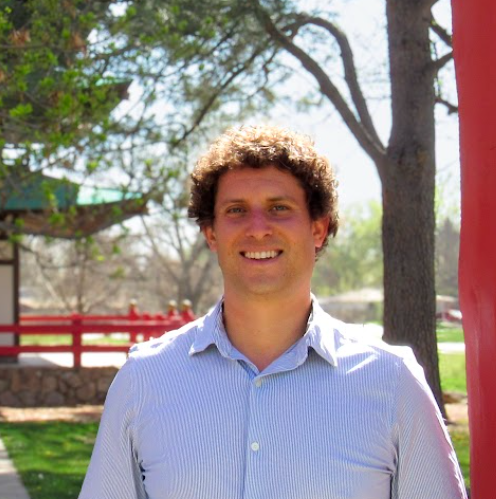
Matthew and his wife moved to Longmont in April 2021 and got married at Sandstone Ranch in 2022. They live in Southmoor Park with their dog and 4 chickens. Matthew is 34 years old and works as a technical manager on the US Cities & Communities team at Rocky Mountain Institute, a non-profit think and do tank focused on market-based solutions to advance the clean energy transition. In January, Matthew was appointed to fill a vacancy on City Council for Ward 2 and now chairs the Longmont Urban Renewal Authority. He also serves on Longmont’s Brownfield Advisory Committee and is on the board of the Colorado Agrivoltaic Learning Center.
Before City Council, Matthew served 2 years on the Longmont Planning & Zoning Commission. He previously worked for a small municipal consulting firm, Sustainable Strategies DC, where he helped more than 30 small municipalities apply for and secure over $15 million in grants for community and brownfields revitalization priorities. He also worked at the White House Council on Environmental Quality and Maryland Energy Administration. Matthew’s collaboration with cities began in College Park, Maryland, where he advised on transportation, public safety, and sustainability in the City of College Park and University of Maryland. He has a master’s in energy and environmental policy from the University of Maryland, College Park.
Matthew Popkin on the Issues
Click the categories below to expand the Q&A on the subject.
General Vision
If elected, what would be your top priority in office?
My top priority would be managing how and where Longmont grows by prioritizing sustainable redevelopment in our old industrial areas and ensuring we expand, support, and offer safe and convenient transportation options for people of all ages and backgrounds. My focus on urban renewal and infill redevelopment has been a widely popular cornerstone of not just this campaign but my service on City Council, as chair of the Longmont Urban Renewal Authority, on the Brownfields Advisory Committee, and on the Planning & Zoning Commission. In fact, no other candidate, current city councilmember, or past city councilmember has ever served in all 4 of those capacities. By reinvesting in our older industrial areas—from the Sugar Mill through Lower Downtown to the River District, we reactivate key sites, bring more housing and retail where we already have existing infrastructure, and increase foot traffic for local businesses. Moreover, we expand our tax base without increasing taxes or increasing our municipal footprint.
What is your plan for advocating Longmont’s business needs at the state and federal levels?
The City of Longmont does take positions and advocate at the state level, and I think it’s important to work more closely with the Chamber of Commerce to identify legislation that we can advocate for together. This February, as the new City Council liaison to the Colorado Municipal League, I got to see first-hand how key municipal groups advocate in Denver, and I personally spearheaded the City’s efforts to support and testify in favor of reforms to the Construction Defects Law and the on-bill financing seed funding legislation to make it more affordable to finance energy upgrades.
Professionally, I previously worked for 3.5 years as a consultant, grant writer, and registered lobbyist for small cities and towns. In this capacity, I helped cities and counties far smaller than Longmont secure over $15 million in federal and state funding for sustainability, economic development, trails and riverwalks, brownfields assessment and cleanup, and community infrastructure priorities. I did this by not only writing the grant, but being the strategic lobbying partner for multiple communities in Washington, DC during both the Obama Administration and Trump Administration. Longmont does not have a particularly active federal lobbying strategy, but if elected, I would want to ensure that we especially plan for this for Sugar Mill cleanup and revitalization efforts.
*What will you do to protect the council and staff from being distracted by issues that don’t fit within the city’s strategic plan?
As the new chair of the Urban Renewal Authority, I’ve already helped prompt staff to prioritize the most time-sensitive and near-term negotiations. Additionally, I think the City Council retreat is underutilized and should be more intentionally planned by staff and City Council together. This is a unique time to set the agenda strategically. While the Council’s primary job is to set the policy direction for the city, we also need to be much more intentional about the process—especially on topics that might balloon from increased time and attention. In the past year, I observed that City Council was not intentional about the minimum wage (until the fishbowl discussion), land swap, or sex offender housing issues—all of which dragged on extensively.
Minimum Wage
**Do you support setting a local minimum wage above the state requirement? If so, what rate do you believe is appropriate, and how do you anticipate it would affect local businesses? Given the pressure from county commissioners and special interest groups to accelerate minimum wage increases — and considering the reported business closures and job losses in cities like Denver, and Niwot — what would be your approach be on this issue?
I do not support a higher minimum wage than the state minimum wage at this time. When considering a local minimum wage increase, I believe it is necessary to consider local, regional, and state implications, especially when Colorado already has one of the top 10 highest minimum wages among states that is already tied to the CPI. Whether and at what level to implement a local minimum wage increase should factor in local economic conditions, macroeconomic supply chain considerations, overall employment rates, expected impacts on current employment levels, and other price/cost pressures. There are many unintended consequences that of a price floor policy in any industry, and considering Longmont’s economy is growing, Sundance is coming, and more than 90% of employees are paid above the minimum wage already, I would intend to track the market closely to see how our businesses and wage rates adjust. This also comes on the heels of Boulder County recently announcing it would be revisiting its minimum wage approach.
That said, I do understand why increasing the minimum wage has gained traction. When the costs of housing and other expenses increase substantially, affordability becomes key—for employers and employees. That’s why I’ll be focused on managing costs that are within the city’s purview, from permits to utilities, to ease the burden on workers, business owners, and families overall.
Environment & Sustainability
What are your plans/programs for balancing growth and environmental sustainability?
Co-locating residential, retail, and recreational areas with a range of mobility options reduces the need for people to get in a car and helps strengthen communities. Here’s how I would tangibly advance this vision:
- Formalize an “Urban Renewal Innovation Zone”: Prioritizing redevelopment along the river corridor, from the Fairgrounds through the River District and Lower Downtown to the Sugar Mill, creates a walkable, bikeable ~3 mile STEAM and Sugar Mill corridor already aligned with Longmont’s infrastructure jewel: the St. Vrain Greenway. In May, I secured unanimous City Council support to create an Urban Renewal Innovation Zone overlay, which will focus development downtown and make it easier to redevelop underutilized areas (which are primarily in this corridor) and attract mixed-use development. The City is already working to create the URIZ zone and I would work intently to ensure it is as effective as possible for the modern growth needs of Longmont.
- Reactivating Our Brownfields: Building on my response in question #1, cleaning up brownfields is intertwined with environmental sustainability. To safely reactivate these sites, the City and its partners will need to carefully remove longstanding contamination from previous industrial operations, structural decay, fires, vandalism, and other activities. This directly helps improve soil and water quality—and air quality if it reduces the likelihood of structural fires (i.e. burned down parts of Sugar Mill).
- Operationalizing TOD: Urban renewal efforts will also enable transit-oriented development (TOD) at the anticipated 1st and Main RTD transit station. Due to RTD timelines, the next council must bring a clear vision for the transit station, what type of housing and retail are located around it, and how well connected our trails, greenways, bike lanes, and transit service are at this location.
Enabling a Bikeable Paradise: With the growth of e-bikes, the incoming regional bikeshare that I advanced, and our greenways, Longmont could be a cyclist’s paradise. To do that, Longmont needs more protected bike lanes, well-planned bikeshare stations, and plentiful bike parking.
*Longmont is five years away from its 2030 goal of sourcing all electricity from carbon-free sources. However, with Platte River Power Authority planning to replace its coal-fired turbine with a natural gas unit, this goal will not be fully met. Projections suggest the cumulative cost to Longmont residents will be around $100 million by 2030 due to steeply rising electric rates (~$2,500/ household).
Given Longmont’s negligible contribution to global CO₂ emissions, and the fact that roughly half of the city’s electricity reportedly now comes from carbon-free sources, should the city reconsider its goal and recognize that the progress made so far represents its fair share, or should it stay committed to the original target, regardless of the financial cost?
Professionally, I help cities across the country embrace market-based strategies for a clean, prosperous energy future. I directly work with communities to plan for and procure renewable energy projects that are the ‘best value’ for achieving their goals. Ambitious renewable energy projects, when done well, can reduce air pollution, reduce the need for utility bill increases, and increase grid flexibility.
Longmont’s 2030 goal was established in a very different economic, policy, and technological context. In fact, PRPA did not even model for a 100% by 2030 pathway in its 2024 plan. I believe we should revisit the 100% renewable energy goal to reflect the realities of current pathways to 100%, not because I don’t think having aspirational targets is valuable, but so we can set reasonable expectations for ratepayers. This can also factor in what the current market will support, the impacts of PRPA joining the Southwest Power Pool, and priorities that enhance near-term resilience for our ratepayers and system. That said, even if we don’t achieve 100% renewable energy by exactly 2030, we should still be ambitious in our pursuits because a more renewable energy-powered grid paired with energy storage is both more flexible and less vulnerable to macroeconomic fuel price volatility, which helps Longmont better manage costs for residents and businesses.
I would prioritize energy efficiency and powering with strategic renewable energy technologies:
- Energy Efficiency: We need to greatly increase participation in PRPA’s Efficiency Works program. Regardless of fuel type, efficiency reduces pollution. Updating our building code in alignment with the Metro Regional Building Policy Cohort is critical. Moreover, this involves evolving our rate structures to align most efficiently with our grid needs and customer/ratepayer needs.
- Powering with Renewables: Due to recent federal changes, PRPA and LPC will have to be more strategic in adding renewables to our grid so as to not increase rates too heavily or risk eroding support for a renewable future. Prioritizing energy storage will be financially and environmentally responsible once the wind and solar tax credits sunset after 2027.
Lastly, it is worth noting our investments in a more efficient and electric power system keep dollars local; investments in fossil fuels send dollars outside of Longmont. In other words, the more we invest in a more electric, renewable, and flexible system, the more we invest in Longmont and keep costs within our control.
Housing Development
**How will you balance sustainable growth and affordability with concerns about increased density—such as traffic, noise, and strain on infrastructure—while also addressing homelessness and panhandling linked to mental health and substance use challenges?
In addition to my previous answers on urban renewal and brownfields reuse, most people agree that our old industrial sites are reasonable locations for higher density and mixed-use developments. My strategic focus on reactivating these areas enables us to reinvent ~400 acres of downtown Longmont, most of which is not in anyone’s backyard. This will preserve our city’s character and open spaces, reduce development pressures from existing neighborhoods, increase housing options for all residents, support our growing community of small businesses, and slow traffic growth.
In terms of housing and homelessness, we need to make sure we continue to support the city’s human services, housing authority, and non-profit partners providing critical mental health and substance use support. The city also needs to innovate with transitional housing, including ‘tiny home’ village opportunities for transitional and supportive housing to help residents who are homeless have more stable, healthier, and safer lives. This could involve collaborating with local partners like Veterans Community Project, Habitat for Humanity, HOPE, and Our Center.
Fiscal Responsibility
What strategies would you implement to increase city revenue and enhance local economic sustainability without burdening residents or relying heavily on federal and state funding?
I’ve previously discussed two strategies: increasing our tax base where we have existing infrastructure (urban renewal areas) and keeping dollars local in our energy system. Additionally, the more we prioritize redevelopment in our urban renewal areas, the more we can leverage tax increment financing to invest in site improvements that enhance the city’s tax base. This will activate new investments, economic activity, and sales and use taxes as well.
In both February and September, I led the push to annex 2 existing dispensaries already operating within Longmont boundaries but technically in County enclaves. As a result, the City has not been receiving tax revenue from these businesses despite these businesses benefiting from city infrastructure and public safety services. This also would allow all operating dispensaries within city boundaries to compete on a level playing field.
Advance Longmont
*What do you see as the key strengths of Advance Longmont 2.0, and what, if any, modifications would you propose? Additionally, what steps will you take to protect its integrity and promote its effective implementation?
Advance Longmont takes a holistic perspective on Longmont’s economic future—from infrastructure investments like Nextlight and downtown revitalization to quality of life. Building on my answers previously about managing growth and housing development, investing in our urban renewal areas, particularly the Sugar Mill, transit station area, and River District, will help enhance placemaking and pedestrian friendliness, which helps retain talent and support existing businesses. Ultimately, if done right, Longmont has the potential to reinvent our downtown and river corridor identity and become a regional destination and more connected community.
Arts Funding & Recreation
What is the city’s role to support and fund the arts, cultural programs, parks, recreation, and community spaces in Longmont?
Arts and recreation are integral to a healthy community and vibrant economy. Fortunately, Longmont has invested heavily in our parks and community spaces already, though these will be key components to effectively integrating urban renewal redevelopment. See response to Sugar Mill and brownfields question for more detail.
While Longmont already has wide range of cultural and art programming, I would love to see more intentional arts and music programming opportunities for the younger generations of Longmont. As our world becomes ever more digital, creating unique opportunities to collaborate across our community.
What role do you see the Sundance Film Festival playing in Longmont’s cultural and economic landscape, and how would you balance its benefits with residents’ concerns about congestion and affordability?
This is a unique moment for Longmon and how we prepare in the next 14 months will be critical. Between 2018 and 2025, Sundance has attracted between 72,000-125,000 people annually. And in the past two years alone, the festival generated $332M for Utah’s economy.
Sundance is a perfect opportunity to enhance the local experience and activate our economy during one of the historically slowest times of year. Many visitors won’t be coming from out of state, so this is a prime time to showcase our small businesses and independent restaurants for Sundance and future visits to Longmont. Imagine a ‘Winter ArtWalk’ and temporarily close Main Street for an evening or weekend to encourage window shopping and eating downtown. Other visitors will fly in—Park City’s nearby airport (HCR) saw approximately a 25% increase in flight traffic during Sundance. Modernizing Vance Brand Airport will enhance the quality of our aerial gateway and make Longmont even more welcoming. And Sundance is a perfect catalyst to help us finally invest in public signs and placemaking along our greenways, parks, and commercial areas to guide visitors around town and to key destinations—ultimately helping people and businesses throughout the year.
To do this right, the City must play a proactive role in preparing for both in-state and out-of-state visitors who will need to move around. This could bring tens of thousands of vehicles over 3 weeks—unless there are convenient, accessible, and comfortable alternatives. First, we need to work with RTD and/or Via (RIDE Longmont) to establish a bus to and from Denver International Airport that gets people to the heart of Longmont without needing a car. Then, we need to make it easy to get around Longmont without a car by increasing RIDE Longmont capacity or with the forthcoming bikeshare and to other key destinations like Boulder, Eldora, and Estes Park. All of these need to be convenient with a “Sundance Guest Pass”. (This will also mean being strategic about Longmont’s construction plans, including Hover/119 and the St. Vrain Greenway reconstruction. Coordinating construction around a new regional peak travel season will be key.)
Additionally, Longmont has been reluctant to enable more flexibility for short-term rentals, but Sundance will bring an influx of visitors, many of whom will be looking for flexible accommodations. We should revisit our licensing process and current restrictions—even if just for the winter holidays until February, and whether there are opportunities to capture additional revenue to invest in our infrastructure, public safety, roads, and parks.
We should not let Sundance ‘happen’ to Longmont. Instead, let’s proactively embrace the opportunities to make Sundance work for Longmont.
Civic Discourse & Engagement
What strategies would you implement to foster more respectful, productive discussions on local issues and encourage civil engagement while reducing vitriolic discourse?
Past and present city councils have underutilized Longmont Public Media. As the only member of City Council currently below the average age of Longmont, I’d like to personally embrace and experiment with more consistent interviews with leaders and residents across Longmont. I’d even consider co-hosting a new podcast that can help promote thoughtful discussions on complex local topics. Most of the challenges we face are not black and white solutions or simple answers. Embracing complexity and bringing more people into the conversation is critical.
Most importantly, modeling constructive and thoughtful discourse is essential. That starts—but does not end—at City Council meetings. Showing up prepared, asking thoughtful questions that help educate interested stakeholders, and explaining the “why” behind our votes on more topics is critical to a more informed, more thoughtful citizenry.
Business Startups, Costs, Commercial Development & Permitting
How would you address concerns over blighted or underutilized commercial areas?
One of the projects that the Longmont Urban Renewal Authority has been working on in 2025 has been redeveloping the old Wal-Mart property next to Hobby Lobby. The proposed 265-unit housing development will directly address extensive public safety calls for service and reactivate a site that has been abandoned for 14 years. This not only brings more housing, but helps neighboring businesses by removing blighted areas that attracted illegal activities and increasing foot traffic next to a wide array of businesses in and around the Village at the Peaks.
See other responses on General Vision and Housing that speak to my focus on Longmont’s urban renewal areas.
**What steps would you take to make Longmont a more competitive and business-friendly city, especially for startups and commercial development? Some have stated concerns that the planning and permitting process has become slow, complex, and costly — making it difficult for businesses to build and occupy space — how would you work to streamline these processes? Additionally, what strategies would you support to help keep commercial rents within reach for small businesses?
I have heard concerns about Longmont’s permitting process directly, through both the minimum wage fishbowl and private conversations with business owners. This is within the city’s control and should be an early priority for the next city council. Even if the goal is to make starting a business 10% easier, that would be a huge improvement.
Building on my response to question #5, I believe the Urban Renewal Innovation Zone (URIZ) that I’ve already started creating with city staff will be key to a more competitive and business-friendly city. While the initial focus will be streamlining our planning processes, permitting, utility easements, and construction in key industrial areas, my hope is that the URIZ will be successful and offer direct insights for how we can reform other planning, permitting, and economic development processes across the whole city.
*Downtown businesses are estimated to be about 80% locally owned and operated independent. What would you do to protect and support that character? What top goals would you prioritize to ensure downtown remains vibrant, accessible, and welcoming to local businesses and the community?
Sundance is a perfect catalyst to help us finally invest in public signs and placemaking along our greenways, parks, and commercial areas to guide visitors around town and to key destinations—ultimately helping people and businesses throughout the year. This is also an opportunity to consider enhancing our downtown incentive programs, including reactivating the Facade Improvement Program and be extended to fund improvements and upgrades internally as well.
Lastly, all businesses use energy and water, but sometimes upgrading to the most efficient and modern sinks, toilets, and appliances is not within budget. This is an opportunity to help businesses maintain their character while ensuring they are vibrant and welcoming, and I would like to examine creative ways—such as low-interest financing or on-bill financing— to restructure, support, and pair LDDA programs with city and utility programs.
Social Issues & Equity
*Are there or could there be local initiatives you would support to ensure a strong safety net for Longmont residents who may be disproportionately affected by broader policy changes—such as immigrants, refugees, low-income families, and those facing barriers to healthcare?
The City of Longmont funds numerous programs that support more vulnerable community members. What I consistently here is that there is not enough funding and that funding is spread too thin, specifically on mental health, food assistance, and housing assistance services.
In addition, while we do have utility assistance programs like CARES, I want to specifically create a utility cost savings task force for renters to evaluate how we can work with landlords and renters to address barriers to more comfortable, safe, affordable, and efficient living in rental properties. This would evaluate options to reduce costs for energy, water, internet, and sanitation, specifically trying to address split incentive situations where the landlord is not incentivized to make efficiency and appliance improvements but the tenant pays the bills.
RTD & Public Transit
Should Longmont explore new public transit options such as Front Range Passenger Rail? If so, what are they?
Yes, both the Front Range Passenger Rail and Bus Rapid Transit have the potential to better connect the region, create new opportunities for Longmont, and meaningfully reduce the growth in traffic. I would actively support current efforts with CDOT, RTD, and Front Range Passenger Rail to finally connect passenger rail to Downtown Longmont by 2029 after decades of Longmont residents paying RTD for promised light rail lines and getting nothing for it. This will help concentrate new development in lower downtown where we already have existing infrastructure to support people, bikes, and vehicles. If current efforts do not succeed, I would push for Longmont to demand the Governor’s office hold RTD accountable for this breach in public trust and require that RTD re-invest Longmont’s FasTracks contributions in other critical transit infrastructure.
Additionally, I will prioritize creating bus service from Longmont to DIA—like the AB1 from Boulder to DIA. To do this I would work with RTD, Via (RIDE Longmont partner), or another provider to establish a dedicated bus line to Denver International Airport by reevaluating current bus routes and needs within Longmont and collaborating with interested neighboring cities to offer affordable, convenient access to DIA. This also directly relates to how we can make it more affordable to travel for work, pleasure, or other needs and how we can prepare for all the new Sundance Film Festival visitors while reducing increases in traffic and air pollution. This is a common-sense and highly desirable bus route that supports all residents, employers and employees, friends, family, and other visitors.
I didn’t own a car until I was 28. I understand how important quality public transit can be, but if the transit and transit stations are not safe, comfortable, and convenient, most people will not consider it to be a viable option.
Business Acumen
Have you signed the front of a paycheck?
Yes, for digital payments to employees and independent contractors. No, to a physical paycheck.
What real-world business experience do you bring, and how would that experience affect your approach to budgeting, hiring, or marketing to help shape city policy?
From 2016-2020, I served as the president of the Metropolitan Washington Soccer Referees Association (MWSRA), a non-profit corporation providing qualified soccer referees to soccer leagues and schools across the Maryland and DC region. The president is the highest officer and serves functionally as the organization’s executive director. As president, I managed an 11-member board of directors and 7 paid staff, led communications and marketing strategy, and led the contract negotiations and client relationships—ultimately responsible for the part-time and full-time livelihoods of ~500 soccer referees (independent contractors). My primary responsibility was to increase referee fees—aka revenue— for referees and the organization. Long-time board members wanted to leverage the regional referee shortage to ask for higher fees, but my strategy was to align referee quality—our services—with increased revenue so that our clients were investing in our referees, not just paying them. I restructured our contracts, operations, and training programs accordingly, and our clients recognized this.
I measured success in three ways. First, I was not only the youngest elected president in MWSRA’s 60-year history, but I was also re-elected. Second, I led the negotiations and renegotiations for over 15 league contracts, including 6 new clients altogether. Third, under my management, the organization surpassed and sustained $1 million in annual gross revenue for the first time in at least 30 years with a net positive operating budget all 4 years I was president—even though we had more staff and more paid mentors than ever before.
From this experience, I learned that aligning incentives—quality of services and fee revenue—helps increase business and creates a shared organizational mission. I also learned that retaining strong talent is essential, and that gaps in talent, when not addressed quickly, can create real problems and gaps in service.
Sugarmill & Brownfield Developments
Do you have a vision for redeveloping the historic Sugarmill site? If so, how would you address environmental concerns, sustainable infrastructure and engage the community and developers to benefit Longmont as a whole?
We get one chance to reinvent the Great Western Sugar Mill. When I think about the optimal vision of the Sugar Mill’s future, I think about San Antonio’s Pearl District—formerly the home to Pearl Brewery’s bottle manufacturing facility now reinvented and reactivated as a hub of commercial, retail, housing, tourism, education, and yes—public spaces for performance, outdoor films, and recreation and intentional placemaking that embraces the history of the Sugar Mill and the character of Longmont. It’s both Longmont’s Eastern Gateway and a regional destination that retains our industrial character (and some of the current structures) and embraces one of the best views of the Rocky Mountains from Longmont.
The site will likely require over $20M in cleanup, demolition (hopefully only some of the buildings), and site preparation with modern infrastructure and utilities. This is not a pipe dream. In fact, this is what motivated me to get involved in the Longmont Planning & Zoning Commission, Brownfields Advisory Committee, City Council, and offer my time as chair of the Longmont Urban Renewal Authority (LURA). LURA specifically brings redevelopment tools, like tax increment financing (TIF) and condemnation authority to the table, if needed. It is also expected that the US EPA will soon open up the next round of brownfields cleanup grants, which offers Longmont the opportunity to potentially secure $4M in federal funding for these exact needs. In addition to funding, we will need to robust community input. As LURA chair, I’ve already started educating groups around Longmont about what we’re working on, including the Chamber’s Public Policy Committee. Bringing these groups together and other residents to help shape the site’s master plan will be critical.
This will not be easy, but ambitious, transformational projects rarely are—and I bring extensive professional expertise to Longmont on brownfields reuse and revitalization. Beyond my local credentials, I have directly helped cities reactivate brownfields, closed landfills, and other challenging sites for most of my professional career. This includes successfully writing and lobbying for 8 federal brownfields and economic assistance grants totalling approximately $9 million for assessment, cleanup, and reuse planning in communities from Weirton, WV to Norfolk, VA to Green Bay, WI. This funding has leveraged hundreds of millions more in private capital investment and new jobs, from Weirton’s new Form Energy manufacturing facility to Green Bay’s Shipyard Revitalization project. Additionally, I’ve created and led trainings on leveraging funding for brownfields revitalization and been a featured speaker and panelist at 4 National Brownfield Conferences and multiple state and regional brownfield conferences.
Are there specific commercial areas in Longmont that you would prioritize for redevelopment or improvement? If so, which areas, and what strategies would you use to enhance them?
I would prioritize the Sugar Mill, 1st and Main Transit Station, and the River District for redevelopment. We have ~400 acres split between these 3 areas along our river corridor and greenway that would make other cities jealous. 400 acres that will shape Longmont for generations.
My answer here is not what I would do but what I am already doing. Through both my roles as chair of the Longmont Urban Renewal Authority, a member of City Council, and a member of the Brownfield Advisory Committee, I’m actively helping drive and coordinate Longmont’s urban renewal and reinvestment strategy.
This includes creating the Urban Renewal Innovation Zone (as already discussed in questions #5 and #14) to streamline redevelopment and attract innovative developers hungry for a career-defining project and supporting negotiations with property owners and Boulder County. Additionally, to make tax increment financing go as far as possible, LURA has established the Southeast Urban Renewal Area. When the Sugar Mill is annexed into Longmont, we can leverage already accrued TIF in the Southeast Urban Renewal Area from projects like the 2nd and Martin apartments to help cleanup the Sugar Mill.
Lastly, for the 1st and Main Transit station, it will be integral to coordinate with LDDA and the Chamber to ensure a smooth, integrated redevelopment that complements existing downtown businesses and infrastructure and filling strategic residential and commercial gaps.
Vance Brand Airport
What role does Longmont’s Vance Brand Airport play in supporting the economic growth and transportation needs of local businesses and residents?
Our airport lacks a sustainable financial model and has outdated infrastructure and services. This impacts quality of life for residents (including pilots), our environment, and our economic potential. With Sundance coming, this is also the time to ensure this is a modern gateway to Longmont – a part of our community that is not just a facility in our community. I envision the airport as stronger economic and community asset:
- Reimagine the Airport as a Community Amenity for Pilots and Non-Pilots Alike: Modern general aviation airports have restaurants, lounges, and meeting spaces that are destinations in their own right. Longmont does not have any of these. At the same time, many in the community want another recreation center, library expansion, and other community gathering spaces. These are not mutually exclusive and would integrate the airport and other community facilities to serve all of Longmont, potential sharing capital retrofit costs across departments.
- Embrace Electric Aviation & Unleaded Fuels: Support the rapid innovation in cleaner and quieter electric aviation by prioritizing investments in electric upgrades with Longmont Power & Communications and collaborating with other Front Range airports on coordinated deployment of compatible charging infrastructure. Owning and operating our own electric utility is a huge asset here. If you build it, they will come. We also need to aggressively pursue grants and FAA support for unleaded fuels, which is already an FAA stated priority by 2030.
- Refocus Vance Brand Airport as a Local Gateway and Innovation Hub: Our airport master plan and airport infrastructure is vastly outdated. We need a new fixed-based operator (FBO) that is a modern gateway for Longmont. We also need to invest in infrastructure that enables sustainable and electric aviation innovation that enhances quality of life in our community and attracts the next generation of aviation innovation companies. We run our own electric utility and Nextlight and have local opportunities with the St. Vrain Innovation Center. This is in our wheelhouse and merits intentional focus. Otherwise, we let opportunities fly right over us.
Envision Longmont calls for development, including residential, near the Vance Brand yet some airport stakeholders have expressed concern about noise complaints and safety. What’s your philosophy on land use planning in that area to balance the City’s housing needs with concerns about airport operations?
Growing toward the airport has inherently led to more conflict. This is not rocket science, nor is prioritizing our growth in our urban renewal areas where we have no shortage of opportunities to invest in housing. See previous answers on urban renewal and brownfields redevelopment.
Going forward, as Envision Longmont gets re-envisioned in the coming years, I would like to see the comprehensive planning, urban renewal planning, airport master planning, and sustainability planning processes overlap more intentionally. Process, who’s involved, and what’s included are critical to creating the next generation of our comprehensive plan.
*What is your position on allowing housing development near the Longmont airport, and how should the city manage potential conflicts between aviation activity and residential growth?
I would not prioritize this. See previous answer for more details.
Tourism
In 2023, nearly 600,000 visitors generated over $277 million in economic impact for Longmont and supported more than 3,000 local jobs — outcomes made possible through strategic destination marketing and management. What is your perspective on the role of tourism and continued investment in destination marketing to benefit both residents and visitors?
How would you work to align City priorities with tourism and destination goals—particularly through collaboration with nonprofit partners like Visit Longmont? What is your vision for the future of Longmont’s tourism economy and its broader contribution to the community?
Throughout this past year, I was a consistent supporter of the newly proposed Tourism Improvement District. This is something that Longmont hotels were asking for, directly impacts their businesses and customers, and ultimately helps strengthen Longmont’s tourism marketing and services.
See response to the question [above] regarding Sundance Film Festival. (I know that’s not all of Longmont’s tourism, but it will be a critical opportunity, if we plan appropriately.)
Childcare
Childcare costs in Longmont and Boulder County are among the highest in the state of Colorado. What could you do as a councilor/mayor to help bring down the costs of childcare for families while helping childcare providers earn more thriving wages?
Colorado is ranked 5th most expensive in the US for early childhood education. We can make it easier for new providers to operate or expand operations in Longmont by:
- Updating Our Zoning Laws: There are limitations on where educational facilities are allowed in Longmont. Revisiting this can allow early childhood education facilities in most residential, mixed-use, and employment zones to increase the supply of local childcare options (as of August 12, 2025, Matthew secured City Council support to allow childcare and daycare facilities in most zones);
- Considering Conditions with Future Annexations: Including early childhood education facility space as a condition in future annexation agreements for new development, where allowed; and
- Making It Easier to Build: Offering streamlined development reviews and fee waivers for developers who partner with early childhood education providers.
Teresa Simpkins
Seat: Ward II
Campaign Website: teresa4longmont.com
Hello! I’m running for City Council because I bring a wealth of experience and a public servant mindset to the creation of public policy. I offer balanced, practical, and collaborative leadership focused on controlled, coordinated growth that preserves the spirit of Longmont. Professionally, I’ve worked for more than 25 years at all levels of government, including time as a Town Clerk in Nederland, a Boulder County Attorney, and a marketing specialist for the CIty of Longmont. I obtained my undergraduate degree from Penn State and my law degree from Georgetown. I lived in several East Coast states, as well as in England, before settling in Boulder County in 1997 and moving to Longmont in 2013. I’m married to a wonderful man and have seven kids that call me “mom” – two that I gave birth to, three that I acquired in a previous relationship, and two foster children. I hope to give Longmont’s Ward 2 the kind of thoughtful, genuine representative we deserve.
Teresa Simpkins on the Issues
Click the categories below to expand the Q&A on the subject.
General Vision
If elected, what would be your top priority in office?
My top priority will be to listen to and actively represent the concerns of all the residents of Ward 2 and beyond. When constituents ask how I will vote on things, I will not equivocate on my positions or give myself an “out” with “what if” or hypothetical situations. And that pledge isn’t hard to keep because all of my positions are based on deep conversations with Ward 2 residents, not on my personal preferences or “day job” advocacy. I have spent 25+ years working in government and for government-associated nonprofits; I intend to incorporate the traits of the most effective elected officials I have worked with. But more importantly, I aim to bring a sense of public service back to Longmont’s political arena and remind our elected officials that we are here to serve the people, not our own agendas or professional goals.
Based on those conversations with Ward 2 constituents, I will focus new high-density housing in existing transportation corridors and near existing services and amenities, such as the St. Vrain River and the Sugar Mill site. In established neighborhoods, I will argue aggressively for in-fill development that reflects the character and density of the existing neighborhood and that fills a specific housing need we have, such as senior housing or affordable housing for purchase. We don’t need more apartments on the west side of Ward 2; those who need affordable housing don’t need yearly rent increases; they need downpayment assistance and access to mortgages designed for people with poor or nonexistent credit scores. Oftentimes, these individuals and families have enough income to pay for a mortgage, but their credit score has tanked due to medical bills or previous job loss.
Again, aligned to my Ward 2 neighbors, I will never vote to develop or change Open Space because I believe that is a question best put to all the people in Longmont who have paid Open Space taxes for decades. And I won’t terminate conservation easements to enrich a developer. Our open and public lands are one of the main reasons many of us settled in Ward 2.
What is your plan for advocating Longmont’s business needs at the state and federal levels?
The City Council needs to proactively and aggressively inform and educate state and federal officials around how their statutes and policies can support or undermine local businesses. Small businesses in particular are really feeling the burden of recent state budget decisions, and with the current economic uncertainty and decline in consumer spending, they need our support more than ever. It will be imperative for the next Council to take better care of our small businesses lest we risk losing them in large numbers. Also, oftentimes policymakers at the state and federal level, who are removed from the day-to-day impact of their decisions, will create rules or laws that have unintended negative consequences when implemented. It is our job to spot those consequences and raise them to the decision makers as early as possible in the process to try and minimize those effects on local businesses.
*What will you do to protect the council and staff from being distracted by issues that don’t fit within the city’s strategic plan?
Governing necessarily entails confronting emerging issues that we hadn’t planned for, and the best leaders are the ones who are nimble and able to emerge from tunnel vision around their own projects to critically and thoughtfully assess new problems as they arise. Refusing to address issues as they come up simply because they weren’t part of the original plan only kicks the can down the road for future leaders to deal with and frustrates the constituents impacted now. Having said that, I don’t think that significant Council time should be devoted to issues or problems that are outside the scope of Council’s ability to solve. Resources, including meeting time and staff time, are finite and need to be deployed to best solve the problems and promote the plans that directly impact city residents and are under the Council’s control. Time spent grandstanding on issues beyond our control is wasteful and self-serving, and I will be quick to point it out when I see it and encourage my counterparts to return to the issues around which we can have meaningful impact.
Minimum Wage
**Do you support setting a local minimum wage above the state requirement? If so, what rate do you believe is appropriate, and how do you anticipate it would affect local businesses? Given the pressure from county commissioners and special interest groups to accelerate minimum wage increases — and considering the reported business closures and job losses in cities like Denver, and Niwot — what would be your approach be on this issue?
I am not opposed in theory to a higher minimum wage, but I don’t think that the current economic uncertainties are compatible with that move. Most of our businesses already pay above the Boulder County minimum wage because they have to in order to attract and retain good workers. But I believe that an overall minimum wage hike right now would result in us losing many of our small businesses, who are already severely hurting from drastic increases in goods and food and consistent increases in City fees. Small business owners have told me they are suffering a “slow death by a million papercuts.” With neighboring towns like Frederick and Firestone offering huge monetary incentives to attract small businesses to relocate or start up in their towns, the risk of our small businesses relocating in order to stay afloat is very real.
I believe that the primary wage issue facing our neighbors who are struggling financially is the need for more high-wage employers and “primary employers” – those large companies that employ a lot of people and whose salaries help set the standard of living in a community. Attracting and keeping higher-wage employers – be they manufacturing, pharmaceutical, or high tech – is the secret to a thriving community. I would place a priority on driving the City’s efforts to attract those employers. And those employers are drawn to communities with charming neighborhoods and robust small businesses and restaurants, so we must support our small businesses, too. They provide the character and sense of local community that gives small towns and cities their identity. If we have a strong business community, our workers will enjoy higher wages overall – far above any minimum wage we set.
Environment & Sustainability
What are your plans/programs for balancing growth and environmental sustainability?
I spoke to this a bit in my answer to Question 1, but I will elaborate further here. I strenuously believe in preserving our Open Space, conserved lands, and riparian corridors. Our easy access to natural spaces is a common reason many of us moved to Ward 2 and Longmont generally. I would carefully examine proposed developments for their negative impacts on our natural spaces. For example, the proposed mixed-use riverwalk along the existing St. Vrain Greenway through downtown is a phenomenal idea and made more possible by the extensive flood mitigation efforts the city made in the decade after the 2013 flood. However, I would work hard to find a plan that would incorporate our riparian areas rather than concreting them over entirely.
Growth is absolutely necessary, but how and where we grow should be up to us, not developers or pro-growth advocates. We have plenty of areas in which to build the necessary housing we need for segments of Longmonters not currently being adequately served. We don’t need to build high density projects in the middle of existing low-density neighborhoods, and we absolutely don’t need to build on Open Space or conservation easement.
In 1982, the Kanemoto family granted approximately 29 acres of land adjacent to southwest Longmont along Airport Road to Boulder County for a mere $10 in exchange for a conservation easement on the land. Now, Boulder County would like to terminate the conservation easement in exchange for $2.3 million from a local developer who has proposed 400+ high-density homes on the land. This development can only happen if the City of Longmont agrees to annex the property, thereby terminating the conservation easement and supplying the necessary utilities and other infrastructure to the property. My opponent’s opposition to annexing, terminating the Kanemoto Conservation Easement, and building on it is based entirely on its existing zoning designation as agricultural. But that zoning can be changed by a vote of City Council, which would presumably unburden him of his reluctance to permit the housing development, and he could happily greenlight the development. I do not believe that a simple zoning change should eliminate a conservation easement meant to persist in perpetuity. My commitment to preserving the Kanemoto Conservation Easement as originally guaranteed to the Kanemoto family is based on my belief that Boulder County and the City of Longmont should work to preserve our natural and agricultural lands, not build upon them, and especially not break a promise to the earlier landowner and our local community.
Similarly, I am adamantly opposed to the Distel-Tull Open Space land swap. While I can agree and recognize that a local composting facility would be an asset, that the Distel land designated for Open Space is well-suited to a light industrial use, and the Tull space would provide more open land, I am still opposed to it and for one simple reason: The Distel property was presumably purchased with Open Space funds generated from the taxes that Boulder County residents have paid for decades. When the land was designated for Open Space, rather than simply zoned something else, the government made a promise to the people. The City of Longmont and Boulder County are only stewards of that land – the land itself belongs to the people. We live in a time of plummeting trust in government institutions and elected officials; the very last thing we need to do is break that promise. I understand that the City is within its legal rights to make the land swap, but just because you can do it doesn’t mean you should to. The City Council could have very easily chosen to put this decision to the voters. It would have cost the City almost nothing and respected the promise made years ago. But they didn’t, and since they didn’t do it the right way, they shouldn’t do it at all.
*Longmont is five years away from its 2030 goal of sourcing all electricity from carbon-free sources. However, with Platte River Power Authority planning to replace its coal-fired turbine with a natural gas unit, this goal will not be fully met. Projections suggest the cumulative cost to Longmont residents will be around $100 million by 2030 due to steeply rising electric rates (~$2,500/ household).
Given Longmont’s negligible contribution to global CO₂ emissions, and the fact that roughly half of the city’s electricity reportedly now comes from carbon-free sources, should the city reconsider its goal and recognize that the progress made so far represents its fair share, or should it stay committed to the original target, regardless of the financial cost?
I am personally in favor of electrification – by way of full disclosure, my husband and I own an electric car and two e-bikes – and I support our ambitious goals. However, these goals were set before COVID arrived and changed everything. During the two plus years of pandemic, everyone, including the City, did their best to simply stay afloat. The pandemic drove up prices on nearly everything, and they never came down. Consumers, businesses, and the City budget have all felt those long-term effects, and many priorities, including our push for electrification, have been slowed. Given the times we have lived through in the last 5.5 years, I believe our progress toward this goal is commendable. We are no longer living in the times we were when these goals were made, and we have to account for life as it is now. I do not think that we should unduly burden our residents now simply to meet a goal from another time. I believe we need to continue to push forward to our goal but also account for the challenges and realities of our current situation.
Housing Development
I think these are two separate issues, so I’ll address them separately. I support a coordinated growth approach and strongly believe that we need to build housing to answer specific needs in our community and to serve people at various stages in life. That looks like:
- Focus our high-density housing on areas along existing transportation areas and near existing amenities and services. The people typically desiring high-density living also want to be near those things. They are often young and willing and able to walk, use public transportation or bike, and support local restaurants and businesses.
- Build affordable housing options that are deed-restricted, income-based, and allow for residents to have housing cost stability while they save money for a downpayment on a home they can purchase, which is often impossible when people get stuck on the rental increase hamster wheel.
- Create additional pathways for home ownership for low-income individuals and families, especially those who earn too much to qualify for public housing vouchers but don’t have enough wealth or income to obtain a typical mortgage. Options include:
- Expanding funding for the City’s downpayment assistance program;
- Identifying and partnering with mortgage lenders accustomed to working with people who don’t have high credit ratings but do have stable incomes currently; and
- Additional City-built, quality affordable housing projects like True North.
- Build more affordable housing designed and designated for seniors and people with less mobility due to age, illness, or disability.
I also think that we need to consider carefully the impact of new developments on infrastructure, traffic, noise, and neighborhood character, and we need to stop relying on standards and ignoring input from the community. Ward 2 residents don’t want to be told that the roads on the west side of the ward aren’t more congested now than they were a few years ago; their experience on their roadways every single day tells a different story, and we need to start listening.
Homelessness is a complicated problem and can’t be addressed by a single solution. I really support and value the Veterans Community Project (VCP) model and would like to see that approach replicated in other areas. VCP targets a particular segment of people experiencing homelessness, designs tiny homes specifically to that groups needs and challenges, and offers wraparound supportive services to promote successful transitions to stable housing. Veterans have specific needs, but so do young families living in their cars, people with mental health challenges, and those struggling with substance use disorder. I support Longmont’s active participation in the Boulder County Coordinated Entry Program and would eagerly support efforts to partner with nonprofits who have creative, targeted solutions like VCP.
Fiscal Responsibility
What strategies would you implement to increase city revenue and enhance local economic sustainability without burdening residents or relying heavily on federal and state funding?
I’ve addressed some of this in Question 2 and on the minimum wage question, but I will add some additional points here.
The best way to generate revenue without burdening residents or local small businesses is create new revenue streams and use the new revenue to fund city services and decrease cumbersome fees on residents and businesses. Creating new revenue through sales, use, and other taxes and fees is best accomplished by attracting new businesses to town. To do that, we need to make Longmont more attractive to those businesses, primarily by making it easier for businesses to open and operate in our community.
The City of Longmont has long had a policy of using federal funding for special projects only, not for ongoing administrative or operational expenses. Thanks to this, we are far more insulated from the uncertainty and controls of federal funding streams than many of our neighbors. However, to free City funds for creative incentives to attract new businesses, I would strongly advocate for temporarily tapping state and federal funding opportunities in a controlled manner and with the stated commitment that once we’d managed to build out our business community, we would again retreat from reliance on federal funding streams for on-going operations.
Advance Longmont
*What do you see as the key strengths of Advance Longmont 2.0, and what, if any, modifications would you propose? Additionally, what steps will you take to protect its integrity and promote its effective implementation?
I am a fan of the Advance Longmont 2.0 plan, in large part because I think it recognizes and incorporates some of Longmont’s unique assets and ongoing challenges. I appreciate that it values and promotes inclusivity, focuses on large and small businesses, and understands and advances a collaborative approach to solving challenges. As a guiding document, Advance Longmont 2.0 should and does leave a lot of room for flexibility and sets goals that are reasonable and attainable. I especially value the construction of a steering committee that represents multiple views of the city.
I am also a firm supporter of the Longmont Economic Development Partnership because I believe, as stated elsewhere in my answers, that primary businesses establish and drive that standard of living in a community, and that small businesses contribute to a city’s identity and character. LEDP also takes a holistic view of our business community, which helps us drive in all directions simultaneously.
Arts Funding & Recreation
What is the city’s role to support and fund the arts, cultural programs, parks, recreation, and community spaces in Longmont?
In my campaign, I talk a lot about the “spirit of Longmont,” and part of what I mean is our community identity and our ability to have fun together, learn together, and build our community together. The programs mentioned in this question are often seen as “nice-to-haves” but their impact is much greater than simple “amenities.” The arts, recreation opportunities, and cultural programs are the glue that hold a community together and forge its identity. Other things our city does – paving roads, policing crime, issuing building permits, etc – are the framework of our city, but they don’t define what makes us different from other places. Our parks, trails, cultural celebrations, neighborhood character, art in public places, museum, and library – those are the things from which we derive a sense of what Longmont is about and what our values are. So, I believe it is vital that the City continue to invest in those “nice-to-haves” even, or maybe especially, in times of economic and political strife.
What role do you see the Sundance Film Festival playing in Longmont’s cultural and economic landscape, and how would you balance its benefits with residents’ concerns about congestion and affordability?
Having lived and worked in municipalities that hosted events that completely dominated their communities, my experience tells me that the impact of the Sundance Film Festival will be powerful and temporary. The economic value of the 11-day festival will far outweigh the inconveniences we’ll endure as residents. The State of Colorado provided $34 million in incentives to bring the festival to Boulder, and the City of Boulder and local organizations pledged in-kind assistance packages of nearly $2.5 million per year, plus necessary infrastructure upgrades. Longmont will make infrastructure improvements to support the festival costing only a fraction of that but will likely receive a healthy share of the expected $132 million generated by the festival. Additionally, the tourism brought to Longmont will allow us to showcase our city’s charm, natural beauty, and wonderful community. That visibility is invaluable as we try to entice new businesses. And, with some slight modifications to our short-term rental regulations, local residents could avoid the congestion entirely and generate income by leaving town and renting their homes to festival attendees.
Civic Discourse & Engagement
What strategies would you implement to foster more respectful, productive discussions on local issues and encourage civil engagement while reducing vitriolic discourse?
This has been a huge focus of my campaign. There is more nastiness in local politics than most people realize, and when I decided to run, I pledged to myself and my supporters that I wouldn’t contribute to that. When other candidates or their supporters have called Longmont residents derogatory names for not supporting their positions, I have publicly called them out on their behavior and informed them that I will only engage in productive, respectful conversations that don’t involve name-calling.
I also made a commitment to the people of Ward 2 that I would represent everyone in the ward and Longmont, regardless of political affiliation or alignment to my personal beliefs. That commitment has earned me, a lifelong Democrat, an endorsement from the Boulder County Republicans that I neither sought out or was informed of until after it was issued. As a public servant, it isn’t my job to tell people what to think or believe in; it’s my job to find areas of common ground among my constituents, build consensus around that those areas of agreement, and represent those needs, desires, and values to the best of my ability. I have a reputation for asking the hard questions, pointing out the uncomfortable truths, and treating everyone with respect, and I will expect the same from those I work with and encounter during my period of service.
Our country is devastatingly broken. It is incumbent upon our elected officials to promote healing, respectful dialogue, and productive outcomes for our whole community.
Business Startups, Costs, Commercial Development & Permitting
How would you address concerns over blighted or underutilized commercial areas?
We have to be more creative with how we think about the underutilized commercial areas in our city. We need to accept and embrace the new realities of retail commerce and commercial office space and lean into the opportunities those new realities create. We own our own electric utility, have some of the country’s fastest internet, and have always been an innovative city. These properties provide us the opportunity to become a significant incubator for new technology and small businesses, but we have to create the correct incentives and platforms to attract those new businesses. Additionally, our city has significant housing needs, such as affordable housing, senior housing, and housing near existing public and multi-modal transportation corridors. We need to thoughtfully consider how those spaces might address some of those needs, partner with developers willing to try new approaches, and identify where we can streamline permitting and review processes to simplify the creation of those homes and reduce the fees that drive up home costs.
**What steps would you take to make Longmont a more competitive and business-friendly city, especially for startups and commercial development? Some have stated concerns that the planning and permitting process has become slow, complex, and costly — making it difficult for businesses to build and occupy space — how would you work to streamline these processes? Additionally, what strategies would you support to help keep commercial rents within reach for small businesses?
I covered some of these questions earlier but will add a bit here for the specifics in these questions.
I believe that we have scapegoated our local businesses to generate more and more revenue for the City. It is certainly true that the City Council frequently opts to burden our small businesses with new or increased fees rather than spreading them out more evenly across Longmont. I think we need to dial back those fees to better support our existing small businesses and attract more. In previous answers, I detailed my approach to do so.
I also will add that we have some significant competitive advantages to attract startups and innovative businesses, including owning our electric utility and having some of the very fastest internet in the country. Those are two elements in extremely high demand for AI server centers. We have underutilized light industrial areas and empty warehouses that would be ideal for those businesses. However, we’d also have to be cognizant and guard against potential negative consequences of these businesses, such as overtaxing our electrical grid or creating potentially harmful EMT saturation. We must choose our business partners carefully and balance the need for new revenue with impacts on current residents and businesses.
*Downtown businesses are estimated to be about 80% locally owned and operated independent. What would you do to protect and support that character? What top goals would you prioritize to ensure downtown remains vibrant, accessible, and welcoming to local businesses and the community?
I’ve answered this question in other answers. Please refer to those above.
Social Issues & Equity
*Are there or could there be local initiatives you would support to ensure a strong safety net for Longmont residents who may be disproportionately affected by broader policy changes—such as immigrants, refugees, low-income families, and those facing barriers to healthcare?
I think the best thing we can do as community in these times of social and economic inequity is stand tall and firm in our protection of those who are most threatened. That includes identifying and financially supporting successful programs that drive positive outcomes for the vulnerable segments of our community. Each of the groups mentioned above has specific and often different needs – as a City, our job is to direct those with needs to services and programs that can answer those needs. Some of those will be city-funded, some will be nonprofits, and some may be faith-based groups. The magnitude of the problems we face at the moment demand a whole menu of solutions. There is no silver bullet for our problems, but working together with our community partners, we can absolutely help ensure that no one is left behind.
RTD & Public Transit
Should Longmont explore new public transit options such as Front Range Passenger Rail? If so, what are they?
I think that Longmont should focus on the public transit solutions that have already shown success in our community, like RIDE Longmont, which provides on-demand ride service to any Longmont resident for $2 and $1 for students, seniors, and those with disabilities. It’s an innovative solution with proven rider usage. That success is key, because the hardest aspect of public transit is getting people to actually use it. I am interested in successful solutions, not those that just sound good in theory.
The Front Range Passenger Rail project has a long history of broken promises by RTD, and that trend continued when RTD recently announced a delay in getting the FasTrack system to Longmont. Now we are told that the rail program won’t be completed until 2034, at a cost of $650 million. However, I’m highly skeptical that the rail will ever be delivered, because RTD also announced an adjusted rider estimate of only 1,100 riders per day. At that rate, it would cost $590,000 per rider to build out FasTracks as promised, not including ongoing maintenance. I’ve worked in government a long time, and that sounds to me very much like the beginning of a justification to not complete the project. Longmont residents have paid millions of dollars in taxes to fund FasTracks across the Front Range and haven’t seen a single benefit to our community. To the extent possible, I would work for an accounting of how our money was spent and a commitment that it will be refunded in full if we are not provided the promised services.
Business Acumen
Have you signed the front of a paycheck?
I have owned a couple of small businesses, but both had only me as a paid employee. While serving as Town Clerk, I signed paychecks for town employees in the absence of the Town Treasurer.
What real-world business experience do you bring, and how would that experience affect your approach to budgeting, hiring, or marketing to help shape city policy?
I have owned two small businesses, but neither were large enough to have a complex budget or to hire others. However, in my 25 years in government, I have worked on countless federal, state, and local budgets and sat through many budget hearings and deliberations, providing me with a solid foundation of how public organizations have to weigh their priorities and maximize their resources. I have also served on numerous hiring committees during decades in government and with nonprofits, as well as during my 3.5 years with my current private sector company. Finally, I spent almost 10 years working in marketing and communications for the cities of Longmont and Westminster, so I have a unique understanding of the importance of marketing for the city and how to most effectively accomplish it. Specifically, during my time at Longmont, I acquired considerable knowledge of how to market to and engage hard-to-reach segments of our community, like our primary Spanish speakers.
Sugarmill & Brownfield Developments
Do you have a vision for redeveloping the historic Sugarmill site? If so, how would you address environmental concerns, sustainable infrastructure and engage the community and developers to benefit Longmont as a whole?
My opponent and I strongly agree on the wonderful possibilities available to the City at the Sugar Mill and other brownfield sites, and I wholeheartedly back those developments without reservation. What my opponent fails to recognize is that development at the Sugar Mill and lower downtown is not his new idea; it has been excitedly discussed since before I joined the City right after the 2013 flood. Having only lived in Longmont for a few years, Matthew doesn’t have the benefit of understanding why progress in those areas has been so slow, but I do understand because I was there. After the flood, the City’s primary focus was on flood recovery, restoration of affected areas, and future flood mitigation. All of those things cost a whole lot of money – money that was planned to go toward redevelopment of these areas. Then, just as the City coffers began to recover from the flood, the COVID pandemic arrived and again focus shifted to keeping our small businesses afloat and ensuring delivery of services to our most vulnerable populations. The City staff haven’t been ignoring the importance and vast potential of our Sugar Mill and other brownfield sites nor have they been without the expertise to act on that potential; they have simply been responding to the realities that have emerged. This happens a lot in government. It doesn’t mean the plan is dead, only that we have had to accomplish other, less exciting things first.
Longmont has a rich history of coordinated growth and development of our downtown areas, and I would continue to promote that. I would work to ensure that we address all the necessary environmental concerns in our brownfield sites, and I would carefully evaluate our infrastructure and building plans to promote sustainably building practices. But most importantly, I would advocate that we judiciously pick our development partners to join with those who understand our community and share our vision for what lower downtown can contribute to our economy, culture, and the spirit of Longmont. Along the Front Range, Longmont has a reputation for successfully repurposing, improving, and redeveloping underutilized parts of the city. Main Street is the most obvious example, as well as the flood recovery along the St. Vrain, and the improvements to Boston Avenue, east Ken Pratt Blvd, and the Harvest Junction areas in Ward 2. We are really good at this! We just need to keep replicating our successes and learn from our missteps. The changes coming to lower downtown in the form of the 1st & Main transit hub are very exciting and a great opportunity for Longmont to showcase its dexterity at marrying our fascinating history with our modern needs and desires without sacrificing the unique character that reflects the spirit of Longmont. I am very interested in applying this same approach to the planned Riverwalk development, the Golden property along the St. Vrain, and parts of north Main streets.
Are there specific commercial areas in Longmont that you would prioritize for redevelopment or improvement? If so, which areas, and what strategies would you use to enhance them?
Along the Front Range, Longmont has a reputation for successfully repurposing, improving, and redeveloping underutilized parts of the city. Main Street is the most obvious example, as well as the flood recovery along the St. Vrain, and the improvements to Boston Avenue, east Ken Pratt Blvd, and the Harvest Junction areas in Ward 2. We are really good at this! We just need to keep replicating our successes and learn from our missteps. The changes coming to lower downtown in the form of the 1st & Main transit hub are very exciting and a great opportunity for Longmont to showcase its dexterity at marrying our fascinating history with our modern needs and desires without sacrificing the unique character that reflects the spirit of Longmont. I am very interested in applying this same approach to the planned Riverwalk development, the Golden property along the St. Vrain, and parts of north Main streets.
Vance Brand Airport
What role does Longmont’s Vance Brand Airport play in supporting the economic growth and transportation needs of local businesses and residents?
In 1929, Longmont’s innovative spirt was on display when our forefathers built the third airport in Colorado (following Stapleton and Colorado Springs) where Roosevelt Park is now. In 1945, Longmont officials moved the airport “way outside of town” to its current location. Since then, our airport has been home to three astronauts and many war heroes, and nowadays students can study aviation at the SVVSD Innovation Center and get their pilot’s license at the airport. The airport was once home to crop dusting planes for our local farmers, and later it supported the development of many of our nationally known businesses, like Oskar Blues. The airport has incubated start-ups and encouraged aviation innovations. And every week, you’ll see people pulled over on Airport Road, watching the planes take off and land and the parachuters glide slowly to the ground in front of a majestic mountain background.
In recent court decisions, the FAA has successfully defeated challenges to close municipal airports, so whether or not we have an airport is likely not a decision we can make, but we are able to decide what kind of airport we want. Most Ward 2 residents that I speak to like having an airport in our town but wish that it could be quieter and less busy. There are absolutely things we can do to get closer to those goals, but I would go a step further. I think it would be wonderful if the airport could be like Main Street – a charming little asset that reflects the rich history and modern sensibilities of our dynamic city. We could raise revenue by constructing a small terminal building where pilots and local residents could have a nice meal, learn about aviation, and watch the planes and helicopters. Instead of a somewhat shabby airport, we could have a small, beautiful destination for residents and local tourists. And during the Sundance Film Festival, we can showcase our natural beauty, character-rich neighborhoods, and friendly people to airport visitors while also generating additional revenue from special tie-down fees and fuel charges. Additionally, that kind of positive exposure can drive future businesses – large and small – to settle here.
Envision Longmont calls for development, including residential, near the Vance Brand yet some airport stakeholders have expressed concern about noise complaints and safety. What’s your philosophy on land use planning in that area to balance the City’s housing needs with concerns about airport operations?
The Envision Longmont comprehensive plan did not account for FAA rules and regulations, so a lot of its recommendations regarding development in and around the airport was lacking a critical consideration. Much of the current development proposals near the airport would, if built, be in direct violation of FAA land use rules. One of these developments specifically, Modern West, unfortunately got caught up in the confusion around different FAA land use rules. After investing significant money and receiving initial approval, Modern West and the City learned that the proposal was actually prohibited by FAA regulations. This was an error that never should have progressed as far as it did. Our City planners and attorneys must do a better and more thorough job of understanding where we do and do not have control of land use around the airport.
*What is your position on allowing housing development near the Longmont airport, and how should the city manage potential conflicts between aviation activity and residential growth?
I have proposed the formation of a task force to work on uncovering the common ground between local residents and our aviation community. Concerns about the airport, particularly financial stability, noise, and leaded fuel emissions, have grown beyond the small group of activists that existed when I moved to Longmont almost 13 years ago. In fact, airport noise was one of the top three issues west side residents spoke to me about during my campaign. Given this situation, I think before we build more near the airport, we need to focus on overarching airport goals of increased airport solvency, decreased noise, and decreased use of leaded fuel. Until we solve for those issues, more residents will only result in more tension and conflict between our resident aviators and airport neighbors.
In keeping with my pledge to try my best to represent all of Ward 2, I have been actively dialoging with our pilot community as well as residents with legitimate concerns about the airport. What I have told both is that we must find areas of compromise. Many of the solutions proposed by airport detractors are literally illegal under FAA regulations, and some pilots won’t entertain discussions of raising certain fees and amending leasing terms. There are solutions we can tap into and we need to turn those into policies and ordinances.
Some specific policies:
- Landing fees: FAA regulations prohibit implementing landing fees to control noise and that has been the main focus of landing fees debate among the City Council, even after they’ve been advised of FAA regulations. Rather than a lengthy legal battle in federal court with the FAA, I would prefer to focus revenue generation that is allowable, such raising hangar rental fees and amending leasing terms to be more favorable to the city. There is a high demand for airport hangars, and the City should raise rates to market level to improve airport solvency.
- Electric aircraft: My opponent loves to talk about electric aircrafts, and we agree that it is an exciting option for the future. Owning our electric utility will enable us to build and serve profitable electric chargers for airplanes of the future. However, those planes are many years away from being widely available to anyone other than the wealthiest pilots. They are absolutely something that we need to encourage and incentivize, but they aren’t going to solve our noise and leaded fuel issues any time soon.
- Leaded fuel: Leaded fuel is a genuine concern for many. Unleaded fuel is a current option for planes but due to performance issues with the fuel, the FAA has yet to endorse an unleaded fuel for widespread use. So, again, better fuel options are emerging, but they aren’t here yet for most planes.
- Saturation and noise abatement policies: Not everyone is bothered by aircraft noise, just as not everyone is bothered by the train whistles through town. But for those who are bothered by airplane noise, it becomes a significant quality of life issue.
The Vance Brand Airport has a Voluntary Noise Abatement Program (VNAP), but it hasn’t generated much success in decreasing noise according to most airport neighbors. The voluntary nature of the program allows less considerate pilots to ignore it without repercussions. The Flight Pattern Saturation Policy recently considered by the City Council is a good step in the right direction to improve safety, but again that policy is entirely voluntary and likely won’t solve our problems.
Tourism
In 2023, nearly 600,000 visitors generated over $277 million in economic impact for Longmont and supported more than 3,000 local jobs — outcomes made possible through strategic destination marketing and management. What is your perspective on the role of tourism and continued investment in destination marketing to benefit both residents and visitors?
How would you work to align City priorities with tourism and destination goals—particularly through collaboration with nonprofit partners like Visit Longmont? What is your vision for the future of Longmont’s tourism economy and its broader contribution to the community?
Longmont has benefitted significantly from smart destination marketing and local tourism generated by our incredible access to natural and open spaces, charming downtown, rich history, and welcoming neighborhoods. That tourism contributed notably to our local economy without overly burdening our resources. I would continue to support the City’s partnership with Visit Longmont and the ongoing investments in downtown businesses. As mentioned in my previous answers, I would protect the character of our city and neighborhoods, as they are what distinguishes us from other cities marked by sprawl, indiscriminate building, and a lack of character. All the marketing in the world won’t generate significant tourism for a lackluster destination.
Childcare
Childcare costs in Longmont and Boulder County are among the highest in the state of Colorado. What could you do as a councilor/mayor to help bring down the costs of childcare for families while helping childcare providers earn more thriving wages?
The value and impact of high-quality early childhood education cannot be overstated. It has been shown in study after study to exponentially improve a child’s later school performance and social success, but childcare is a significant cost for most families with young children, particularly if both parents need to work. There are, however, incredible academic and financial models for childcare, and I would be especially interested in exploring ways that the City could promote and incentivize the creation of more of those centers.
My own children, for example, attended Boulder Day Nursery, a 100-year-old nonprofit early childhood center in downtown Boulder, that delivers high quality enrichment and uses a sliding scale tuition model to create socioeconomic diversity within its classrooms and provide opportunities to children whose parents could not otherwise afford high quality care or maybe any care at all. Additionally, due to its nonprofit approach, rather than generating profit for investors, it is able to pay its educators a better wage than most other centers. It’s a remarkable school and a successful operating model that I would like to see replicating more widely. I also think it’s time to reframe our whole concept of childcare from the idea of “babysitting” to the reality of “educating” and work harder to specifically support the organizations that offer better wages for those who so importantly influence our youngest residents.
2025 Council Candidates: At-Large
Voters will be able to vote for up to two candidates, as there are two vacant At-Large seats.
Click here to download a printer-friendly PDF of these responses.
Jake Marsing
Campaign Website: jakemarsing.com
I’m Jake Marsing, a husband, dad to two young kids, fourth-generation Longmonter, high school social studies teacher, and community advocate. Growing up in north Longmont, I saw firsthand what it means to work hard and persevere here. My family’s roots run deep here, from my great-grandfather’s farm to my grandmother and parents growing up in the city.
I’ve spent my career serving our community, from working as a legislative aide in the Colorado State Senate to serving on local boards like Longmont’s Housing and Human Services Advisory Board. Today, I teach and support students while raising my own family in the city I love.
I’m running for City Council to ensure Longmont remains affordable, inclusive, and vibrant. I’ll fight for working families, advocate for access to quality early childhood education, and help our city grow sustainably—building a Longmont where everyone has the opportunity to succeed.
Jake Marsing on the Issues
Click the categories below to expand the Q&A on the subject.
General Vision
If elected, what would be your top priority in office?
Longmont is at a crossroads. My top priority is making sure our city remains a place where working families and local businesses can thrive together. Too many folks are being priced out by the cost of housing, childcare, and everyday expenses, and that impacts families and businesses.
I’m running to be a voice for working people, including small business owners, entrepreneurs, and the workers who power our local economy. That means tackling barriers like housing affordability, childcare costs, and infrastructure so businesses can recruit and retain talent and families can put down roots. It also means being responsive and accessible, ensuring every neighborhood and business owner has a seat at the table.
In short, my top priority is building a Longmont for Everybody, a city where families can thrive, businesses can grow, and our community remains strong for generations to come.
What is your plan for advocating Longmont’s business needs at the state and federal levels?
I’ve spent much of my career working at the intersection of community and government, including time handling constituent services in the legislature. That means I know how to cut through bureaucracy, navigate agencies, and make sure local needs are heard and acted on.
If elected, I’ll use that experience and the relationships I’ve built at every level of government to advocate for Longmont’s business community. I’m proud to already have the support of leaders like Congressman Joe Neguse, Rep. Karen McCormick, and Senator Katie Wallace, and those relationships matter when it comes to connecting our local priorities with state and federal resources.
Whether it’s infrastructure funding, workforce development, or ensuring policies don’t create unintended burdens on small businesses, I’ll bring a proactive approach: listening to local businesses, carrying their concerns to Denver and Washington, and making sure Longmont’s voice is represented at every table where decisions are made.
*What will you do to protect the council and staff from being distracted by issues that don’t fit within the city’s strategic plan?
If Council is spending time on something, it should connect back to our community’s larger vision. That’s why I believe we need to reinvest in Envision Longmont, not just as a document on a shelf, but as a living guide to the work of the city. Re-engaging residents in that process is how we keep our priorities clear and aligned with the people we serve.
I admire the goal-oriented leadership that folks like Dr. Tim Waters championed during their time on Council, and I’m proud to have his endorsement. His approach was about setting clear goals, holding ourselves accountable, and making sure progress could be measured. That’s the model I want to carry forward.
For me, that means Council’s role is to set the goals and direction, then follow up consistently to make sure we’re moving toward them, whether privately or on a Tuesday night. Staff should be empowered to focus on execution, with clear direction and support from council. By grounding our work in a refocused Envision Longmont and a goal-oriented leadership model, we can stay focused on the issues that matter most.
Minimum Wage
Yes. I believe Longmont families deserve a living wage. I also believe we need to get there in a smart, responsible way. My vision is for Longmont to ultimately reach a living wage, indexed to inflation. Based on the data in Boulder County, that would mean roughly a $25/hr wage. I know that scares folks. I get that fear. That’s what I also know the only way that works is through gradual, phased increases that are coordinated with nearby communities. That allows us to track impacts on prices, hours, and jobs as we go, and make sure Longmont stays competitive in the region. I would not go about this the way it was done at the county level.
We need to be intentional about who is affected and when. Teenagers, students, and first-time workers should still have entry-level opportunities, while adults working full-time should be able to support their families.
Raising wages can’t happen in a vacuum. We have to pair it with offsets that reduce any potential unintended consequences and offer real support for small businesses. Any proposal to get to a living wage must be combined with offsets like reducing city fees, cutting red tape, streamlining permits, and looking at creative partnerships like child care support that help employers keep staff. That way, we’re not just asking businesses to absorb higher costs; we’re making sure they have the tools to succeed alongside their workforce.
When workers earn more, they spend more locally. That strengthens small businesses and our economy as a whole. My commitment is to bring workers and employers to the table together, so wage policy works for everyone in Longmont.
Environment & Sustainability
What are your plans/programs for balancing growth and environmental sustainability?
Growth in Longmont is an economic reality, and the question isn’t whether we grow, it’s how. I believe we can welcome new neighbors, attract businesses, and expand opportunity without sacrificing the things that make Longmont special.
For me, balancing growth and sustainability starts with smart land use. That means encouraging growth where infrastructure already exists, prioritizing infill and redevelopment before expanding outward, and building “missing middle” housing that uses land efficiently while keeping neighborhoods vibrant and walkable.
When council has the opportunity to be choosy, especially around things like annexation, we should be. Not every project makes sense for our community. We should prioritize for sale construction, smart infill, redevelopment, and “missing middle” housing where infrastructure already exists, instead of sprawling and putting more pressure on water, roads, and open space.
We also must maintain our commitments on renewable energy and climate action. We’re already on the path to 100% renewable power, and we need to finish that work while investing in energy efficiency for homes and businesses. By lowering utility bills and reducing emissions at the same time, we can align environmental goals with economic benefits.
Finally, I believe sustainability includes fiscal responsibility. For me, I see it as both an environmental and economic challenge. Every new development should help pay for the infrastructure and services it requires, so that growth doesn’t overburden current residents or city resources.
Longmont can be a model for how a city grows sustainably by protecting open space and water, investing in renewable energy, and making sure growth adds value to our community instead of eroding it.
*Longmont is five years away from its 2030 goal of sourcing all electricity from carbon-free sources. However, with Platte River Power Authority planning to replace its coal-fired turbine with a natural gas unit, this goal will not be fully met. Projections suggest the cumulative cost to Longmont residents will be around $100 million by 2030 due to steeply rising electric rates (~$2,500/ household).
Given Longmont’s negligible contribution to global CO₂ emissions, and the fact that roughly half of the city’s electricity reportedly now comes from carbon-free sources, should the city reconsider its goal and recognize that the progress made so far represents its fair share, or should it stay committed to the original target, regardless of the financial cost?
I’m proud that Longmont has been a leader in setting bold climate goals, and I believe we have a moral and ethical responsibility to stay the course. My two young kids are counting on me to do everything I can to hand them a livable planet. That’s why I am firmly committed to continuing our work to achieve 100% renewable energy.
But let me be equally clear: I also oppose putting the costs of that transition onto working families. Rising electric bills hit low- and middle-income households the hardest, and I won’t vote for another rate increase without an offset to protect residents. We need to keep PRPA accountable for accelerating renewables and storage in ways that save ratepayers money over time because the truth is, clean energy is already the cheapest source of new power in Colorado.
Longmont can’t solve climate change alone, but we can lead by example, just like we’ve done before. Our city has shown that innovation is possible from becoming one of the first communities in the country to ban fracking, to building NextLight, to committing to renewable energy ahead of our neighbors. Staying committed to the 2030 goal sends the message that Longmont will not back down from the challenges of our time.
In short: we can protect both the planet and people’s pocketbooks. We do that by rejecting false choices, demanding innovation from our power provider, and making sure working families don’t carry the cost of progress alone.
Housing Development
That’s quite a question! You’ve basically asked me to solve all of Longmont’s biggest challenges at once. Truthfully, these issues are connected. When we add housing in a thoughtful way, focusing on for-sale homes working families can actually afford, in places with good transit and infrastructure, we ease the pressure that drives sprawl, traffic, and skyrocketing prices. When we balance growth with sustainability, we preserve quality of life for existing neighborhoods while making room for the next generation. And, when we tackle homelessness, panhandling, and behavioral health with a housing-first approach, paired with prevention, case management, and treatment, we reduce the strain on public spaces and services.
In other words, the path to affordability, sustainability, and livability is the same: thoughtful planning, balanced growth, and a compassionate, pragmatic approach to our toughest social challenges.
Balancing these challenges takes takes clear eyed, principled leadership that understands how policy impacts people.
Fiscal Responsibility
Longmont needs a revenue strategy that grows with the community, without nickel-and-diming residents. That starts with supporting small businesses and entrepreneurs so they can thrive here, creating a stronger tax base through local success rather than new burdens.
I’d like to see the city streamline permitting and licensing processes, reduce unnecessary fees, and make it easier for local businesses to open, expand, and hire. I want Longmont to be the easiest place on the Front Range to open a business. Right now, too many entrepreneurs and developers are being stymied by a permitting and development process that pits the city against the entrepreneur against the city, rather than working collaboratively.
We also need to think creatively about revenue diversification. That can mean modest user fees for out-of-town users of city services (like at our airport), pursuing smart public-private partnerships, and leveraging Longmont’s leadership in renewable energy and fiber broadband as economic drivers.
The goal is a stable, sustainable city budget built on a healthy local economy that supports residents and businesses alike, without relying on constant rate hikes or short-term outside funding.
Advance Longmont
Advance Longmont 2.0 gets a lot right: it’s a clear, place-based economic strategy that centers inclusivity, vitality, workforce development, and cross-sector collaboration. It hits a ton of the key drivers that working families need. The plan’s collective-impact approach, aligning city, business, nonprofit and education partners around shared goals, gives Longmont a credible framework to compete for jobs while preserving community character.
I’d strengthen it in a few ways.
First, I’d make “for-sale missing-middle” housing an explicit economic objective
Advance Longmont emphasizes talent and place; if we’re serious about retaining teachers, nurses, and first-responders, we must target incentives for for-sale products priced for working families. That means fast-track permitting, fee waivers, making sure the incentives in our IHO are lined up, and doing all we can to expand affordability.
Second, I’d pair economic development with childcare and workforce supports. Employers struggle to recruit and retain staff when childcare costs are prohibitive. The plan should fund an Advance Longmont childcare-workforce partnership: employer-assisted childcare incentives, developer-provided childcare space in new projects, and EDP-led convenings to match employers with providers. Lack of access to childcare is a massive issue for primary employers looking to come to Longmont, and real solutions matter. I appreciate the work that’s already started here under the Advance Longmont 2.0 framework, and I’m excited to contribute how I can.
Third, I’d establish anti-speculation and anti-displacement guardrails to protect neighborhoods. I support testing tools like targeted anti-speculation taxes, first-refusal for local nonprofit housing partners, and vacancy/flip monitoring so investment grows ownership, not transient rental stock. Making sure Longmont’s housing stock is for Longmont residents matters.
The bottom line is that I support Advance Longmont 2.0 and want to see it strengthened and enacted. Beyond that, though, council needs leaders who will protect its integrity by keeping funding stable, giving LEDP the resources to succeed, and holding all of us accountable for results. Plans only matter if they’re implemented. My goal is to make sure Advance Longmont 2.0 isn’t just another vision on paper, but a real roadmap that delivers housing, childcare, jobs, and opportunity for the people who call Longmont home. To get there, I’ll be a staunch advocate for LEDP and its mission on council and stand ready to support ensuring they get the 50/50 funding split they’re asking for, and that the city does all it can to attract and support primary employment.
Arts Funding & Recreation
I see arts, cultural programs, parks, recreation, and community spaces as core city services. They’re part of what makes Longmont vibrant and livable. But, I also think we have to be intentional about scope, scale, and how we fund them. A library, rec center, or neighborhood park that serves thousands of families every week across all income areas is different from a performing arts center that may reach a smaller share of residents.
My approach is to prioritize projects that deliver the broadest access and impact, while making sure we aren’t asking our lowest-income residents to fund amenities they’re unlikely to use through regressive tools like sales tax. That means being thoughtful about funding mechanisms, leveraging partnerships, philanthropy, and regional dollars where appropriate, while keeping city investments focused on equity and community benefit.
Ultimately, I support the growth of arts, culture, recreation, and shared spaces in Longmont. They build community identity, strengthen our economy, and improve quality of life. But they have to be done in a way that’s financially sustainable and fair to the families who are working hardest to make ends meet.
What role do you see the Sundance Film Festival playing in Longmont’s cultural and economic landscape, and how would you balance its benefits with residents’ concerns about congestion and affordability?
I think it’s important to be realistic about Sundance. The festival will primarily center on Boulder, and I don’t expect Longmont to experience the same level of congestion or direct impact. That said, events of this scale ripple outward, and we need to be ready for the opportunities and challenges that will come our way.
On the positive side, Sundance could bring visitors, hotel stays, and spillover traffic to our restaurants, breweries, and cultural venues. That’s good for our economy if we’re proactive about capturing it. We should position Longmont as a complementary cultural destination, highlighting our arts community, local businesses, and outdoor spaces, so that folks who come to the Front Range for Sundance also discover what makes Longmont special. I’ve discussed how the city can support counter programming to compliment what is happening in Boulder, lift limits on short term rentals temporarily, and try to get as much benefit as possible.
At the same time, we can’t ignore residents’ concerns. Large-scale events anywhere along the corridor tend to put pressure on traffic patterns, and raise affordability questions. Our job is to stay ahead of that: strengthen our housing protections so residents aren’t displaced, invest in transit connections that move people efficiently without clogging streets now, and keep affordability and impact front and center.
In short, I see Sundance less as a challenge to brace for and more as an opportunity to plan for. If we’re thoughtful, we can capture economic and cultural benefits while protecting the affordability and quality of life that Longmonsters value most.
Civic Discourse & Engagement
I’ve had the privilege of serving this community in a number of capacities, including my time as staff in the Colorado General Assembly, where politics and vitriol were front and center every day. What I learned there is that even in a highly charged environment, you can get things done if you stay focused on solving problems and keep your values front and center.
At the local level, the job of a councilmember is more straightforward: it’s about filling potholes, keeping neighborhoods safe, and making sure city services work for everyone. But how we do those things matters. If we approach issues with respect, listen carefully to residents, and explain our decisions clearly, people may not always agree, but they’ll know they were heard.
That’s why I’ve pledged to answer every constituent within 24 hours, never turn down a meeting request, and hold regular town halls and listening sessions across the city. Consistent outreach, early engagement, and real follow-through are how we make sure every resident has a voice in city decisions.
I’ll bring that approach to council: focus on the basics, model respect in every interaction, and make sure that values like fairness, transparency, and accountability guide how we deliver for Longmont. That doesn’t mean I won’t stand on my principles and fight for good causes. I promise I will. There are folks on council I will disagree with. But, at the end of that disagreement, my goal will be to work where we can to solve problems.
Business Startups, Costs, Commercial Development & Permitting
Blighted and underutilized commercial areas are both an economic and community challenge — they weaken our tax base, limit opportunities for small businesses, and hurt neighborhood vitality.
I think the answer is twofold. First, we need to expand and diversify our tax base by attracting a broader range of employers. That means supporting LEDP in their mission, giving them the resources and clear direction they need from council to recruit businesses that bring quality jobs and reinvest in our community.
Second, we should be proactive in reactivating vacant or underutilized spaces. That includes incentivizing redevelopment where appropriate, streamlining permitting for small business tenants, and using tools like façade improvement programs or flexible zoning to make reinvestment easier. We also need to keep equity in mind, making sure redevelopment doesn’t just push out locally owned businesses or raise costs beyond what working families can afford.
In short: use the city’s economic development tools to grow the base, while making sure reinvestment strengthens Longmont’s character.
**What steps would you take to make Longmont a more competitive and business-friendly city, especially for startups and commercial development? Some have stated concerns that the planning and permitting process has become slow, complex, and costly — making it difficult for businesses to build and occupy space — how would you work to streamline these processes? Additionally, what strategies would you support to help keep commercial rents within reach for small businesses?
I’ve heard from too many business owners and developers that Longmont can feel like the hardest city to work in on the Front Range. My top priority is changing that. I would establish a dedicated permit liaison to guide startups and developers through the process, cutting red tape, and clarifying requirements so city staff are partners, not obstacles.
I also support using digital tools, clear timelines, and streamlined approvals to make planning predictable and efficient.
At the same time, we need to keep commercial rents within reach for small businesses. I’d encourage redevelopment of underutilized spaces, flexible zoning, land use changes, and programs that lower barriers for local tenants.
The goal is simple: make Longmont a city where starting a business is straightforward, predictable, and collaborative so entrepreneurs can thrive, our economy grows, and the community benefits.
*Downtown businesses are estimated to be about 80% locally owned and operated independent. What would you do to protect and support that character? What top goals would you prioritize to ensure downtown remains vibrant, accessible, and welcoming to local businesses and the community?
I remember downtown Longmont when it was more pawn shops and liquor stores than boutique coffee shops. That change is a testament to the growth of our community, but as downtown evolves, it’s important to keep it accessible to a diverse business base. The character we’ve built downtown, thanks in large part to LDDA, is worth protecting. It’s part of what makes our city unique.
To keep downtown vibrant, I would focus on supporting local businesses by making it easier to open, expand, and thrive through streamlined permitting, targeted incentives, and programs that help keep rents accessible. At the same time, investing in streetscapes, safe parking, bike and pedestrian infrastructure, and public spaces will make downtown welcoming for residents and visitors alike.
Preserving downtown’s character also means thoughtful redevelopment that complements the local business mix instead of replacing it. Partnerships with local business associations and anti-displacement measures will help ensure decisions reflect the community’s priorities.
We also need to expand parking where reasonable so people can comfortably spend extended time downtown. One idea I’ve been exploring is multi-level garage parking in the lot behind the Pumphouse/O’Shay’s at 6th and Main. That lot is one of our most heavily used, and adding capacity there, paired with better biking and pedestrian infrastructure, would make downtown more accessible without sacrificing character.
Downtown is the heart of Longmont. My goal is to keep it thriving, welcoming, and rooted in the people and businesses that give it its identity.
Social Issues & Equity
What we know about this administration is that it will drop the ball each and every day between now and January 20, 2029. In its place, local leadership in Longmont must be ready to pick it up and protect our community. Federal policies have repeatedly targeted immigrants, refugees, low-income families, and others who already face barriers to healthcare and basic services, leaving too many people vulnerable.
In Longmont, we need proactive initiatives and leadership to fill those gaps. I support expanding access to affordable healthcare and strengthening local nonprofit services by doubling our HHSAB budget to fund programs for food security, housing assistance, legal support, and ensuring city policies do not unintentionally create additional barriers.
Longmont must be a place where everyone, regardless of immigration status, income, or circumstance, can live safely and thrive. My goal is to make sure that when the federal government fails, our city steps up to protect our neighbors and maintain a strong, inclusive community.
RTD & Public Transit
Yes, Longmont should absolutely explore new public transit options, and I’m firmly supportive of Front Range Passenger Rail. RTD has systematically reduced service to our city over the years, leaving residents without the regional connections they’ve been promised. The commuter rail, for example, was promised over 20 years ago but still hasn’t materialized, despite Longmonsters paying into the system.
I support FRPR and the work of leaders like Mayor Peck and Karen Benker, and I am committed to helping see it through. But we can’t wait indefinitely. If Front Range Passenger Rail or a similar alternative doesn’t move forward, Longmont must explore all feasible options, whether regional partnerships, public-private solutions, or local transit expansions, to ensure residents get the service they deserve.
Longmont has been patient, but the city deserves reliable, connected, and modern public transit, and I will fight to make that a reality.
Business Acumen
I’m proud to say that I have signed paychecks, not in the traditional private sector, but as a registered agent and fiscal officer for organizations and campaigns. In those roles, I’ve been directly responsible for managing budgets, ensuring timely payroll, and balancing the needs of staff with the resources available.
Handling payroll taught me the importance of accountability, attention to detail, and making decisions that affect real people’s livelihoods. It’s experience I would carry forward as a city council member.
What real-world business experience do you bring, and how would that experience affect your approach to budgeting, hiring, or marketing to help shape city policy?
I don’t come from a traditional business background, and I think it’s important to be upfront about that. What I do bring is real-world experience managing budgets and people in the settings I’ve served. At Frederick High School, I oversee our broadcast program, managing resources, setting priorities, and ensuring the program delivers results for students and the community. In my church, I’ve helped manage budgets and make decisions about hiring and programming as a former lay leader. And in the legislature, I led an office where accountability and responsiveness were daily priorities, along with hiring and general management.
Those experiences taught me the value of careful stewardship, transparency, and keeping people at the center of every decision.
Running a city isn’t the same as running a business. The goals are different. Our goal as a city should be about making sure taxpayer dollars are used wisely, programs align with community priorities, and results are delivered that residents can see and feel. That’s the mindset I’ll bring to budgeting, hiring, and policy decisions on Council.
Sugarmill & Brownfield Developments
I believe the Sugar factory site is an opportunity, but only if we approach it honestly. The site is a mess. The soil is contaminated, the buildings contain large amounts of asbestos, the structures themselves are unstable. It will take millions of dollars just to make it habitable. That means rushed or piecemeal solutions will fail residents and waste public dollars. We need a deliberate, phased, and well-resourced redevelopment plan.
Environmental due diligence is critical. We need a complete brownfields assessment and remediation plan so developers and the public know the true costs and timelines. Longmont should aggressively pursue state and federal remediation grants (EPA brownfields, Colorado programs), tax-increment financing or infrastructure grants, and public-private partnerships so cleanup doesn’t fall entirely on either taxpayers or the developer, which makes the site less attractive for potential development partners.
From there, we need to pick the right partner. Any RFP must require demonstrated experience with brownfield remediation, sustainable infrastructure, and large mixed-use projects, plus community benefits that can be negotiated in: local hiring, affordable units if we’re going to put in housing, and commitments to long-term maintenance. I’d back an RFP process with clear evaluation criteria and project milestones, and contract provisions if developers don’t deliver.
Third, sustainability and infrastructure: prioritize green stormwater systems, renewable energy readiness, all-electric building standards where feasible, and durable multimodal access so the site improves, not burdens, our streets and utilities. Build infrastructure in phases tied to occupancy to limit upfront risk.
Fourth, community engagement and leadership. I look to leaders like Matthew Popkin for technical guidance and community trust. He’s been a leader on this issue from the jump, and I’m committed to working with him on the project so residents see tangible gains at the site.
The sugar factory can be an asset, but only with honest accounting of cleanup costs, a skilled development partner, committed funding strategies, strong sustainability standards, and community guarantees that the project benefits Longmont as a whole.
Are there specific commercial areas in Longmont that you would prioritize for redevelopment or improvement? If so, which areas, and what strategies would you use to enhance them?
Yes, there are commercial areas in Longmont that could benefit from targeted redevelopment, and one area I see a lot of potential in is the triangle near Left Hand Brewing at Boston Ave. There’s a triangle in this area that could become a pedestrian-friendly development corridor that attracts both residents and businesses while enhancing connectivity to surrounding neighborhoods.
My approach would focus on mixed-use redevelopment, prioritizing spaces that combine retail, office, and residential uses to create a vibrant, walkable environment. I’d work to streamline permitting and incentivize reinvestment, so developers and small business owners can take on projects without unnecessary delays or red tape. Streetscape improvements, expanded bike and pedestrian infrastructure, and thoughtful parking solutions would make the area accessible and welcoming.
Finally, I’d engage nearby residents and business owners early in the process to ensure the development reflects community priorities, preserves neighborhood character, and supports local entrepreneurs. The goal is to turn underutilized commercial space into a thriving, connected, and pedestrian-friendly part of Longmont.
Vance Brand Airport
Vance Brand Municipal Airport plays a unique role in supporting Longmont’s economy and transportation needs. For local businesses, it provides access for small aircraft, enabling client visits, business travel, and connections to regional markets. The airport also supports aviation-related jobs and recreational activities, including operations like Mile High Skydiving, which bring visitors and tourism dollars to the city.
Importantly, Vance Brand is also a hub for medical flights and emergency services, ensuring critical transportation for residents when time is of the essence.
At the same time, the airport must coexist with nearby neighborhoods so the entire community can see Vance Brand as the genuine community asset it has the potential to be. I support measures that balance its economic and recreational value with the quality of life of residents, encouraging voluntary noise abatement, limiting excessive “touch-and-go” operations, and maintaining open channels for community feedback.
Longmont deserves an airport that contributes to the economy, supports residents’ safety, and remains a community asset everyone can appreciate.
Envision Longmont calls for development, including residential, near the Vance Brand yet some airport stakeholders have expressed concern about noise complaints and safety. What’s your philosophy on land use planning in that area to balance the City’s housing needs with concerns about airport operations?
Development near Vance Brand Municipal Airport presents both an opportunity and a challenge. Longmont needs more housing, and smart infill near existing infrastructure, including the airport, can help meet that demand. At the same time, residents and airport stakeholders have legitimate concerns about noise, safety, and operations.
My philosophy is thoughtful, balanced land use planning. That means using tools like setbacks, noise buffers, and design guidelines to ensure new housing is compatible with airport operations, while preserving the airport as a community asset. It also means engaging residents, developers, and airport stakeholders early and consistently so that concerns are addressed before they become conflicts.
In practice, this approach allows us to grow responsibly, meeting Longmont’s housing needs without compromising safety or quality of life. We can have both a thriving airport and safe, livable neighborhoods if planning is proactive, data-driven, and guided by collaboration.
*What is your position on allowing housing development near the Longmont airport, and how should the city manage potential conflicts between aviation activity and residential growth?
I am supportive of development near Longmont Airport when it is thoughtfully planned, engages the community, and incorporates stakeholder feedback. Projects should address safety concerns, comply with FAA regulations, and include measures like noise buffers or setbacks to reduce conflicts with aviation activity. Potential residents and tenants should also be clearly notified about the impacts they’ll be dealing with.
At the same time, development in this area should meet broader community needs, including for-sale housing, mixed-use spaces, and amenities like childcare that support working families. A project like Modern West 2 is a model of the kind of development I could support if it meets these criteria.
Ultimately, the city should manage potential conflicts through proactive planning, clear guidelines, and ongoing communication with both residents and airport stakeholders. This approach allows us to expand housing responsibly while preserving the airport as a valued community asset.
Tourism
How would you work to align City priorities with tourism and destination goals—particularly through collaboration with nonprofit partners like Visit Longmont? What is your vision for the future of Longmont’s tourism economy and its broader contribution to the community?
Tourism brings valuable dollars and supports local businesses, but it isn’t the central driver of Longmont’s economy. Most visitors are passing through on their way to Denver, Boulder or the mountains. Our long-term economic strength relies on supporting working families, small businesses, and sustainable growth.
That said, I support strategic tourism initiatives that benefit both residents and businesses. I want to work closely with Visit Longmont to highlight local businesses, cultural assets, and community events, making sure investments in marketing and destination management align with city priorities and enhance quality of life.
My vision is for a pragmatic, community-centered approach: use tourism to complement, not define, Longmont’s economy—supporting jobs, local entrepreneurs, and vibrant neighborhoods while keeping our city affordable and accessible for the people who live here.
Childcare
Childcare in Longmont and Boulder County is unaffordable for far too many families, and the shortage of quality spots is a barrier to both parents and the local economy. It costs more to send a 2-year-old to daycare than a 20-year-old to CU Boulder. That’s an economic crisis for working families, and one of the core reasons I got into this race.
As a father of two young kids and an educator, I recognize this as a moral and economic crisis. Every child deserves access to quality early education, and every family deserves a choice that doesn’t break the bank.
On council, I would push for creative, community-driven solutions to expand access and lower costs. One approach I support is the creation of an early childhood education special district, which could raise and distribute dedicated revenue to address the $60+ million gap between what our kids need and what’s currently available. This would be a community-focused mechanism to ensure every child has access, regardless of income.
I also support incentives for developers to include on-site childcare and early learning centers in new residential or mixed-use projects. This increases capacity, reduces commuting burdens for families, and provides childcare providers with stable, fair wages.
Ultimately, my goal is to make Longmont a place where families can thrive, children can succeed from day one, and childcare providers are valued and fairly compensated. I will fight to ensure that no family is left behind due to cost or lack of access.
Alex Kalkhofer
Seat: Council At-Large
Campaign Website: AlexForLongmont.com

I’m Alex Kalkhofer, and I’ve spent the past decade and a half building efficient, compliant logistics and international trade operations. As Chair of Longmont’s Transportation Advisory Board, I champion practical projects like signal timing improvements to protected crossings, making our streets safer and more connected for everyone all while supporting local businesses. My wife Emily, our two kids, Alder (8) and Alice(6), and I love calling Longmont home. I’m committed to preserving our community’s character while driving smart growth in housing, transportation, and small business.
Alex Kalkhofer on the Issues
Click the categories below to expand the Q&A on the subject.
General Vision
If elected, what would be your top priority in office?
My top priority is building a transportation system that supports a thriving local economy. Longmont’s streets and infrastructure must safely and efficiently connect residents, workers, and customers. As Chair of Longmont’s Transportation Advisory Board, I prioritize practical improvements like better signal timing, protected crossings and bike lanes. All of this will reduce congestion and maximize access to local businesses. A safe and efficient transportation system is a foundation for a thriving community.
I will also champion streamlined, predictable permitting processes that help businesses expand quickly and developers deliver affordable housing without unnecessary delays or costs. The city’s high fees for infrastructure upgrades (such as traffic lights and utility connections) create barriers to development. I’ll negotiate reduced costs that developers must pass on to buyers, improving affordability for Longmont’s workforce.
By cutting red tape and lowering development costs, Longmont can attract and retain businesses while ensuring our workforce can live affordably nearby. I’m committed to fostering a business environment where city policies are clear, consistent, and responsive. When businesses thrive, our entire community benefits.
What is your plan for advocating Longmont’s business needs at the state and federal levels?
I’ll leverage my experience with the Transportation Advisory Board and Community Action Program to advocate through existing regional partnerships. My supply chain management background helps me understand how businesses need predictable regulations and efficient processes. I’ll work with state legislators on infrastructure funding, streamlined permitting, and workforce development programs. Through organizations like the Boulder Economic Council, I’ll ensure Longmont businesses have strong representation in regional economic initiatives that attract investment and support local entrepreneurs.
*What will you do to protect the council and staff from being distracted by issues that don’t fit within the city’s strategic plan?
I’ll advocate for clear governance protocols that tie agenda items to Advance Longmont 2.0 and measurable community outcomes. When issues arise outside our jurisdiction, I’ll work to redirect them appropriately while keeping council focused on areas where we can deliver results like housing, transportation, business support, and infrastructure. My approach emphasizes data-driven decision making and staying focused on what residents and businesses need most from local government.
Minimum Wage
**Do you support setting a local minimum wage above the state requirement? If so, what rate do you believe is appropriate, and how do you anticipate it would affect local businesses? Given the pressure from county commissioners and special interest groups to accelerate minimum wage increases — and considering the reported business closures and job losses in cities like Denver, and Niwot — what would be your approach be on this issue?
I approach local minimum wage increases cautiously, recognizing the balance between supporting workers and maintaining business viability. Rather than unilateral increases, I support regional coordination with neighboring municipalities to prevent competitive disadvantages. My priority is creating economic conditions where businesses naturally offer good wages through reduced regulatory barriers, streamlined processes, and attracting higher-paying industries. I’d want to study impacts on similar-sized cities and hear from local business owners about implementation challenges. We will also support employees growth through training programs where we partner with Front Range Community College (FRCC) and St. Vrain Valley School District (SVVSD).
Environment & Sustainability
What are your plans/programs for balancing growth and environmental sustainability?
I support practical sustainability measures that provide economic benefits. We need to have energy efficiency programs that reduce costs for businesses and residents, renewable energy partnerships that create jobs, and development standards that manage growth impacts. Green infrastructure like permeable surfaces and retention areas can manage stormwater while creating community assets. Strategic growth along transit corridors reduces sprawl while supporting local businesses through increased foot traffic and customer access.
*Longmont is five years away from its 2030 goal of sourcing all electricity from carbon-free sources. However, with Platte River Power Authority planning to replace its coal-fired turbine with a natural gas unit, this goal will not be fully met. Projections suggest the cumulative cost to Longmont residents will be around $100 million by 2030 due to steeply rising electric rates (~$2,500/ household).
Given Longmont’s negligible contribution to global CO₂ emissions, and the fact that roughly half of the city’s electricity reportedly now comes from carbon-free sources, should the city reconsider its goal and recognize that the progress made so far represents its fair share, or should it stay committed to the original target, regardless of the financial cost?
While I support environmental goals, the projected $2,500 per household cost requires serious evaluation. We should explore cost-effective alternatives like regional partnerships, innovative financing, and phased approaches that balance environmental progress with economic sustainability. The city should be transparent about costs and timelines, seeking resident input on priorities. Regional coordination may achieve better environmental outcomes more affordably than individual municipal efforts.
I support tapping into residents’ solar energy by providing incentives for battery storage and developing micro power stations to utilize that renewable energy before relying on gas-fired backups. Smart investments in distributed clean energy can help meet carbon goals cost-effectively while empowering residents to participate in sustainability.
Housing Development
**How will you balance sustainable growth and affordability with concerns about increased density—such as traffic, noise, and strain on infrastructure—while also addressing homelessness and panhandling linked to mental health and substance use challenges?
Strategic density near transit corridors and employment centers reduces infrastructure strain while supporting local businesses. I support missing middle housing like duplexes, ADUs, small apartment buildings where we add housing choices without overwhelming neighborhoods. For homelessness, regional partnerships with Boulder County and evidence-based services addressing mental health and substance use are more effective than municipal efforts alone. Clear development standards can manage traffic and noise concerns while meeting housing needs.
Fiscal Responsibility
What strategies would you implement to increase city revenue and enhance local economic sustainability without burdening residents or relying heavily on federal and state funding?
Focus on economic development that grows the tax base by attracting businesses that create good jobs, supporting existing business expansion, and investing in infrastructure that makes Longmont more attractive to employers and visitors. Streamlined permitting and business-friendly policies encourage development that generates sales tax and property tax revenue. Regional partnerships can reduce service costs while strategic tourism investment creates revenue. The goal is sustainable growth that funds essential services without excessive tax increases.
Advance Longmont
*What do you see as the key strengths of Advance Longmont 2.0, and what, if any, modifications would you propose? Additionally, what steps will you take to protect its integrity and promote its effective implementation?
Advance Longmont 2.0 provides a solid framework for balanced growth, economic development, and community character preservation. Its strengths include community input, measurable goals, and integration of housing, transportation, and economic development. I’d enhance implementation by strengthening regional partnerships, modernizing our development codes to support missing middle housing, and improving metrics for business friendliness and development efficiency. Regular community check-ins ensure the plan evolves with changing needs while maintaining core principles.
Arts Funding & Recreation
What is the city’s role to support and fund the arts, cultural programs, parks, recreation, and community spaces in Longmont?
Arts and recreation are essential quality-of-life amenities that attract visitors, keep residents in Longmont, and support local businesses. The city should maintain core recreational facilities and programs while partnering with nonprofits and private organizations to expand cultural offerings. Strategic investment in arts venues and community spaces creates gathering places that support local businesses. Grant programs and venue partnerships can leverage public investment to support diverse cultural programming without excessive municipal costs.
What role do you see the Sundance Film Festival playing in Longmont’s cultural and economic landscape, and how would you balance its benefits with residents’ concerns about congestion and affordability?
Sundance provides significant economic opportunities through visitor spending and national visibility. Our goal should be to welcome these visitors and make Longmont a top destination, turning increased activity into lasting benefits for our local businesses, restaurants, and cultural scene. The key is managing growth to maximize benefits while addressing resident concerns about traffic and costs. I support infrastructure improvements to handle increased visitors, coordination with local businesses to capitalize on this influx, and policies ensuring housing affordability remains protected. Regional partnerships will help with logistics, while strategic marketing leverages the festival to promote Longmont year-round as a top cultural destination.
Civic Discourse & Engagement
What strategies would you implement to foster more respectful, productive discussions on local issues and encourage civil engagement while reducing vitriolic discourse?
Create structured forums that focus on facts and solutions rather than politics, use neutral facilitators, and establish clear guidelines for respectful dialogue. Community coffee hours, neighborhood meetings, and online platforms with moderation can provide venues for productive discussion. Transparent information sharing and regular progress reports build trust. My approach emphasizes listening first, finding common ground, and focusing on shared community goals rather than division.
Business Startups, Costs, Commercial Development & Permitting
How would you address concerns over blighted or underutilized commercial areas?
Target strategic areas for infrastructure investment, streamlined redevelopment processes, and incentives for quality improvements. Flexible zoning that allows mixed-use development can revitalize underutilized areas while creating housing opportunities. Partnership with property owners, tax incentives for improvements, and facade grant programs can encourage private investment. Focus on areas with good transportation access where improvements can catalyze broader economic development.
**What steps would you take to make Longmont a more competitive and business-friendly city, especially for startups and commercial development? Some have stated concerns that the planning and permitting process has become slow, complex, and costly — making it difficult for businesses to build and occupy space — how would you work to streamline these processes? Additionally, what strategies would you support to help keep commercial rents within reach for small businesses?
Drawing from supply chain experience, I’ll implement concurrent permitting reviews, digital permitting submittals, and clear timelines with accountability measures. Create a “Good Neighbor Pre-Application” process bringing developers, neighbors, and staff together early to identify issues before formal submittal, reducing redesigns and delays. For commercial renters, explore shared infrastructure costs, streamlined tenant improvements, and mixed-use incentives that create more commercial space naturally moderating rents through increased supply.
*Downtown businesses are estimated to be about 80% locally owned and operated independent. What would you do to protect and support that character? What top goals would you prioritize to ensure downtown remains vibrant, accessible, and welcoming to local businesses and the community?
Support local business success through improved parking management, coordinated events that drive foot traffic, and infrastructure improvements that create attractive gathering spaces. Streamlined permitting for small business improvements, facade grant programs, and marketing partnerships help local businesses compete. Mixed-use development policies that maintain ground-floor commercial while adding housing can support businesses through increased customers while preserving downtown’s walkable character and local ownership.
Social Issues & Equity
*Are there or could there be local initiatives you would support to ensure a strong safety net for Longmont residents who may be disproportionately affected by broader policy changes—such as immigrants, refugees, low-income families, and those facing barriers to healthcare?
Support partnerships with nonprofits and Boulder County for services beyond municipal scope, maintain city programs that provide direct assistance, and ensure city services are accessible to all residents regardless of status. This includes language access, affordable utility programs, and coordination with regional organizations providing healthcare and social services. Local initiatives should complement rather than duplicate county and state programs while addressing gaps in service delivery.
RTD & Public Transit
Should Longmont explore new public transit options such as Front Range Passenger Rail? If so, what are they?
Yes, Front Range Passenger Rail would provide significant economic and transportation benefits by connecting Longmont to the Denver metro area and regional destinations. I support advocating for Longmont inclusion in rail planning, improving local transit connections to future rail stations, and coordinating development around potential stations. Enhanced regional connectivity supports local businesses by improving workforce access and customer reach while reducing transportation costs for residents. We also need to hold RTD to account by increasing frequencies and adding routes we demand.
Business Acumen
Have you signed the front of a paycheck?
While I haven’t owned my own business, I grew up in a family of entrepreneurs. My family ran multiple restaurants and clothing stores, and I started working at my mother’s restaurant in high school. This gave me hands-on experience with customer service, inventory management, cash flow challenges, staffing issues, and the daily realities of small business operations. Combined with my corporate experience managing multi-million dollar budgets, I understand both entrepreneurial challenges and operational efficiency.
What real-world business experience do you bring, and how would that experience affect your approach to budgeting, hiring, or marketing to help shape city policy?
I have three areas that have shaped my experience throughout my life. My family’s restaurant/retail operations is where I learned customer service, inventory management, and small business cash flow challenges; 15+ years managing supply chains and budgets most recently at Teladoc Health involving contract negotiations, vendor relationships, and regulatory compliance; and volunteer leadership managing organizational budgets and stakeholder coordination. This combination provides perspective on both small business challenges and corporate efficiency, which I apply to streamlining city processes and supporting entrepreneurs.
Sugarmill & Brownfield Developments
Do you have a vision for redeveloping the historic Sugarmill site? If so, how would you address environmental concerns, sustainable infrastructure and engage the community and developers to benefit Longmont as a whole?
The Sugarmill presents opportunities for mixed-use development that honors historical significance while creating community assets. Environmental remediation should be transparent with community oversight. Development should include public spaces, potentially cultural venues, and housing options that serve various income levels. Strong community engagement throughout planning ensures development serves broader community interests while creating economic opportunities and preserving historical elements where feasible.
Are there specific commercial areas in Longmont that you would prioritize for redevelopment or improvement? If so, which areas, and what strategies would you use to enhance them?
Focus on areas with good transportation access and infrastructure capacity: corridors along major streets that can support mixed-use development, underutilized shopping centers that could benefit from redevelopment, and areas near employment centers where worker-serving businesses would thrive. Strategic investment in infrastructure improvements, streamlined approval processes, and targeted incentives can catalyze private investment in priority areas while supporting existing businesses during transition periods.
Vance Brand Airport
What role does Longmont’s Vance Brand Airport play in supporting the economic growth and transportation needs of local businesses and residents?
Vance Brand provides essential business transportation, supports aerospace and technology companies, and contributes to Longmont’s economic diversity. General aviation serves business needs, flight training creates jobs, and aerospace companies provide high-paying employment. The airport also supports emergency services and recreational flying that contributes to quality of life. Strategic marketing and infrastructure improvements can attract more aviation businesses while maintaining good neighbor relationships with surrounding communities.
Envision Longmont calls for development, including residential, near the Vance Brand yet some airport stakeholders have expressed concern about noise complaints and safety. What’s your philosophy on land use planning in that area to balance the City’s housing needs with concerns about airport operations?
Require noise disclosures and design standards for residential development near the airport, maintain clear height restrictions for aviation safety, and create buffer zones that could include compatible uses like light industrial or office space. Strategic land use planning can accommodate both housing and aviation through appropriate design. Development should complement rather than conflict with airport operations while meeting community housing goals.
*What is your position on allowing housing development near the Longmont airport, and how should the city manage potential conflicts between aviation activity and residential growth?
Support carefully planned housing development that acknowledges airport operations through appropriate design standards, noise mitigation, and buyer disclosure requirements. Compatible housing development can coexist with aviation through proper planning, zoning that creates appropriate buffers, and development standards that address noise and safety concerns. Regional housing needs require utilizing available land responsibly while protecting existing economic assets like the airport.
Tourism
In 2023, nearly 600,000 visitors generated over $277 million in economic impact for Longmont and supported more than 3,000 local jobs — outcomes made possible through strategic destination marketing and management. What is your perspective on the role of tourism and continued investment in destination marketing to benefit both residents and visitors?
How would you work to align City priorities with tourism and destination goals—particularly through collaboration with nonprofit partners like Visit Longmont? What is your vision for the future of Longmont’s tourism economy and its broader contribution to the community?
Tourism’s $277 million economic impact and 3,000 jobs demonstrate significant community benefit. Strategic tourism investment should focus on assets that also serve residents like parks, trails, cultural venues, and local amenities. Partnership with Visit Longmont leverages expertise while ensuring city priorities align with tourism goals. Sustainable tourism growth manages visitor impacts while maximizing economic benefits through coordination with local businesses and infrastructure investment that serves both residents and visitors.
Childcare
Childcare costs in Longmont and Boulder County are among the highest in the state of Colorado. What could you do as a councilor/mayor to help bring down the costs of childcare for families while helping childcare providers earn more thriving wages?
To help bring down childcare costs while supporting provider wages, the city should work closely with childcare providers to ensure all available openings are widely broadcasted to families, helping fill as many slots as possible. We can also improve communication about financial assistance options so families are aware of resources to help offset costs.
Additionally, I support zoning flexibility to increase home-based childcare options, streamlined licensing for quality providers, and partnerships with employers to explore workforce childcare solutions. Advocacy for state funding that boosts provider wages without raising parent costs, along with exploring regional collaborations and innovative financing, can help expand affordable, high-quality childcare availability and sustain providers.
This combination of proactive outreach, regulatory support, and funding advocacy creates a more accessible, affordable childcare system that benefits families and providers alike.
Steven Altschuler
Seat: Council At-Large
Campaign Website: steve4longmont.com

I owned my first business when I was 22 years old. When I sold that I went to work for an automotive parts supply company based in Dallas, TX. After 18 months of in the field sales training, I was promoted to sales manager and was sent to Toronto to open up Canada for the company. I hired and trained all of the sales team. At 32, I bought a carpet and drapery store in California, 7 years later, after tripling the volume of the business, I sold it for 3 times what I had paid for it and moved to Boulder County in 1995. Two years later, I started my own business selling and installing Hunter Douglas blinds. Within 2 years, I was the largest Hunter Douglas dealer in Boulder County. In 2007, my family and I moved to Longmont to be closer to schools for my daughter. In 2019, I sold my business and currently continue to manage my rental properties which I have acquired throughout the years.
Steven Altschuler on the Issues
Click the categories below to expand the Q&A on the subject.
General Vision
If elected, what would be your top priority in office?
The very first ordinance that I will put forth, is to require homeless people and their possessions to remain at least 100 feet from a storefront and 500 feet from a school or park. There are many things that we can and should do to REALLY help the homeless, but businesses are the engine that runs every city. We must protect our businesses and actually help them to be MORE successful, not hinder them.
What is your plan for advocating Longmont’s business needs at the state and federal levels?
First we must decide what those business needs are. They are different for every type, industry and size of business. As a small business owner for over 35 years, I have a good idea of what businesses need: lower fees for opening a business, less red tape, less city oversight etc. I plan on making myself very available at monthly after hours events and by email, to allow the business owners to tell me their specific needs. Longmont is a “Home rule” city and as such we do NOT have to follow EVERY state rule. I will consult with non-city attorneys to find out how much wiggle room we have.
*What will you do to protect the council and staff from being distracted by issues that don’t fit within the city’s strategic plan?
The current City Council plan seems to be to build 7,10 and 14 story buildings on every possible piece of land. Combined with reducing parking everywhere and building 1000’s of low-income, subsidized housing, which will make living in Longmont a nightmare. Combine that with removing 30-50% of parking spaces and you have nowhere for customers to shop and 1000’s of people living in Longmont that cannot afford to shop. This is not exactly a “Strategic Plan” that I can support.
Minimum Wage
**Do you support setting a local minimum wage above the state requirement? If so, what rate do you believe is appropriate, and how do you anticipate it would affect local businesses? Given the pressure from county commissioners and special interest groups to accelerate minimum wage increases — and considering the reported business closures and job losses in cities like Denver, and Niwot — what would be your approach be on this issue?
As I have stated repeatedly on this issue. I am ABSOLUTELY against this “minimum wage” increase being crammed down our business’ throats. If a business has a good employee, the owner or management will gladly give a raise to keep them. It is much less expensive than continually hiring and training new people. We have many empty businesses in Longmont. If we can fill those vacancies with good, vibrant businesses then more Longmont citizens will be working in Longmont. saving on gas, reducing traffic, and organically increasing wages for everyone. All a 50% forced increase will do is close or move many businesses, create 100’s and 100’s of more unemployed and drive those newly unemployed either into the city owned, subsidized housing, or create many more homeless.
Environment & Sustainability
What are your plans/programs for balancing growth and environmental sustainability?
See below.
*Longmont is five years away from its 2030 goal of sourcing all electricity from carbon-free sources. However, with Platte River Power Authority planning to replace its coal-fired turbine with a natural gas unit, this goal will not be fully met. Projections suggest the cumulative cost to Longmont residents will be around $100 million by 2030 due to steeply rising electric rates (~$2,500/ household).
Given Longmont’s negligible contribution to global CO₂ emissions, and the fact that roughly half of the city’s electricity reportedly now comes from carbon-free sources, should the city reconsider its goal and recognize that the progress made so far represents its fair share, or should it stay committed to the original target, regardless of the financial cost?
5 years ago Longmont was looking pretty good in regards to our excess electricity capacity. Adding many EV cars, reducing natural gas, stopping coal plants and nuclear plants, and building 1000’s of new apartments have all been a drain. Also, Statewide, Bitcoins and AI are HUGE drains on our capacity. We need to be extremely aware of the very real risk of having our grid crash. We need to keep having natural gas as a clean and very inexpensive fuel source. Electric is 4X the cost of gas. A $200 gas bill would be an $800 electric bill and may make many citizens lose their homes. Yes, I think the city should reconsider its goal.
Housing Development
**How will you balance sustainable growth and affordability with concerns about increased density—such as traffic, noise, and strain on infrastructure—while also addressing homelessness and panhandling linked to mental health and substance use challenges?
We currently have about 350 vacant rental apartments in Longmont. We have over 750 houses for sale that are selling very slowly. I believe we have already overbuilt, and at least for now, we do not need anymore. Where is it written that we must provide housing for anyone and everyone that may want to live in Longmont? Most of our citizens moved here for a certain “quality of life”, that is being eroded very quickly, especially with our city council wanting 7,10 and 14 story buildings even on Main Street. The #1 complaint by 75% of all Longmont citizens is traffic. I had a retired Longmont water engineer tell me that Longmont only has enough water for about 100,000 residents and we are already over that number. STOP BUILDING! What we can and should do is convert some apartments into condo type of for sale units. A 1-2 bedroom, 1 bath would sell for $150K -200K. They already have separate addresses and separate utility billing. A conversion would be a simple matter of paperwork. The mortgage would be the same or less than rent and the new owner would have an asset that would get more valuable over time, increase in value with inflation, and provide a tax write-off. We need to get our younger people into the real estate market and let them start growing wealth. The city would benefit due to increased property tax revenue and the project itself would be better maintained when the residents have an ownership interest.
Fiscal Responsibility
What strategies would you implement to increase city revenue and enhance local economic sustainability without burdening residents or relying heavily on federal and state funding?
From 2019 to 2024 our population grew by 2.5%. In the same time span, our budget grew by 22.5%. In 2023, our property taxes went up over 35%. I would rather see Longmont reduce their spending and give Longmont residents a tax break rather than always taking more and more. We need to find ways to support our businesses and encourage more residents to shop locally. A tax free day? A citizen discount or a shopping card after spending X amount or turning in receipts from X number of local businesses?
Advance Longmont
*What do you see as the key strengths of Advance Longmont 2.0, and what, if any, modifications would you propose? Additionally, what steps will you take to protect its integrity and promote its effective implementation?
As I have said many times…filling a city with low-income, subsidized housing units will bring in more lower income workers. Longmont has more than enough low income workers. If a person cannot afford to pay their own rent, how is that person going to help contribute to a thriving and vibrant local economy? Longmont was at its strongest financially when we had vibrant chip and computer companies. Now, if you drive along Clover Basin all you see is vacancies. Companies that pay much higher salaries will have a higher percentage of employees that desire nicer homes and yards for their kids and entertainment. We need to make sure that nicer amenities are available for those that long for that style of living, and some nicer apartments with amenities for those that have no desire to be a homeowner.
Arts Funding & Recreation
What is the city’s role to support and fund the arts, cultural programs, parks, recreation, and community spaces in Longmont?
First, we need to “Keep Open Spaces Open”! Too many city council members have been voting to change open space, change zoning laws-and then allow massive construction and over run our city with cars and traffic. Keep our parks and recreation going. They are well used and enjoyed by all. They help make Longmont-Longmont. Arts and cultural programs should be a free market option, just like a movie theatre, bowling alley or supermarket.
What role do you see the Sundance Film Festival playing in Longmont’s cultural and economic landscape, and how would you balance its benefits with residents’ concerns about congestion and affordability?
Boulder is anticipating charging every homeowner who wishes to rent out a room or their home for the film festival $195.00 for a permit. In my opinion, this is insane, selfish and greedy! If people have an opportunity to make a little extra money for a few weeks, let them! The City of Longmont and local businesses will make a lot of extra money from all these tourists buying food and shopping, Everyone’s revenue will go up and the city will profit in that way. Longmont could be promoted as a great place to be “home base” during the festival. We may need to have our police officers assist during peak hours to help traffic flow the best way possible.
Civic Discourse & Engagement
What strategies would you implement to foster more respectful, productive discussions on local issues and encourage civil engagement while reducing vitriolic discourse?
A lot more education on our 1st amendment could go a long way in fostering more respectful and productive discussions. Everyone should be able to enjoy free speech, not just someone that shares your opinion. We are all free to walk away. However, speech that incites riots or violence needs to be punished through our courts or our penal system. If anyone can commit violence and not be punished, it just encourages more violence. Perhaps local community forums could be implemented to encourage discussions on local issues among our residents.
Business Startups, Costs, Commercial Development & Permitting
How would you address concerns over blighted or underutilized commercial areas?
Why are they blighted? Taxes too high? Not enough easy parking? Too many homeless and panhandlers chasing customers away? Buildings falling apart? Inconvenient access? Gangs in the area? Overpriced rents? We must figure out these questions first. Perhaps a reduced tax structure while improvements are made, better signage, and increased police presence in these areas would be useful depending upon the specific need.
**What steps would you take to make Longmont a more competitive and business-friendly city, especially for startups and commercial development? Some have stated concerns that the planning and permitting process has become slow, complex, and costly — making it difficult for businesses to build and occupy space — how would you work to streamline these processes? Additionally, what strategies would you support to help keep commercial rents within reach for small businesses?
I am a believer in the free market and “supply and demand”. Our city council doesn’t need to control everything. When there are vacancies, rents will come down. Speaking from personal experience, any landlord would rather have 60% rent from a good tenant than 0% from no tenant. The city can do things like police patrols or reducing red tape and excessive, expensive permits to make starting a business in Longmont more attractive.
*Downtown businesses are estimated to be about 80% locally owned and operated independent. What would you do to protect and support that character? What top goals would you prioritize to ensure downtown remains vibrant, accessible, and welcoming to local businesses and the community?
I would do the exact opposite of what our current city council is doing! We need to have more parking, better access and better prices. Pricing can be affected by cost of theft, rent, utilities, wages, etc. Having festivals, Unity in the Community, art walks and such have been a great start. Let’s build on that. Perhaps something like a Bingo card where a citizen can get rewarded or entered into a drawing for visiting 3 different stores in 1 day, free “Ride Longmont” trips on a slow business day such as Mondays, or a scavenger hunt with the winners getting a Downtown Longmont gift card would be some ideas.
Social Issues & Equity
*Are there or could there be local initiatives you would support to ensure a strong safety net for Longmont residents who may be disproportionately affected by broader policy changes—such as immigrants, refugees, low-income families, and those facing barriers to healthcare?
Longmont taxpayer money should go to help Longmont citizens that have fallen on a hard time, need help and are trying to help themselves, too. We cannot, nor should we, build a free home for every homeless person in Colorado, as one current city council member stated on his website. Denver is always sending their homeless to Boulder County whenever they have a “sweep”. Boulder had Longmont build a shelter that they send their homeless up here to stay in. Getting behind our local non-profits such as the Our Center and The Inn Between is necessary to help support folks that are transitioning. I would personally like to see our lower income citizens be able to take classes at Front Range in order to broaden their skills and make themselves more valuable in the marketplace.
RTD & Public Transit
Should Longmont explore new public transit options such as Front Range Passenger Rail? If so, what are they?
If the Sugar Mill is developed with over 2500 residences (about 7,500 more residents) as one Ward 2 person wants and if Longmont builds 14,000 new residences (about 42,000 residents) as one mayoral candidate wants, those will add at least 5,000 cars from Sugar Mill development and 30,000 cars from other new residences to our already over-crowded streets. How many would need transportation to Denver? At best, we could provide a transportation system for residents to get to a station at 119 and I25, or Hwy 66 and I25, to hop on a Denver-Cheyenne rail system. However, in my opinion, a rail in Longmont makes no sense logistically or financially.
Business Acumen
Have you signed the front of a paycheck?
Yes, 1000’s.
What real-world business experience do you bring, and how would that experience affect your approach to budgeting, hiring, or marketing to help shape city policy?
35 years of owning my own businesses, building a business in Longmont from a start-up in Gunbarrel into the largest window covering business in Boulder County in 2 years. Please see my bio above for more details.
Sugarmill & Brownfield Developments
Do you have a vision for redeveloping the historic Sugarmill site? If so, how would you address environmental concerns, sustainable infrastructure and engage the community and developers to benefit Longmont as a whole?
I am open to discussions and I realize that ultimately something needs to be done. 2 years ago, there was a $2 BILLION proposal that included 100’s of businesses and 2500+ apartments/townhouses and even an event center. Though I had no vote at the time, I was against that for several reasons including but not limited to: 8-10 years of construction that would reduce Ken Pratt to 1 lane each way, 1000’s and 1000’s of trucks removing old, contaminated dirt and bringing in new dirt, Longmont being way off of the highway, and the resulting increase of traffic when finished. Broomfield spent $10’s of MILLIONS on their event center right on HWY 36 and in the past few years had to shut it down for lack of use. They spent $10’s of MILLIONS more to remove it.
Are there specific commercial areas in Longmont that you would prioritize for redevelopment or improvement? If so, which areas, and what strategies would you use to enhance them?
In general, N. Main, 17th and Pace (Safeway area) and Clover Basin west of Hover have many areas that are vacant. We do NOT need more high-rise apartments in these areas, but we do need business redevelopment that can provide good paying jobs for our local residents. This will help reduce traffic on Main, Ken Pratt and Hwy 66. Having better paying jobs will also make our local businesses more successful. One of the ideas I have to stimulate these areas is to have special events to drive business into a particular area and create a heightened awareness to the existing businesses. Generally, it seems like the majority of events and festivals in Longmont take place in the downtown area and it would be great to spread out these events to different parts of our city.
Vance Brand Airport
What role does Longmont’s Vance Brand Airport play in supporting the economic growth and transportation needs of local businesses and residents?
I honestly do not know how extensive the economic impact of the airport is. In my opinion, they were here first and the City of Longmont needs to honor that.
Envision Longmont calls for development, including residential, near the Vance Brand yet some airport stakeholders have expressed concern about noise complaints and safety. What’s your philosophy on land use planning in that area to balance the City’s housing needs with concerns about airport operations?
The problem with “Envision Longmont” is their vision of Longmont is 10 and 14 story buildings, high density and high traffic. Basically, they want another Denver. If people in Longmont want to live in Denver then go there, but most Longmont residents moved here for a quieter and more idyllic lifestyle. We need to honor, respect and protect that desire.
*What is your position on allowing housing development near the Longmont airport, and how should the city manage potential conflicts between aviation activity and residential growth?
See above.
Tourism
In 2023, nearly 600,000 visitors generated over $277 million in economic impact for Longmont and supported more than 3,000 local jobs — outcomes made possible through strategic destination marketing and management. What is your perspective on the role of tourism and continued investment in destination marketing to benefit both residents and visitors?
How would you work to align City priorities with tourism and destination goals—particularly through collaboration with nonprofit partners like Visit Longmont? What is your vision for the future of Longmont’s tourism economy and its broader contribution to the community?
Anytime you can get out of area people up here and spending their money in our city, it makes everyone a little wealthier. As much as possible we need to find out why those 600,000 came to Longmont and build on that… Hunting and leaves changing in the fall? Skiing in the winter? Climbing 14ers in the summer? Rocky Mountain National Park? Enjoying trees blooming in the spring? We can build on all of those. We need to check with the local hotels and find out why they are busy. Weddings? Grandchildren? College graduations? I am big on finding synergies so that each need grows and supports another.
Childcare
Childcare costs in Longmont and Boulder County are among the highest in the state of Colorado. What could you do as a councilor/mayor to help bring down the costs of childcare for families while helping childcare providers earn more thriving wages?
Again, I am a free market advocate. The city should NOT own or run daycare centers. That is for an enterprising, business person to do. If the city does it they are only raising everyone’s taxes to provide this “free” or reduced cost benefit to a few. The city CAN find ways to cut red tape and regulations to reduce the cost of running such a business. Some ideas may include using a vacant city owned building, or even help to find retired school teachers or grandparents that might want to spend some time with kids.
John Lembke
Seat: Council At-Large
Campaign Website: lembkeforlongmont.com

I’m a husband and father. I have degrees in mechanical engineering and engineering management. I can bring my problem solving skills as an engineer to Longmont’s government.
Longmont faces real, pressing issues: kids going to school hungry, families struggling to find childcare, preventable car crashes, and a lack of affordable housing. These are not abstract policy issues, they directly impact the community where my children are growing up.
I’m committed to honest leadership and real conversations. I believe in bold policies to build a future where our kids, and all working families in Longmont, have the opportunity to thrive.
John Lembke on the Issues
Click the categories below to expand the Q&A on the subject.
General Vision
If elected, what would be your top priority in office?
Housing affordability.
What is your plan for advocating Longmont’s business needs at the state and federal levels?
I would get regular feedback from the business community on specific needs for advocacy. I will build relationships with our state and federal leaders so that I can be an effective channel to communicate the needs of our community.
The one specific item I know I will advocate for at the state level is enabling legislation to allow us to transition our current property taxes to what is called Land Value Tax or Universal Building Exemption. This encourages efficient land use, reduces sprawl, and incentivizes business investment.
*What will you do to protect the council and staff from being distracted by issues that don’t fit within the city’s strategic plan?
This is driven by the agenda set by the mayor. We must be focused on our priorities and set agendas based on the strategic plan. It is the leaders of the city that need to drive that. This isn’t easy and many people have pet projects or nice to haves that require enormous effort for miniscule gain. Projects must be prioritized by what has the biggest benefits.
Minimum Wage
**Do you support setting a local minimum wage above the state requirement? If so, what rate do you believe is appropriate, and how do you anticipate it would affect local businesses? Given the pressure from county commissioners and special interest groups to accelerate minimum wage increases — and considering the reported business closures and job losses in cities like Denver, and Niwot — what would be your approach be on this issue?
I am not opposed to setting a local minimum wage. I find it frustrating that the state did not give cities more discretion in how to apply it, like setting it at a certain level for large businesses. The first thing we should do is equalize our discriminatory tax code that punishes small business and end subsidies for large companies. The intent is to force companies that have pricing power and wage setting power to pay more because they have the profit margins to do so.
Finding an appropriate rate is a values judgement. In the short term, when we raise the minimum wage people will lose their jobs and businesses will close like they did in Niwot. In the long term businesses that can automate, will to increase productivity so they can pay more. There is nothing in the minimum wage report on how much profit businesses paying minimum wage have. If they only profit $100,000 and we set a minimum wage that raises the payroll by $100,000 then the business ceases to exist or must dramatically raise prices. Many of the marginal businesses are struggling because of government policies that favor certain businesses over others. I am thinking Costco which the city paid $7 million directly. They then only pay $15,000 per acre while Your Butcher Frank and the Longmont Dairy pay $50,000 per acre. It isn’t possible to compete when the government subsidizes big business like that.
I would press on those special interest groups that want to raise the minimum wage to also lobby state legislators to legalize the land value tax so that fewer businesses are marginal, we end the tax subsidies for large businesses, and we lower housing costs. If we lower housing costs the wage necessary to be a living wage goes down and the minimum wage needed also goes down and more businesses will survive an increase in the minimum wage.
Environment & Sustainability
What are your plans/programs for balancing growth and environmental sustainability?
I personally do not view these things as being mutually exclusive. We have not had as many people take advantage of efficiency works audits as they city targeted. I had an efficiency works audit done and insulated my house at their recommendation and the results were excellent.
One program I would like to see us trial is to let people opt for a demand meter for electricity. A demand meter charges a different price of electricity based on the time of usage. It costs different amounts to generate electricity at different times of the day. Generally, at peak demand in the middle of the day the cost is highest. For people and businesses that can change the time of day they run machines there is tremendous amounts. My parents who owned a business out of state saved thousands when they installed a demand meter.
*Longmont is five years away from its 2030 goal of sourcing all electricity from carbon-free sources. However, with Platte River Power Authority planning to replace its coal-fired turbine with a natural gas unit, this goal will not be fully met. Projections suggest the cumulative cost to Longmont residents will be around $100 million by 2030 due to steeply rising electric rates (~$2,500/ household).
Given Longmont’s negligible contribution to global CO₂ emissions, and the fact that roughly half of the city’s electricity reportedly now comes from carbon-free sources, should the city reconsider its goal and recognize that the progress made so far represents its fair share, or should it stay committed to the original target, regardless of the financial cost?
It is tempting to abandon a goal even if it is unachievable. If we only ever had goals we were 100% sure we could achieve, we would not make as much progress we have in society. I believe we should not change the target even if we know we will miss. We track the miss and look at why we failed to achieve it. Replacing a coal fired power plant with natural gas is an immense improvement in terms of its impact on human health. Deaths from mining and burning coal are alarmingly high compared to other sources. I believe we owe it to future generations to continue to reduce combustion power plants because the fine particulate emissions from coal and natural gas are particularly harmful to children and pregnant women. Do I want us to go straight to a non-combustion source absolutely but if converting a power plant to natural gas is the fastest way to stop burning coal then we should do that.
Refer to: https://ourworldindata.org/grapher/death-rates-from-energy-production-per-twh
Housing Development
**How will you balance sustainable growth and affordability with concerns about increased density—such as traffic, noise, and strain on infrastructure—while also addressing homelessness and panhandling linked to mental health and substance use challenges?
This question appears to be making links that I don’t believe are accurate.
There is only 1 thing that reduces homelessness and that is reducing the cost of housing. Addressing mental health and substance abuse are necessary to help people for other reasons but they have a negligible impact on reducing homelessness.
Sustainable growth and affordability come from legalizing more different types of homes. It is illegal to build anything except a detached single-family home in 65% of Longmont. I would allow duplexes in more of the city.
Strain on infrastructure is a bit disingenuous, low density puts a strain on the city budget because our roads in much of the city are overbuilt and the low density of the area does not generate enough tax revenue to support those roads . They should be rightsized for their use.
Addressing traffic is partially a comparison problem. We have a few roads like Hover and Ken Pratt that are congested and much of the city streets are quite empty. To address congestion, we must shift from 100% single use zoning and make changes to our street and intersection design.
Fiscal Responsibility
What strategies would you implement to increase city revenue and enhance local economic sustainability without burdening residents or relying heavily on federal and state funding?
I believe we need to reduce our reliance on the federal and state governments. The big bold change I want to implement is to transition our property tax policy to be a land value tax. We should stop taxing the buildings and tax only on the land. It provides better stability in tax revenue, it discourages land speculation, it incentivizes efficient development, it accurately taxes underutilized land like parking lots, and lowers taxes on most homes.
Advance Longmont
*What do you see as the key strengths of Advance Longmont 2.0, and what, if any, modifications would you propose? Additionally, what steps will you take to protect its integrity and promote its effective implementation?
I see the key strengths being is specificity around the businesses and the methods to attract high paying jobs.
Modifications I would propose would be an intentional relationship with CO-Labs and CU Boulder which are accelerators for businesses to take intellectual property from the university and national laboratories and create businesses.
The plan touches on the disparity in income. I would propose that we add something to address it. One would be to eliminate the benefits cliff for residents in Longmont. Earning $1 more in income causes people to lose thousands in benefits and traps them in poverty. Also, the segregation of neighborhoods by income which happens all over the country including Longmont is a contributing factor. I have always found that who you know is more important than what you know when looking for a job. If people in low-income neighborhoods don’t know anyone in high income neighborhoods that can connect them to a solid career path it becomes a barrier to economic mobility.
Arts Funding & Recreation
What is the city’s role to support and fund the arts, cultural programs, parks, recreation, and community spaces in Longmont?
The city should take an active role and be the leader in funding parks, recreation, and community spaces. Those are all fundamental public goods and everyone in the community benefits from them.
I personally love the cultural programs the city puts on. I think they are valuable to the community. The city should have a secondary role in supporting and providing funding and should follow the lead of members of the community in those events.
Supporting the arts meaningfully is tougher. Something I recently learned is that development follows art. I want the city to be supportive of the artists in our community, I am not an artist myself and don’t want the city to force something that wouldn’t naturally exist. I believe favorable tax treatment of the Firehouse Art Center and Longmont Public Media are valuable to the community. The art walk and the concerts downtown are all wonderful events in the community.
What role do you see the Sundance Film Festival playing in Longmont’s cultural and economic landscape, and how would you balance its benefits with residents’ concerns about congestion and affordability?
For economic benefit I would waive the city’s short term rental requirements for that week so people can rent out a room and make extra money. People will have to stay in Longmont as there aren’t nearly enough hotel rooms in Boulder for all the attendees.
It will be critical for us to have a more robust bus service in the area for the event. Approximately 80,000-100,000 people attended the event in Utah. Having an extra 40,000 to 50,000 cars for the event would be a burden. We must finish the bus rapid transit service between Longmont and Boulder before Sundance so the diagonal highway is not filled with thousands of extra cars.
As far as cultural landscape, I will hold judgement until the first event to see how many people come to Longmont. Boulder is hosting the event, and I don’t want us to spend taxpayer money on something with no return.
Civic Discourse & Engagement
What strategies would you implement to foster more respectful, productive discussions on local issues and encourage civil engagement while reducing vitriolic discourse?
I am a champion of Ranked Choice Voting (RCV), particularly multi winner RCV. Our current election system of first past the post leads to minority rule. In the current system elected leaders must cater to a cohesive minority to get elected. The other method would be a citizen’s assembly for difficult cultural decisions. In a citizen’s assembly a group is chosen through a lottery to discuss a particularly difficult issue, develop a specific proposal with legal experts, and finally that proposal is put on the ballot for the city to vote on. It keeps the city council and staff from being dragged into heated values-based issues.
Business Startups, Costs, Commercial Development & Permitting
How would you address concerns over blighted or underutilized commercial areas?
Implementing a Land Value Tax would be an enormous first step. I wrote more details about it in response to another question. One of the primary purposes of LVT is to get blighted and underutilized commercial areas to pay taxes in line with the value of the land or sell to someone who will do develop it into something more productive.
For the second part, I don’t think we should subsidize converting blighted areas if it will drive businesses in other parts of the city under. Large subsidies like the $7 million we gave to Costco in direct payments came from local businesses and residents. I’m not willing to take money from critical services or raise taxes on existing businesses just to make things look good, investments in blighted areas need to stand on their own financially.
**What steps would you take to make Longmont a more competitive and business-friendly city, especially for startups and commercial development? Some have stated concerns that the planning and permitting process has become slow, complex, and costly — making it difficult for businesses to build and occupy space — how would you work to streamline these processes? Additionally, what strategies would you support to help keep commercial rents within reach for small businesses?
I would propose we track project permitting timelines by project complexity. For simple projects it should be very fast. Other cities have achieved same day permitting for simple projects. We should set a goal for the same. For small development projects I would also propose that we develop standard guidelines for buildings to meet in terms of looks, size, efficiency, and intended use to go through a less arduous approval process.
*Downtown businesses are estimated to be about 80% locally owned and operated independent. What would you do to protect and support that character? What top goals would you prioritize to ensure downtown remains vibrant, accessible, and welcoming to local businesses and the community?
This is the biggest reason to implement a land value tax is to support local businesses downtown. Current property tax policies apply a small business tax penalty when they don’t have their own parking. Small locally owned businesses subsidize large corporate businesses under our current property tax system.
The approval process to open a business needs to be faster.
Social Issues & Equity
*Are there or could there be local initiatives you would support to ensure a strong safety net for Longmont residents who may be disproportionately affected by broader policy changes—such as immigrants, refugees, low-income families, and those facing barriers to healthcare?
One of the items I talk about with folks is the benefits cliff aka the poverty trap. I have worked with a lot of people that couldn’t get a raise or work more hours, or they would lose thousands in public benefits. I would love to see us transition some of our social safety net into something called a reverse income tax. Individuals can best determine how to spend the money they need. I don’t have illusions that this will be easy but when we set up systems that permanently pull people out of poverty our long-term burden will go down.
For health care access I heard an interesting suggestion that I would like feedback from the fire department on. We would provide inexpensive basic health care to folks in the community at our fire stations.
RTD & Public Transit
Should Longmont explore new public transit options such as Front Range Passenger Rail? If so, what are they?
I believe in building systems incrementally. The cost and speed for us to build out a bus rapid transit system (BRT) is much faster than anything on rails. As things develop around the BRT we can prove that a rail investment is worth it.
I am not optimistic that RTD will ever get us a train. We are getting free buses within the city in place of a train. I am personally a huge fan of trains. I have ridden trains in several countries, Germany, France, and the UK. It appears that the Front Range Passenger Rail is our best option to connect us to other cities in the front range and I am on board with any rail system that is financially sound.
Business Acumen
Have you signed the front of a paycheck?
Not a physical check but I have digitally approved a lot of timecards for people that have worked for me.
What real-world business experience do you bring, and how would that experience affect your approach to budgeting, hiring, or marketing to help shape city policy?
I have worked in multiple manufacturing plants and worked closely with our finance teams. I have had to investigate, justify, and install hundreds of thousands of dollars’ worth of equipment.
When it comes to hiring, I believe we need to really know we need someone before we expand the team. Hiring and firing shortly after for budget reasons ruins the morale of an organization.
Sugarmill & Brownfield Developments
Do you have a vision for redeveloping the historic Sugarmill site? If so, how would you address environmental concerns, sustainable infrastructure and engage the community and developers to benefit Longmont as a whole?
I am more pessimistic than others about the Sugarmill site. The cost of renovating that area and dealing with the environmental cleanup will be a burden. In my opinion I would leave that as the last part of the city to touch. We need the city finances to be healthy and capable of generating the income to afford that renewal effort.
Before we get working, I want the city to have a robust housing and transit plan for that area before breaking ground. In my opinion the city should draw up the vision for it and then solicit developers to do that work.
Are there specific commercial areas in Longmont that you would prioritize for redevelopment or improvement? If so, which areas, and what strategies would you use to enhance them?
First, Main St. south of the railroad tracks to Ken Pratt. It seems to be a natural extension of downtown to rezone that area and allow it to be redeveloped over time.
Second, the southeast corner lot of Hover and Nelson Road. I heard that there is a developer interested in that lot. The intersection of Hover and Nelson, Nelson Rd to Ken Pratt, and the large empty parking lot need to be redone. Access to that commercial area from any residential area is extremely challenging and part of the reason many businesses close in that plaza.
Vance Brand Airport
What role does Longmont’s Vance Brand Airport play in supporting the economic growth and transportation needs of local businesses and residents?
The Airport is a public good like a park. Part of Envision Longmont is committing to operating the airport at Vance Brand. From what I know it is almost entirely a recreational airport. There is very little economic use of the airport for commercial transport. I live very close to the airport, and we go watch the planes take off and land on occasion.
If the city desires the airport to support economic growth we would need to target it for a whole new use like flight schools, or manufacturing things that must be installed in place. From my conversations with neighbors, I don’t believe more commercial use is desirable by most of the residents near the airport.
Envision Longmont calls for development, including residential, near the Vance Brand yet some airport stakeholders have expressed concern about noise complaints and safety. What’s your philosophy on land use planning in that area to balance the City’s housing needs with concerns about airport operations?
I want to do something bold. We should put a measure on the ballot for the residents of Longmont to decide. I believe there are a small minority of very loud voices that don’t like the airport. A citywide vote would settle the matter. This is a values judgement decision, and those decisions are best determined through direct democracy in the form of a citywide referendum. Do we as a city want to codify the existence of the airport? If yes, they we need to commit to a path to optimize the airport operation. If people vote it down, then city council has a better understanding of the priority between development and the airport.
*What is your position on allowing housing development near the Longmont airport, and how should the city manage potential conflicts between aviation activity and residential growth?
My biggest concern around the airport is the use of leaded gasoline in aircraft engines. I believe we need to focus on phasing it out.
The city is in a difficult situation because the airport has been there since 1945. There are many people who live near the airport and don’t even notice the noise. There are others who find it to be unbearable. I personally find the noise from cars to be more intrusive than airplanes. I think the city needs to determine first if we want to continue to have an airport. Once that is settled, we can focus on what the priority is. We must acknowledge that for some people the only solution for them is to get rid of the airport and unless that happens they will continue to have conflict.
Tourism
In 2023, nearly 600,000 visitors generated over $277 million in economic impact for Longmont and supported more than 3,000 local jobs — outcomes made possible through strategic destination marketing and management. What is your perspective on the role of tourism and continued investment in destination marketing to benefit both residents and visitors?
How would you work to align City priorities with tourism and destination goals—particularly through collaboration with nonprofit partners like Visit Longmont? What is your vision for the future of Longmont’s tourism economy and its broader contribution to the community?
How would you work to align City priorities with tourism and destination goals—particularly through collaboration with nonprofit partners like Visit Longmont? What is your vision for the future of Longmont’s tourism economy and its broader contribution to the community? (Question submitted by Visit Longmont, our economic partner)
I would start by learning more from Visit Longmont. Envision Longmont only has one sentence dedicated to tourism, that is not enough to make an informed judgement. I think the city’s goals around improving our transportation infrastructure will keep Longmont an attractive place to visit. Continuing to invest in our downtown area as a destination for people to visit will also help the tourism industry.
Childcare
Childcare costs in Longmont and Boulder County are among the highest in the state of Colorado. What could you do as a councilor/mayor to help bring down the costs of childcare for families while helping childcare providers earn more thriving wages?
I propose we follow the lead of Mesa County. They set up a program with their health department to train more individuals to open in-home day cares. My wife and I sent our children to an in-home day care before they were old enough to go to school and our experience was excellent. The pay for people running them is much greater than the people that work in an early childhood education center.
Early childhood education advocates have proposed a property tax increase to fund more children to attend formal schools before preschool. I am willing to put that on the ballot, but I think the likelihood of passing is low. Which is why I believe we should focus on more in-home childcare opportunities. It costs the government very little, it will be faster to get started, and the pay for the providers is higher than in a school.
Riegan Sage
Seat: Council At-Large
Campaign Website: VoteSage.com

I’ve zigzagged all over our nation to land here in Longmont, a place I’ve absolutely fallen in love with. My two children are educated at a St. Vrain Valley School, I am grateful to drink the delicious tap water here, and I’m constantly impressed by the people I meet and what is at our disposal as citizens of Longmont.
For the last 23 years I have consistently sat on and led multiple non-profit boards and committees from theatre to education to my current homeowner’s association. I have an MBA in management science consulting and marketing (I took extra finance classes for fun). I care deeply about people, our city and our future. I believe in listening. I want to hear all sides of a proposal, gather community input and ask deep questions. I live my values; it isn’t always easy or convenient but I don’t compromise there. Some of my values include honesty, respect for all people (even those with whom I disagree), reducing waste, personal responsibility, and continuous learning.
Riegan Sage on the Issues
Click the categories below to expand the Q&A on the subject.
General Vision
If elected, what would be your top priority in office?
Representing the people who live and work here is my first and highest priority. As an at-large candidate, I feel strongly that my role is to be the citizens’ voice on Council, not to push a personal agenda.Beyond that, my objective is to protect what we all value in Longmont: the green spaces, agricultural lands, diversity of voices, small businesses, and distinctive neighborhoods. Besides protecting what we love, we need to plan strategically for the future. This includes attracting primary employers (preferably those in line with the City’s values and priorities), and reexamining city taxes and fees to ensure that entrepreneurs and small businesses aren’t at a disadvantage compared to larger companies operating in Longmont. As we build more housing, we must be mindful of what, where, and for whom we are building so that our choices make sense and serve the people who live and work here. We must partner with developers who share a vision with the city and, preferably, are local. As we grow, I want us to be strategic rather than opportunistic – planning rather than reacting.
What is your plan for advocating Longmont’s business needs at the state and federal levels?
At the state level, I would advocate for a change in our minimum wage law so that we could act as Ohio or Minnesota have and be able to set minimum wage can be set based on the number of company employees. This would allow us to support entrepreneurs and small businesses by not increasing minimum wage when it is untenable, while allowing us to require national chains to offer higher wages to local employees.
I would also advocate for our local agribusinesses, so that our smaller local producers can have a positive impact on our community.
At the federal level I would advocate for allowing farms to claim tax credits for investments in solar panels. Agrivoltaics (the practice of growing crops under solar panels) is an exciting area of opportunity for our region, and I’d like to be able to incentivize those businesses.
*What will you do to protect the council and staff from being distracted by issues that don’t fit within the city’s strategic plan?
It’s hard to say what I would do in a broad hypothetical situation;, however I generally like to ask focusing questions such as: what is the purpose or end goal of this discussion? Who is this policy serving? Especially in a forum where words, ideas and processes are discussed, tangents and distractions are understandable byproducts. I have found the most expedient way of moving through these types of situations is to determine what the real ask or issue is (sometimes it is unwinding two or more interwoven ideas or concerns from each other) and speaking to it or them directly. Acknowledging that there is a tangential issue that is out of line with a city’s plan can give speakers, staff and Council an opportunity to assess whether that issue must be further considered, or if it simply required acknowledgement before moving on.
Minimum Wage
**Do you support setting a local minimum wage above the state requirement? If so, what rate do you believe is appropriate, and how do you anticipate it would affect local businesses? Given the pressure from county commissioners and special interest groups to accelerate minimum wage increases — and considering the reported business closures and job losses in cities like Denver, and Niwot — what would be your approach be on this issue?
At the fishbowl discussing the increase of minimum wage, the overwhelming take away was that many of our small businesses are currently paying above minimum wage and that an escalation of minimum wage that would mirror what Boulder County set ($25/hour by 2030) would shutter businesses in Longmont. With the rising costs for local businesses – from tariffs to rent –I think it would be foolish to support such a policy. Small businesses give flavor to a city, employ people, provide goods and services, and offer meeting spaces to the public. Furthermore, it is in an employer’s best interest to retain and entice good employees. If workers choose to travel 8-12 miles away for a higher paying minimum wage job, that creates a market incentive for employers to consider what they’re offering employees–, not just in wages but inclusive of them.
I would also like to work with state legislators to model Colorado minimum wage law to look more like Ohio or Minnesota, where minimum wage can be set based on the number of company employees. That way if Longmont wanted to raise the minimum wage in the future it could do so without negatively impacting small businesses and early stage entrepreneurs.
Environment & Sustainability
What are your plans/programs for balancing growth and environmental sustainability?
In the past, Longmont has committed to ensuring that we have enough water for the city at full capacity. I think that is strong policy, but I do not believe that this has been reexamined as we approve and add more housing, especially taking into consideration our agricultural lands. There is a push for a lot of development, and though there is definitely room for growth I think we need to get very specific how much growth is sustainable with the resources at our disposal.
I am a proponent of protecting our green spaces, and with extreme heat as a climate risk for our area we must be mindful about how much of our city is paved over as well as what steps we are taking to offset hardscape development.
I recently discussed with our fire chief the threat of wildfires, and he shared with me the City’s efforts to create balance- if we get rid of our grasses to reduce fire risk in riparian areas, we remove habitat for animals and put ourselves at greater risk for flooding. It’s an ongoing balancing act- our environment is made up of living organisms- they are always in flux. We have city staff that deal with this ongoing balance, and I think we are doing a pretty good job of communicating with the public about specific tactics homeowners can take. As we move into the future, which is unknown and continues to change, we must act with awareness towards maintaining balance as we plan for human and infrastructural growth.
*Longmont is five years away from its 2030 goal of sourcing all electricity from carbon-free sources. However, with Platte River Power Authority planning to replace its coal-fired turbine with a natural gas unit, this goal will not be fully met. Projections suggest the cumulative cost to Longmont residents will be around $100 million by 2030 due to steeply rising electric rates (~$2,500/ household).
Given Longmont’s negligible contribution to global CO₂ emissions, and the fact that roughly half of the city’s electricity reportedly now comes from carbon-free sources, should the city reconsider its goal and recognize that the progress made so far represents its fair share, or should it stay committed to the original target, regardless of the financial cost?
It is my understanding that the investments made by Platte River Power Authority are already sunk costs. PRPA has already made a 30 year commitment to finance their infrastructure changes that Longmont, Estes Park, Loveland and Fort Collins have directed. Because of that, the escalation of power costs for the next five years have already been forecast (an increase of about 50% by 2030) and though they are expected to continue to rise after 2030, the raises should begin to taper off as renewables do not require the same cost per input as coal, gas, etc. Of course there will still be maintenance, replacement, and personnel costs but most of the costs for changing to primarily renewable energy sources are front loaded. To be blunt: the transition to renewable energy should continue, and we should do what we must to mitigate the impacts to our at-risk community members. But those costs will stabilize, and whether we achieve carbon neutrality by 2035 or 2030 it will still position Longmont for sustainable growth into the latter part of this century.
Housing Development
**How will you balance sustainable growth and affordability with concerns about increased density—such as traffic, noise, and strain on infrastructure—while also addressing homelessness and panhandling linked to mental health and substance use challenges?
We should be building smaller. With falling birth rates, dwindling household size , and rising costs, it simply makes the most sense. Smaller homes are less expensive to build, maintain, heat and cool. Small, single-story homes are great for an aging population who want less property to care for and they also make great starter homes, which is currently missing from the housing mix. Building near amenities and transportation can help make car ownership unnecessary, further increasing affordability, reducing traffic and increasing walkability.
So much space has been wasted by not building residential above commercial space; this should be amended moving forward. It is a win-win as it increases the walkability of a neighborhood, creates an effortless market for ground floor businesses, and broadens the rent structure for developers. Creating “missing middle” housing (duplexes/triplexes), live-work spaces, and offering direct incentives to homeowners for building ADUs can help increase the housing supply without sacrificing the character of a neighborhood or stressing any given artery too much.
We must also know definitively how many people we can add to our city before our water infrastructure is affected, and we should be asking at what pace we can grow so that our power grid can grow alongside us (especially with confounding factors such as two way electrical flow from individually owned solar panels).
Homelessness and panhandling linked to mental health and substance use challenges have little to do with affordable housing. The causes of homelessness are various. For some it is the combination of a lack of a safety net in a high cost of living area and an inclement event such as loss of a job or hospitalization. These situations could be ameliorated by more affordable housing, or by other social safety net programs that help people/families remain in their home.
However, others become houseless due to mental health issues. These individuals may require housing, but they also require wrap around services to help them do more than just locate and pay for shelter. There is no single mental health issue that causes someone to become houseless- some may be overcome in time with treatment, and some may not.
Substance abuse is a third reason that some people become houseless, and sometimes people who suffer from houselessness turn to substance abuse as their life circumstances are overwhelming. This is another case where those suffering require more services than just a safe place to sleep or live.
In both of these latter scenarios Maslowe’s hierarchy of needs must be addressed. Addressing addiction (which has no magic bullet solution, even when a substance user has a home and resources) and mental health issues (which can be equally complex) are compounding factors without safe shelter, food and water. The countries that have excelled at greatly reducing their houseless populations have very different cultures than ours, and a different perspective on housing. If we decided in the United States that shelter was first and foremost a human right – rather than a vehicle for attaining and preserving wealth – then perhaps we could address these issues more holistically (though certainly not without major repercussions for the economy).. In fact we are currently witnessing the very opposite happening, with large investment into rental units by institutional investors precisely because market rents are easily adjustable (in Colorado even voluntary rent control is illegal). This creates a major impediment for low-income earners who would like to become homeowners, and for whom a fixed-rate mortgage would at least flatline the expense of shelter.
These are hard questions, and there are no easy answers. The best we can do as policymakers is to bring open minds, open hearts and a commitment to keep trying to find a better solution.
Fiscal Responsibility
What strategies would you implement to increase city revenue and enhance local economic sustainability without burdening residents or relying heavily on federal and state funding?
We have two main avenues for addressing this: attracting new primary employers and increasing tourism. Longmont is a fantastic place to live: we have NextLight internet, resources like Longmont Public Media, an interested and engaged population, plenty of community events, great air quality, access to trails and parks, a phenomenal view of the mountains, a growing and thriving Main Street… there are many reasons that we are an attractive place to move as a primary employer. We also have sunshine to spare- which would be another great reason to attract green tech companies to our city. I am interested in engaging with the Longmont Economic Development Partnership to aggressively attract likeminded primary employers to Longmont, while ensuring that any deals we cut directly benefit the people of Longmont with training and employment opportunities.
I am also extremely keen on increasing tourism here. It is expensive to eat out and shop and I want people from outside Longmont to come and patronize our businesses. Currently our Main Street shuts down pretty early, even on weekends, because we just do not have the foot traffic to support staying open later. I would like to explore with LDDA as well as with business owners, how we can attract more clientele from outside of Longmont- how we can become a destination for Lyons, Eerie, Firestone, even Louisville and Lafayette. Creating easy ways of getting between our surrounding cities would be a boon to this as well, so creating a coalition among our other municipalities to establish transportation solutions will be beneficial to all. Furthermore, we know that Sundance is coming to Boulder in January of 2027. Though migration up to Longmont is expected to be lower in year one than in the years that follow, we should be preparing now for a year one opportunity to introduce the world to our businesses, restaurants, hotels, and airport. The revenue for our businesses and the resulting tax dollars could be significant.
Advance Longmont
*What do you see as the key strengths of Advance Longmont 2.0, and what, if any, modifications would you propose? Additionally, what steps will you take to protect its integrity and promote its effective implementation?
Advance Longmont 2.0 has clear and specific goals aligned with the needs of our city. The Steering Committee has the appropriate stakeholders involved. The ideas outlined and communicated through AL2.0 are idealistic in the most positive sense; if growth is only measured in dollar signs and within a silo of overall property and business valuation then we are missing the forest for the trees. AL2.0 addresses these blind spots in its foundation. As we continue attracting primary employers, clear communication between prospective employers and Advance Longmont is integral. There are so many things about Longmont that are attractive; however, we should not just be selling our resources, we should be creating a partnership- offering support and incentives and expecting support and prosperity for all in return. As I see it, Advance Longmont 2.0 will be most effective in creating relationships with companies that can integrate into community in Longmont, both receiving and offering support for a robust, multi-faceted, mutually beneficial experience as opposed to a purely transactional relationship measured only in tax incentives.
Arts Funding & Recreation
What is the city’s role to support and fund the arts, cultural programs, parks, recreation, and community spaces in Longmont?
Parks are a public good. They offer places to play and rest, to enjoy the outdoors and should be maintained by the public (with the use of tax dollars) for the public. The scenery and weather in Longmont and Colorado at large is a huge draw to those coming here, and a big reason that people stay. The parks were a very big reason that my family moved to Longmont. Beyond public safety and infrastructure maintenance, the city’s main responsibility is providing for its citizens. Everyone benefits from parks, public art and community programming. Every great city in the world makes space for these in varying degrees, because they are important to the people who live there and these amenities attract tourism. The city, businesses, and populace directly benefit in tourism dollars and land valuation which both increase when we invest in park and communal space beautification, cultural programming, and the arts.
The fear that some people exhibit around the relationship between government and the arts, cultural programs, parks, recreation, and community spaces are two-fold. The primary issue is funding. A city’s budget is finite, and when there are other practical issues at hand such as public safety, infrastructure development and maintenance, and needed social services the “nice to have” public amenities tend to get deprioritized. This is especially true in leaner years. I would posit that we could do a better job of fostering public volunteerism and feelings of ownership of our public spaces so that individuals or groups can sponsor or spend time maintaining public spaces. We need to be creative in organizing and spending, especially when times are economically harder, to support the morale of the public; these marginalized priorities are most appreciated and needed then.
The second concern in the relationship between government and the arts is that art often purposefully pushes the boundaries of comfort, which can set the stage for criticism not just of the artists involved but also of those who fund said art. Yet uncomfortable conversations have value, particularly as we have become less tolerant of differing points of view. Personally I feel that Longmont is set up well to be a model to our nation for how ideological diversity can be a strength, how we can participate in civil dialogue, and how we can create a strong community together by honing listening and diplomacy skills on all sides.
In short: I firmly believe that the city should be supportive of the arts, parks and community programming. There is a public need for it, it pays us back in the long run, and it helps build community. And a robust community is how we survive uncertain and difficult times.
What role do you see the Sundance Film Festival playing in Longmont’s cultural and economic landscape, and how would you balance its benefits with residents’ concerns about congestion and affordability?
I see the Sundance Film Festival as a great opportunity for Longmont. We’ve got 13 breweries, three distilleries, a hard cidery, fantastic restaurants, great shops, homeowner short term rentals and hotels all lined up to benefit from the extra patronage and at a time of year where we do not generally see a lot of tourism. I would like to see Longmont hold its own fringe festival, so that visitors do spend time (and money) here in Longmont, and that we have something for our own citizens to participate in and enjoy as well.
The transit piece of the puzzle is absolutely crucial. Whether we are coordinating with RTD, hotel, or private bus/shuttle companies it is in the best interest of everyone involved to ensure that there are considered and planned out transportation options for those visiting Longmont. Whether Boulder County Fairgrounds acts as a Park-n-Ride for shuttles to Boulder, or we have service from designated areas, including hotels, we should be having these planning conversations now. Regarding in-town traffic: preparing for two weeks of increased patronage in the city might need to include temporary shuttles between economic centers. Preparing for this influx is the crucial step that sets us up for success– not just in year one, but over the years to come as well.
Civic Discourse & Engagement
What strategies would you implement to foster more respectful, productive discussions on local issues and encourage civil engagement while reducing vitriolic discourse?
As touched on in my arts and funding answer: I believe it is crucial to our community to come together and end the divisiveness that has been so toxic to our nation and city. I am not a trained communication facilitator, so I would like to get input from experts in this area before giving concrete steps we should take as a city to begin healing this rift. However, I do believe– as I mentioned in my closing comments at the first candidate forum this year–that we should all do a better job of listening to one another. Ask questions and listen, really listen- putting aside assumptions and judgements. And above all, be kind. I think these are habits worth fostering.
Business Startups, Costs, Commercial Development & Permitting
How would you address concerns over blighted or underutilized commercial areas?
We should be redeveloping these areas. Envision Longmont has some good ideas as to how to engage in redevelopment of existing structures; however I would add that if we are repurposing existing buildings, structural reinforcements should be made so that residential apartments or condos can exist on top of commercial space. We have wasted a tremendous amount of space in Longmont by zoning hubs and corridors as commercial areas rather than mixed use areas. Village at the Peaks could have offered prime housing on second and third floors, building in diversified rent income for developers, foot traffic for businesses, and with public transit stops right there it would have made a lot of sense. We should not make an error like that again. We reduce traffic on our streets and strengthen community by creating walkable neighborhoods with amenities and accessible transportation.
**What steps would you take to make Longmont a more competitive and business-friendly city, especially for startups and commercial development? Some have stated concerns that the planning and permitting process has become slow, complex, and costly — making it difficult for businesses to build and occupy space — how would you work to streamline these processes? Additionally, what strategies would you support to help keep commercial rents within reach for small businesses?
Please also see questions 1 [General Vision, Top Priority], 8 [Fiscal Responsibility], and 9 [Advance Longmont].
The permitting process for new businesses in existing commercial space absolutely needs streamlining. I want to determine what the bottleneck in that process is so that we can appropriately remedy it. There are certain departments where city employees are over tasked, so whether it is a personnel issue or a process issue or something else, we need to investigate the cause before we can cure it.
Fees and taxes for small businesses need to be considered as well, so that large businesses do not have advantages over small and entrepreneurial endeavors, at least from the municipal perspective. The idea of levying a charge on empty commercial space has been suggested, and I’m interested in exploring that as an option to affect commercial rents. Introducing intentional business incubator space is another avenue of possibility. We currently have two different spaces that tend to act as default incubators but with the right partners we could offer more shared spaces and proportional rent, encouraging and supporting our local entrepreneurs.
*Downtown businesses are estimated to be about 80% locally owned and operated independent. What would you do to protect and support that character? What top goals would you prioritize to ensure downtown remains vibrant, accessible, and welcoming to local businesses and the community?
Downtown is on an upward trajectory. We have an engaged populace that does shop locally, and programming like the winter passport further encourages that behavior. As I mentioned earlier, we need to reexamine the tax and fee structure to advantage small businesses in Longmont. Increasing tourism in partnership with Visit Longmont will ensure that we are attracting visitors to Longmont to offer additional support for our business community. Most people don’t visit somewhere with the hope of getting exactly what they can have at home. It is our small businesses, our unique offerings, that make Longmont an attractive place to visit (and live).
Finally, I will prioritize working with LDDA to find new ways to partner and support our local businesses. I’ve spoken to a number of business owners in the downtown district, and they had nothing but good things to say about the support they receive from LDDA.
Social Issues & Equity
*Are there or could there be local initiatives you would support to ensure a strong safety net for Longmont residents who may be disproportionately affected by broader policy changes—such as immigrants, refugees, low-income families, and those facing barriers to healthcare?
See also question 7 [Housing].
There definitely could be local initiatives that I would support to ensure a strong safety net for Longmont residents. I am very much in favor of using our agricultural lands in robust ways, including to help feed our neighbors in need. I am for programming that keeps families and individuals in homes, as this is significantly less disruptive and less costly than needing services after they have lost their primary shelter.
RTD & Public Transit
Should Longmont explore new public transit options such as Front Range Passenger Rail? If so, what are they?
I’m definitely open to exploring new public transit options that better the lives of the people who live here in Longmont while also reducing traffic congestion and street repair costs. But our history with RTD has not been great and there have been lots of promises made but not kept. I believe this has cost policymakers some of the trust of the public, which is not easy to earn back.
I also think we can do a better job of making our city bikeable and walkable. Not all transit solutions need to have the letters RTD in the name. Ride Longmont, for instance, is a great example of the City taking initiative to build a better system for residents. Unfortunately it is still putting traffic on our streets and not our sidewalks, which is where we can do better. More pedestrians and bikers means more foot traffic to our businesses.
Finally, we have some opportunities with RTD that have so far been left on the table. Simply connecting their FlexRide service with open enrolled schoolchildren in the St Vrain Valley School District could dramatically reduce traffic congestion in the morning, as parents would not need to shuttle those children to school.
As we lay the foundations for sustainable growth, transit is one of the three legs of the stool we should be considering first (the other two being water and energy sustainability).
Business Acumen
Have you signed the front of a paycheck?
No, but I have worked with a number of entrepreneurs building or expanding their businesses. Additionally, I have sat (and do sit) on boards that put out RFPs, develop and approve budgets, review vendor contracts, and pay invoices.
What real-world business experience do you bring, and how would that experience affect your approach to budgeting, hiring, or marketing to help shape city policy?
I have an MBA in management science consulting and marketing, and have worked with a number of early stage entrepreneurs building or expanding their businesses. I have also worked in sales, business development, real estate, education and theatrical production as well as sitting on multiple boards and committees. My experience across multiple industries offers me a wealth of perspective.
My approach to city policy is shaped by these experiences, my desire to fully understand an issue and my attention to detail, which I hope is evident throughout my responses here.
Sugarmill & Brownfield Developments
Do you have a vision for redeveloping the historic Sugarmill site? If so, how would you address environmental concerns, sustainable infrastructure and engage the community and developers to benefit Longmont as a whole?
I think just about everyone in Longmont has seen the Sugarmill and imagined what it could be. The scope of the site is so large that I think it would best be served in a mixed use capacity, but structurally it would need to be assessed to determine what is re-purposable, in what capacity, and what limitations exist. This is assuming that all the owners are amenable to selling/redeveloping at a realistic price; this has been the sticking point for all city councils before when attempting to revitalize the site. There are already comprehensive studies and plans available on our city website, but before we can do anything we must surmount the ownership hurdle.
Are there specific commercial areas in Longmont that you would prioritize for redevelopment or improvement? If so, which areas, and what strategies would you use to enhance them?
I am open to any number of possible plans, provided they: preserve our agricultural lands; consider the impact on transport and our less advantaged communities; provide a net benefit for Longmont as a whole and not merely for the developer in question. With the new traffic patterns on Coffman, I’d like to see increased commercial activity on that street as a complement to our downtown businesses. As a Prospect resident, I’d like to see other neighborhoods create and support local amenities like grocery stores or coffee shops– having these in walking distance both reduces traffic and increases community. A riverfront development is certainly ideal as well. This is not an exhaustive list, there are lots of opportunities for us ahead! Let’s be smart about how we grow, so we don’t lose what we love.
Vance Brand Airport
What role does Longmont’s Vance Brand Airport play in supporting the economic growth and transportation needs of local businesses and residents?
Vance Brand already plays a critical role in the support and development of our local businesses, even though some residents may not be aware of that fact. When many Longmonsters think of the airport, they tend to think of aircraft noise; however, residents should know that we are already doing everything we can to reduce that noise (by adopting a Voluntary Noise Abatement Procedure, or VNAP). Since we accept FAA funding for Vance Brand, we are prohibited from implementing anything more restrictive.There has been some speculation as to how we may engage with pilots (training and otherwise) to act more consciously to their altitude tracker and I’m interested in furthering those conversations.. Additionally, due to the controlled airspace around DIA not all of the airplane noise affecting residents can be attributed to Vance Brand– much of it may be from other regional airports nearby.
I share this because I see the further development of our airport as critical to the growth of our city. The economic impacts of a strong regional airport are profound; a 2024 assessment estimates Vance Brand has an economic impact on Longmont of nearly $30 million dollars annually. But we need to start with the basics: our Airport Master Plan is outdated, and our supportive services at the airport need to be addressed. With the future of Boulder Airport in doubt, I believe that shoring up investment and support for Vance Brand is one of the most pressing issues facing the next City Council.
Envision Longmont calls for development, including residential, near the Vance Brand yet some airport stakeholders have expressed concern about noise complaints and safety. What’s your philosophy on land use planning in that area to balance the City’s housing needs with concerns about airport operations?
I believe City Council made the correct decision by refusing to approve the Modern West developments. As I said in the previous question, we need to update our Airport Master Plan in order to best prepare for the future.
Envision Longmont is an excellent and exhaustive document. The ideas outlined in its 188 pages are creative, inclusive, and forward thinking. My biggest issue with Envision Longmont is the map, which like our Airport Master Plan should be refreshed for this decade and the next era of growth.
Across the nation we have seen municipalities that allowed their drinking water to degrade to dangerous levels, or allowed developers to create unsafe buildings. These are policies created for the protection or betterment of the few over the many. For these and other reasons, I believe people have lost faith in their represented officials. I want to earn the trust of the people I represent, and the risk of building unsafe housing is too great. There are other places that can be redeveloped and built on in Longmont, this is not the only parcel.
To be clear though: if the FAA were to deem that this space was appropriate for housing and it did not interfere with a renewed Master Plan, I would consider it viable.
*What is your position on allowing housing development near the Longmont airport, and how should the city manage potential conflicts between aviation activity and residential growth?
I am not categorically opposed to residential development near the airport, however I’m not convinced that is the highest and best use of all the lands surrounding it either. I think it would be in everyone’s best interest to resolve the current issues that we have between the airport and residents in the nearby area before we compound the issue with further residential development there.
Tourism
In 2023, nearly 600,000 visitors generated over $277 million in economic impact for Longmont and supported more than 3,000 local jobs — outcomes made possible through strategic destination marketing and management. What is your perspective on the role of tourism and continued investment in destination marketing to benefit both residents and visitors?
How would you work to align City priorities with tourism and destination goals—particularly through collaboration with nonprofit partners like Visit Longmont? What is your vision for the future of Longmont’s tourism economy and its broader contribution to the community?
I am 100% for increased tourism in Longmont. I said it when I submitted my name to fill the Ward 2 seat in January; tourism has been part of my platform from the very beginning. It is expensive to go out to eat, to shop, to drink and go to entertainment venues and the people of Longmont shouldn’t have to keep all our businesses afloat by ourselves. I live in Prospect New Town- it has its own small downtown with shops, restaurants, and services. It’s a wonderful benefit of living in Prospect, but it is very hard for many of the business owners because not enough people know that it exists and the residents of my neighborhood can’t support all the businesses by themselves. I see this as a microcosm of Longmont- we need to work with Visit Longmont to publicize that we are here, that we have fantastic things to offer, that people should come and visit and patronize our businesses. Furthermore, I believe we can leverage our farm lands as an agritourism destination and continue to capitalize on our many strengths as a city.
Tourism is not only good for our businesses, it further incentivizes the creation of accessible transportation (which I see as very positive), and it offers more tax revenue to further serve the needs of the public who live here at no cost to our residents. Let’s make Longmont the best place to live and a great place to visit!
Childcare
Childcare costs in Longmont and Boulder County are among the highest in the state of Colorado. What could you do as a councilor/mayor to help bring down the costs of childcare for families while helping childcare providers earn more thriving wages?
As it happens, the State of Colorado already publishes one of the best resources on this topic, called “Best Practices to Support Child Care,” which outlines in great detail specific steps which can be taken at the community level to support both child care providers and families. Childcare facilities typically have high labor costs and operate on razor-thin margins, so I would advocate first for solutions which address this challenge: through direct public financing, reduction of fees and zoning changes to incentivize creation of facilities within communities. While reducing administrative costs is helpful, it’s also critical to not forego all oversight; therefore I would advocate for a balanced, incremental approach to these changes as the safety of our children is what is at stake.
Other programs I would support rolling out in controlled test phases include: floor-area ratio incentives to developers who are interested in increasing density; encouraging the development of onsite child care at employer facilities through permit simplification/incentives; working with the Boulder County Early Childhood Council to find further opportunities for integration into Longmont’s services– such as offering free NextLight to child care providers and identifying vacant city property that could be re-purposed into a facility.
Crystal Prieto
Seat: Council At-Large
Campaign Website: Crystalforlongmont.org
I am a Family Development Specialist and lifelong Longmont resident with extensive experience in nonprofits, the school district, and local government. I currently serve as Chair of the City’s Housing and Human Services Advisory Board and volunteer on the Education and Public Policy Committee for EFAA. With a Bachelor’s degree in Human Services focused on high-risk youth and a minor in Criminal Justice, I have dedicated my career to strengthening families and building community partnerships. As a small business co-owner with my spouse of 17 years, I also understand the challenges facing local businesses and bring both professional and personal perspective to public service.
Crystal Prieto on the Issues
Click the categories below to expand the Q&A on the subject.
General Vision
If elected, what would be your top priority in office?
If elected, my top priority will be to strengthen Longmont’s foundation so that both families and businesses can thrive. Affordable housing, access to childcare, food security, and mental health support are not just social issues , they are economic issues that directly impact our workforce, our schools, and our business community. I will work to ensure city resources are spent responsibly and focused on solutions that improve quality of life, support local businesses, and create a stronger, more resilient Longmont.
What is your plan for advocating Longmont’s business needs at the state and federal levels?
As a small business co-owner, I understand the challenges local businesses face and the importance of having strong advocacy at the state and federal levels. I will work in partnership with the Chamber and business leaders to elevate Longmont’s priorities, from workforce development and infrastructure to access to funding and grants. By building strong relationships with our state and federal representatives, I will ensure that Longmont’s business community has a clear and consistent voice at every table where decisions are made.
*What will you do to protect the council and staff from being distracted by issues that don’t fit within the city’s strategic plan?
I believe the council’s role is to stay focused on Longmont’s strategic priorities while also listening to community concerns. To avoid distractions, I will advocate for using the strategic plan as our roadmap and ensure council agendas and staff time are aligned with those goals. When new issues arise, I will evaluate whether they support the city’s vision and values before committing resources. This approach keeps us accountable, prevents mission drift, and ensures taxpayer dollars are directed toward actions that strengthen our community and economy.
Minimum Wage
**Do you support setting a local minimum wage above the state requirement? If so, what rate do you believe is appropriate, and how do you anticipate it would affect local businesses? Given the pressure from county commissioners and special interest groups to accelerate minimum wage increases — and considering the reported business closures and job losses in cities like Denver, and Niwot — what would be your approach be on this issue?
I think any discussion of raising wages has to be data-driven and phased in responsibly. If we do it, it should be paired with policies that actually help businesses absorb the impact — things like workforce development, small business support, and cutting down on barriers to growth. My goal is simple: make sure Longmont families can afford to live here, without creating unintended harm to the businesses that keep our community strong.
Environment & Sustainability
What are your plans/programs for balancing growth and environmental sustainability?
My plan is to balance growth with environmental sustainability by encouraging smart development that supports housing, business needs, and quality of life. I support energy-efficient building practices, multimodal transportation, and renewable energy investments that reduce costs in the long term. Protecting our natural resources isn’t just good for the environment, it makes Longmont more competitive and attractive for families and businesses alike.
*Longmont is five years away from its 2030 goal of sourcing all electricity from carbon-free sources. However, with Platte River Power Authority planning to replace its coal-fired turbine with a natural gas unit, this goal will not be fully met. Projections suggest the cumulative cost to Longmont residents will be around $100 million by 2030 due to steeply rising electric rates (~$2,500/ household).
Given Longmont’s negligible contribution to global CO₂ emissions, and the fact that roughly half of the city’s electricity reportedly now comes from carbon-free sources, should the city reconsider its goal and recognize that the progress made so far represents its fair share, or should it stay committed to the original target, regardless of the financial cost?
I support the transition to cleaner energy, but I believe the 2030 target is overly ambitious and may place too great a financial burden on families and small businesses if not carried out cautiously. Longmont has already made meaningful progress, with about half of our energy now coming from carbon-free sources. We should continue advancing sustainability at a pace that is both responsible and affordable. Also, If greater control over energy remains with the city, we must also build in strong protections to ensure accountability, fairness, and affordability for residents and businesses as the transition moves forward.
Housing Development
**How will you balance sustainable growth and affordability with concerns about increased density—such as traffic, noise, and strain on infrastructure—while also addressing homelessness and panhandling linked to mental health and substance use challenges?
Balancing sustainable growth with affordability requires thoughtful planning and community input. I support smart, balanced development that maintains the character of our neighborhoods while ensuring infrastructure keeps pace with growth. That means investing in transportation, safety, and city services to minimize traffic, noise, and strain on resources.
At the same time, we cannot ignore the visible challenges of homelessness, panhandling, and the mental health and substance use issues that contribute to them. My approach is to strengthen partnerships between the city, nonprofits, and regional providers to expand access to treatment, housing, and supportive services, while also enforcing ordinances that keep public spaces safe and welcoming. Growth must work for both families and businesses, while compassion and accountability guide how we address our most vulnerable populations.
Fiscal Responsibility
What strategies would you implement to increase city revenue and enhance local economic sustainability without burdening residents or relying heavily on federal and state funding?
To strengthen Longmont’s economic sustainability without placing additional burdens on residents, we need to grow our local economy in ways that expand the tax base rather than raise taxes. That means supporting small businesses and entrepreneurs, streamlining permitting and licensing, and attracting diverse industries that bring quality jobs. I also support investing in workforce development, partnerships with our schools and Front Range Community College, and creative use of public–private partnerships to fund key projects. By focusing on smart growth, innovation, and strong local business support, we can increase revenue and build long-term economic stability without overreliance on state or federal dollars.
Advance Longmont
*What do you see as the key strengths of Advance Longmont 2.0, and what, if any, modifications would you propose? Additionally, what steps will you take to protect its integrity and promote its effective implementation?
One of the key strengths of Advance Longmont 2.0 is that it emphasizes inclusive, community-driven economic growth. I appreciate how it brings together business, education, nonprofits, and government to focus on shared priorities such as workforce development, supporting entrepreneurs, and ensuring Longmont’s growth benefits all residents.
That said, I believe there is room to strengthen the plan by putting even greater focus on small business resiliency, especially given how vital they are to Longmont’s economy, and by ensuring equity goals are tied to measurable outcomes.
To protect the integrity of Advance Longmont 2.0, I would work closely with the Chamber, LEDP, and other partners to maintain transparency, track progress against clear benchmarks, and ensure community voices remain central in its implementation. Strong collaboration and accountability will be essential to making the strategy effective and sustainable
Arts Funding & Recreation
What is the city’s role to support and fund the arts, cultural programs, parks, recreation, and community spaces in Longmont?
The city plays a vital role in supporting arts, cultural programs, parks, recreation, and community spaces because these are not only central to Longmont’s quality of life, but also key drivers of our local economy. Events and community spaces draw residents and visitors alike, creating foot traffic that supports small businesses and brings revenue into our local economy. I believe the city should maintain sustainable funding for these programs while also leveraging partnerships with nonprofits, local artists, and the private sector to expand opportunities. In doing so, we can strengthen both community connection and economic vitality.
Civic Discourse & Engagement
What strategies would you implement to foster more respectful, productive discussions on local issues and encourage civil engagement while reducing vitriolic discourse?
Civility begins with leadership, and I am committed to modeling respectful and transparent communication even when we disagree. I will promote structured forums and outreach that give residents a voice, while keeping council discussions focused on solutions rather than personal attacks. By fostering a culture of respect, accountability, and listening, we can reduce vitriol and strengthen engagement so every resident feels heard and valued.
Business Startups, Costs, Commercial Development & Permitting
How would you address concerns over blighted or underutilized commercial areas?
Blighted and underutilized commercial areas represent both a challenge and an opportunity. I would support revitalization strategies that attract diverse businesses, encourage mixed-use development, and create spaces that serve residents while generating economic activity. Partnering with property owners, small business entrepreneurs, and developers can help bring new life to these areas while preserving affordability and character. By leveraging tools such as public–private partnerships, smart zoning, and targeted incentives, we can transform underutilized spaces into vibrant, productive parts of our community.
**What steps would you take to make Longmont a more competitive and business-friendly city, especially for startups and commercial development? Some have stated concerns that the planning and permitting process has become slow, complex, and costly — making it difficult for businesses to build and occupy space — how would you work to streamline these processes? Additionally, what strategies would you support to help keep commercial rents within reach for small businesses?
Making Longmont more competitive starts with supporting small businesses and startups. I would work to streamline planning and permitting by modernizing systems, improving communication, and providing clear timelines to reduce delays and costs. To address affordability, I support encouraging mixed-use development, partnering with landlords and developers to help stabilize commercial rents, and exploring incentives that keep spaces accessible for small businesses. Reducing barriers and keeping costs manageable will strengthen Longmont’s economy and help local businesses thrive
*Downtown businesses are estimated to be about 80% locally owned and operated independent. What would you do to protect and support that character? What top goals would you prioritize to ensure downtown remains vibrant, accessible, and welcoming to local businesses and the community?
Downtown is the heart of Longmont, and the fact that 80% of its businesses are locally owned is what gives it character and vibrancy. I would prioritize policies that protect and support small businesses by keeping commercial rents manageable, streamlining permitting for improvements, and promoting events and cultural programming that bring people downtown. Accessibility is also key, so I support investments in safe transportation, parking, and pedestrian-friendly infrastructure. My goal is to keep downtown welcoming, vibrant, and economically strong by ensuring it remains a place where local businesses can thrive and the community feels connected.
Social Issues & Equity
*Are there or could there be local initiatives you would support to ensure a strong safety net for Longmont residents who may be disproportionately affected by broader policy changes—such as immigrants, refugees, low-income families, and those facing barriers to healthcare?
Yes, Longmont has some strong initiatives, but I believe more can be done through collaboration. One of my top priorities will be connecting city services, nonprofits, schools, and local partners to strengthen access to housing, food, healthcare, and other essential resources, especially for immigrants, refugees, low-income families, and residents facing barriers. A stronger safety net not only helps families find stability, it also supports workforce participation and strengthens our local economy. By improving coordination, we can reduce long-term costs and build a healthier, more resilient Longmont.
RTD & Public Transit
Should Longmont explore new public transit options such as Front Range Passenger Rail? If so, what are they?
Yes, Longmont should explore new public transit options, including the Front Range Passenger Rail and other regional connections, because reliable transit is essential for residents, workers, and businesses. Expanding transit can reduce traffic congestion, cut emissions, and improve accessibility. At the same time, any new system must be studied carefully to ensure it is affordable, efficient, and well-integrated with existing services like RTD and Longmont’s micro transit program. We must also hold RTD accountable for the commitments and funding Longmont residents have already paid into, to ensure our community receives the service it deserves. Exploring flexible options and regional partnerships will help us meet community needs while keeping costs manageable
Business Acumen
Have you signed the front of a paycheck?
Yes, as a small business co-owner with my spouse, I understand firsthand the responsibilities that come with signing the front of a paycheck. Running a business has given me direct experience with budgeting, managing expenses, supporting employees, and navigating the challenges local business owners face. That perspective shapes my commitment to making Longmont more supportive of entrepreneurs and small businesses
What real-world business experience do you bring, and how would that experience affect your approach to budgeting, hiring, or marketing to help shape city policy?
As a co-owner of a small family business, I’ve learned firsthand the importance of budgeting, hiring, and marketing with discipline and care. I’ve also been part of one of the most successful nonprofits in Boulder County, which has perfected the recipe for running an effective, sustainable organization. Those experiences taught me that financial responsibility and efficiency are possible, and they’ve been a top priority of mine from the very start of this campaign. On City Council, I’ll bring that same mindset to ensure taxpayer dollars are used wisely while supporting families and small businesses
Sugarmill & Brownfield Developments
Do you have a vision for redeveloping the historic Sugarmill site? If so, how would you address environmental concerns, sustainable infrastructure and engage the community and developers to benefit Longmont as a whole?
The Sugar Mill site is one of Longmont’s greatest opportunities for transformational redevelopment. My vision is a project that both honors the history of the Sugar Mill and sets a new standard for innovation, sustainability, and economic growth. Because it is the gateway to our city, it should be something that signals pride and ambition , a development that attracts businesses, creates community spaces, and draws people from across Colorado. I believe we can do this while addressing environmental concerns responsibly and ensuring that the community has a strong voice in shaping the outcome. Whatever rises there should celebrate our heritage, reflect our values, and serve as a model that other cities will admire.
Vance Brand Airport
What role does Longmont’s Vance Brand Airport play in supporting the economic growth and transportation needs of local businesses and residents?
The airport is a valuable community asset and an important part of Longmont’s economic future, so protecting its ability to operate safely and effectively must be a priority. At the same time, I recognize the city’s pressing need for housing. My philosophy is that any land use planning near the Vance Brand Airport must begin with respect for airport operations — ensuring there is adequate space and buffer to minimize safety risks and noise concerns. Growth in that area should be thoughtfully planned, with clear communication so new residents understand and accept the realities of living near an airport. Done right, we can meet housing needs while also safeguarding one of Longmont’s key assets for innovation and economic opportunity
Tourism
In 2023, nearly 600,000 visitors generated over $277 million in economic impact for Longmont and supported more than 3,000 local jobs — outcomes made possible through strategic destination marketing and management. What is your perspective on the role of tourism and continued investment in destination marketing to benefit both residents and visitors?
How would you work to align City priorities with tourism and destination goals—particularly through collaboration with nonprofit partners like Visit Longmont? What is your vision for the future of Longmont’s tourism economy and its broader contribution to the community?
Tourism plays a vital role in Longmont’s economy, supporting local jobs and generating revenue that benefits the entire community. Continued investment in destination marketing is essential, not just to attract visitors, but to showcase Longmont as a place to live, work, and do business. My perspective is that tourism should be aligned with our broader city priorities: supporting small businesses, promoting cultural and outdoor amenities, and highlighting Longmont’s unique identity. Collaboration with partners like Visit Longmont is key to making this work, and I believe the City should strengthen those relationships to ensure efforts are strategic and effective. My vision is for Longmont’s tourism economy to grow in a way that brings direct benefits to residents, through stronger small businesses, vibrant events, and increased visibility, while preserving the character and quality of life that make people want to visit in the first place.
Childcare
Childcare costs in Longmont and Boulder County are among the highest in the state of Colorado. What could you do as a councilor/mayor to help bring down the costs of childcare for families while helping childcare providers earn more thriving wages?
Childcare is one of the most pressing challenges for Longmont families, with costs among the highest in the state and limited capacity to meet demand. I’ve seen firsthand through recent funding hearings the innovative efforts of nonprofits and the City, such as staff childcare subsidies, but much more needs to be done. Currently, licensed providers in Longmont can only serve about 18% of children ages 0–5, which is unacceptable if we want families to thrive here.
As a councilor, I would prioritize this issue by establishing a task force or committee under the City to bring together providers, nonprofits, and community stakeholders to align efforts, identify new funding opportunities and grants, and recruit additional providers. We need a coordinated and aggressive approach to expand affordable childcare options while also ensuring providers can earn sustainable wages. This isn’t just a family issue, it’s an economic issue, and addressing it will strengthen Longmont’s workforce, support small businesses, and make our community more livable for all.